
Reviewed · MYTHOLOGY TOURS
Athens: The History of Greek Mythology Private Tour
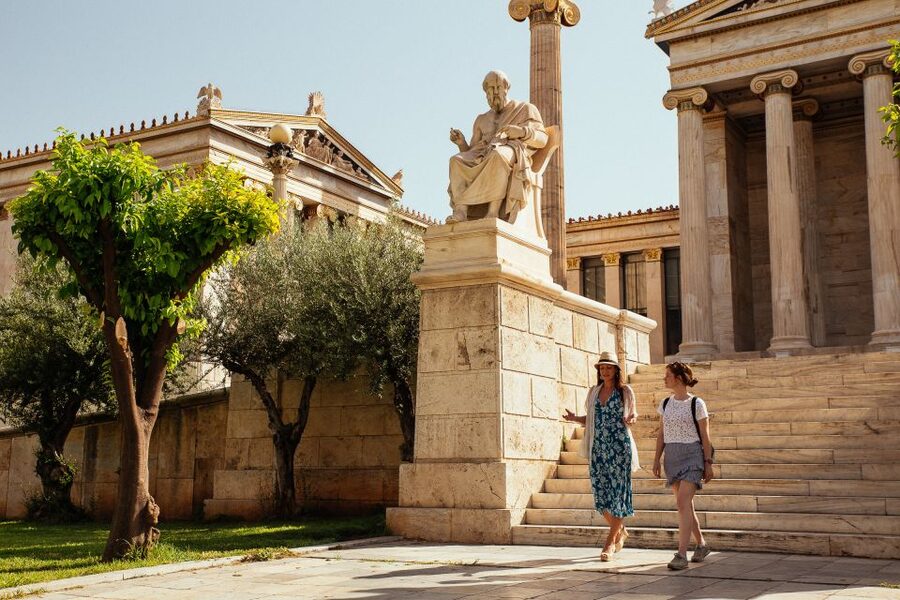
Greek mythology in Athens is not just myth on a plaque. It is a walking map through neighborhoods that shaped how Athenians thought, argued, prayed, and organized daily life. I love that a private guide makes the stories feel placed in context, the way guides like Markella explain what you are actually looking at.
I also like how the route connects legend to Athens street level, not only the postcard sites. You will pass major education landmarks like the Academy of Athens and University area, then work into central market life around Varvakios and the Monastiraki flea market. When I want to understand a city beyond one monument, this kind of mix is gold.
One drawback to plan for: this is a moderate-walking experience. If you have limited mobility, or you are pregnant, this may not be the right fit. Bring good shoes, and be ready to move at a steady pace for about three hours.
Key highlights you will feel right away

- Myth-to-street storytelling that connects scenes and symbols to the Athens around you
- Central Athens markets like Varvakios and Monastiraki, where you see the city as it lives today
- Education and civic Athens at stops such as the Academy and University areas
- Agora zones that help you understand why myths mattered to politics, culture, and public life
- Strong local guiding with English-speaking specialists such as Markella, Elisivet, Irini, and Myriam
- Private format so you can ask questions without watching the group pace
Greek mythology hits differently when you walk through Athens
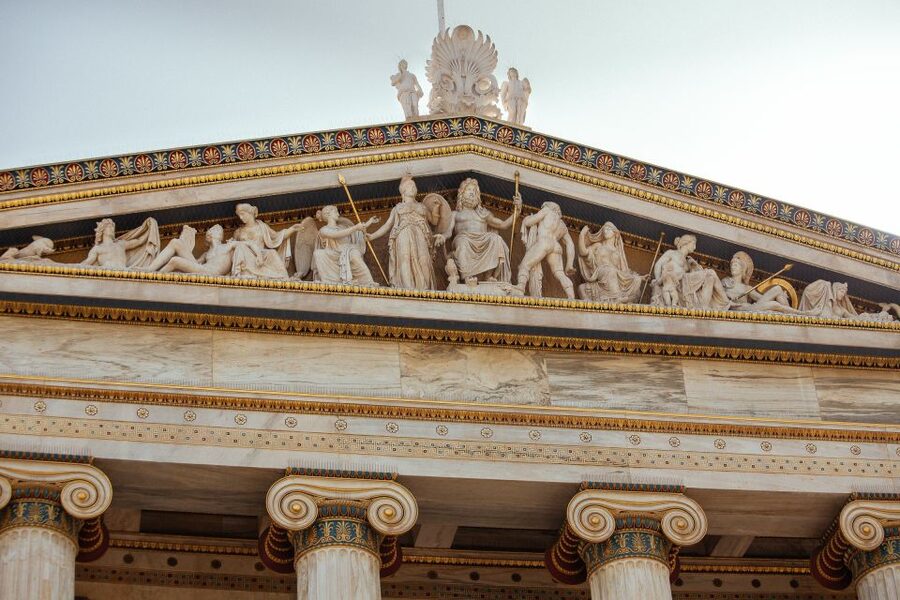
Greek mythology has a reputation for being complicated. Names tangle up fast, and you start mixing up gods, heroes, and places. What works on this tour is the way your guide keeps the story straight by anchoring it in real locations across Athens.
A good guide helps you connect myth to the city’s rhythm. You learn why certain sites feel meaningful, not just impressive. You also get the practical side, like how to read the layout of neighborhoods so you can explore on your own later with confidence, not confusion. One guide, Elisivet, is noted for giving a crash course that helps you roam with more direction after the tour.
The big payoff is that you start to see Athens as more than one famous hill. This route is built to show you the layers. You get myth, yes, but you also get the historical logic behind why Athenians built where they built, and how that still shapes what you walk past today.
More Historical Tours in Athens
- Historical Delphi One Day Tour with Arachova Stop & Expert Guide
★ 4.5 · 1,247 reviews - Historic Athens: Small Group Electric Bike Tour
★ 4.9 · 966 reviews - Acropolis, Parthenon & Athens Old City Heritage Walking Tour
★ 4.5 · 876 reviews
Meeting outside Nakas Book House, then moving like locals
Your tour starts at a simple, easy-to-find spot: meet your guide outside Nakas Book House. From there, you will walk through central areas at a pace that works for a 3-hour private experience.
Because this is a private group, you do not have to fight for time or keep up with strangers who want different stops. You can ask quick questions when something catches your eye. You can also adjust the pace a bit if your guide thinks it helps your comfort.
One thing I appreciate is how meeting in a normal city location gets you into the Athens mood fast. You are not transported to some separate staging area. You start watching real life unfold right away. That matters for a tour like this, because Greek mythology becomes more believable when you feel the city’s present-day streets alongside the past.
Academy of Athens and University area: where ideas meet myth
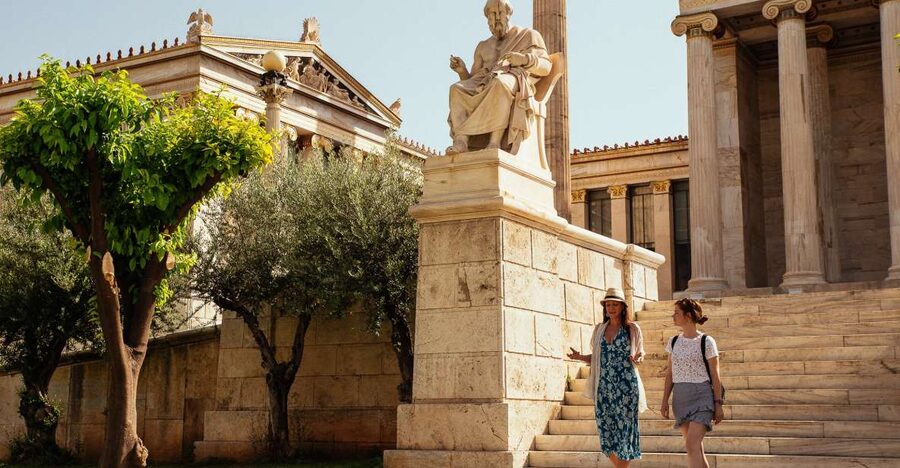
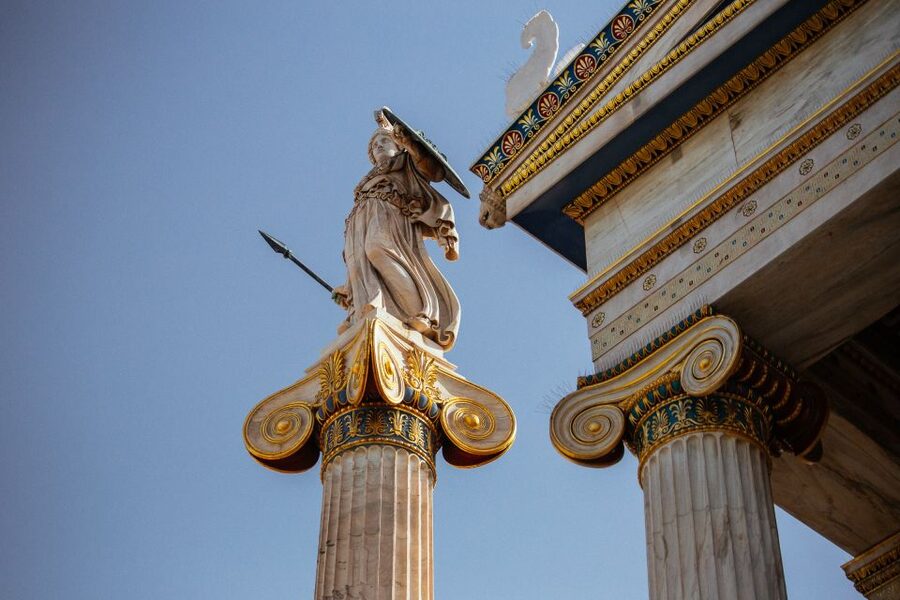
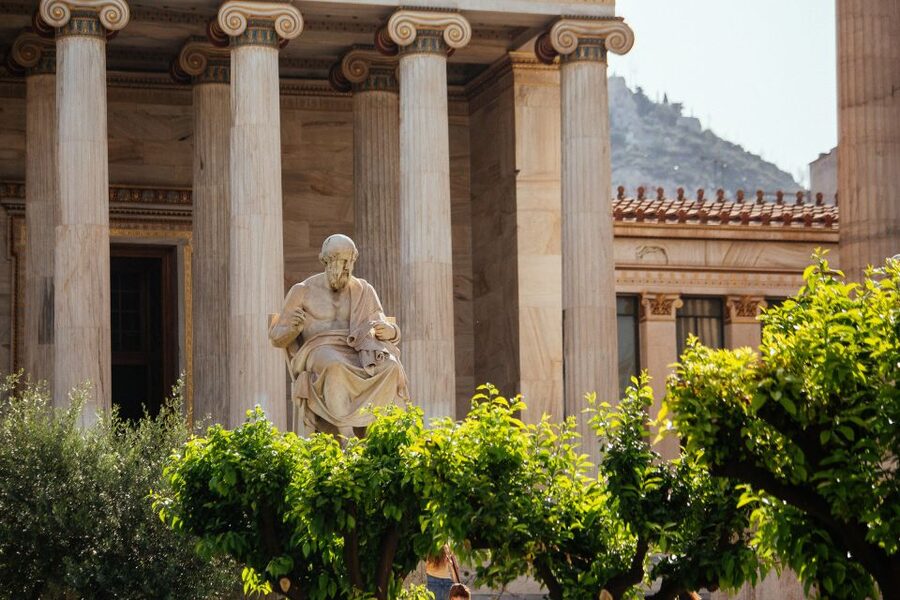
One of the strongest parts of the tour is how it treats education and public thought as part of the mythology story. You will see the Academy of Athens and the University of Athens area. These places remind you that Athens has always been a city of ideas, not only temples.
Your guide uses that frame to connect myths to the broader cultural life of the city. Myth was not trapped in old stories. It showed up in how people argued, in how they explained nature, and in how they justified political and social ideas.
This also helps your later sightseeing. When you know that Athens has long been a place where ideas are studied and debated, you interpret the city differently. Details like inscriptions, statues, and even street placement start to make more sense.
In short, this stop is not only about architecture. It is about what Athens values, and how myth fed into that.
Varvakios Central Market: the city’s everyday pulse behind the legends

After the more formal education landmarks, you shift into lived-in Athens with the central city market, Varvakios. Market streets can feel like a break from “history,” but that is exactly why this stop works.
Greek mythology mattered to everyday life. Your guide’s job is to show you how public stories and cultural symbols belonged in ordinary routines. When you watch people shop, talk, and move through the market space, the myths start to feel less distant.
This is where you also gain practical context. Market areas help you understand local geography fast. They teach you the flow of pedestrian routes and where things cluster. That becomes useful after the tour, when you want to wander without wasting time.
If you like tours that include real city atmosphere instead of only stone monuments, Varvakios is a smart inclusion. It helps you balance myth with the Athens you will still be eating, shopping, and exploring in that day.
More Mythology Tours in Athens:
- Athens: Mythology of Delphi, Museum and Arachova Guided Tour
★ 4.7 · 5,102 reviews - Athens & Acropolis Highlights: Greek Mythology Small-Group Tour
★ 5.0 · 2,370 reviews - Athens: Acropolis and Mythology Highlights Small Group Tour
★ 4.8 · 2,275 reviews - Athens: Mythology Tour for Families
★ 4.8 · 173 reviews
Monastiraki flea market: myths near the tourist grid
Then you slide into the Monastiraki area, famous for its flea market atmosphere. This is still central Athens, still walkable, and still full of visual cues that your guide can connect back to the stories you are hearing.
The guide focus here is on linking what you see now to what the area meant in the past. Monastiraki sits close enough to the Acropolis neighborhood that you can feel two Athens realities at once. One is everyday shopping and street life. The other is the deeper historical layer your guide is putting into words.
A personal tip: if you are the kind of person who gets overloaded by too many ruins in one day, this is a nice correction. Market energy gives you breaks for your brain. You still learn, but you are not staring at marble for three straight hours.
Also, the private format helps here. If you want a quick moment to look around and then rejoin the story thread, your guide can pace it with you.
Ancient Agora and Roman Agora zones: where myths and public life collide
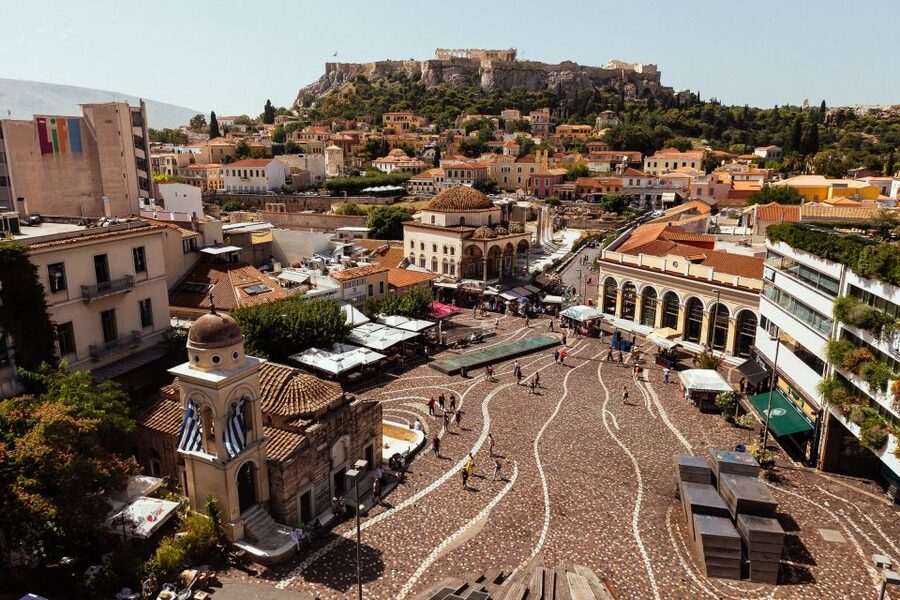
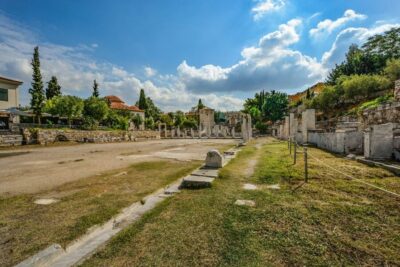
Several guides on this tour lean hard into the Agora areas, and it is easy to see why. The Ancient Agora and the Roman Agora zones help you understand a key point: myth was not only for storytelling. It was also for civic identity.
If you want to know why certain symbols show up in public spaces, this is where it clicks. The Agora was a hub for political life, social life, and cultural events. That means myths and legends were constantly circulating, even when no one was standing in front of a modern museum label.
In one example, Lars described a tour that included both the Ancient Agora and the Roman Agora, plus the Academy and University areas. That kind of pairing is ideal if you want to see how Athens thinking evolved across periods without feeling like you are reading a textbook.
This is also where your guide’s style matters. Some guides bring humor, others bring a very structured explanation. Either way, the best part is that the Agora context helps your brain build a framework. You stop treating mythology as separate from “real history.” You start seeing how stories supported the way people lived together.
What the best guides do, and why you feel it in the questions you ask
This is a private tour, and it shows. In reviews, guides like Markella, Costas, Elisivet, Irini, and Myriam come up for one big reason: they do not just talk. They respond. You get a real back-and-forth feel.
If you want a “how do I understand Athens fast” tour, that question is answered quickly. Your guide can give you a crash course on Greek mythology and Greek history in a way that connects to what you will later spot on your own. Tonya specifically pointed out how her guide answered questions and helped her feel prepared to explore after.
Another standout pattern is how guides add human details to keep the tour from feeling like a lecture. One guide is described as witty and personable during the walk between sites. Another takes a more neighborhood-focused approach, including quieter side streets in the Acropolis region where you can get different views of historical places.
Even if your route is different from someone else’s, the guiding principle stays the same. You are not just collecting facts. You are learning how to interpret Athens while you are standing in it.
Price and value: why $187 per person can make sense
At $187 per person for a 3-hour private experience, this is not a budget-only option. But it is also not overpriced if you compare it to the cost of missing the most helpful part of Athens: context.
Here is how I see the value:
- You are paying for a human guide who can explain what you see, not just point at it.
- You are paying for a private format, which is the difference between hearing a story and participating in it.
- You are paying to cover more than one “major site.” A common reason people love this tour is that it goes beyond the usual Acropolis-only loop.
Also, the guides are the product. With multiple guides highlighted, and with an average rating of 4.7 from 53 reviews, the success rate here is solid. For a city where it is easy to get overwhelmed, that matters.
If you are traveling as a solo visitor or a couple who wants a guided route with real conversation, this price is easier to justify. If you are a large family that needs a slow pace or lots of breaks, you might need to compare your priorities against other tours.
Comfort tips for a 3-hour myth walk
This tour is built around walking, and the listing calls it moderate walking. Bring comfortable shoes and dress for the weather. If your feet are already tired from a previous day of sightseeing, consider doing this earlier when you still have your energy.
Because it is private, you can usually ask for small adjustments. Still, it is not designed as a sit-down museum tour. Plan snacks and water around the rhythm of the route, especially if you are doing it on a hot day.
One more practical note: hotel pickup and drop-off are not included. That is fine, but it means you should plan how you will reach Nakas Book House before your start time. If you like easy logistics, this matters.
Best way to pair this with the Acropolis day
If you are doing a classic Athens itinerary, this tour works well as a primer. It gives you background so your later stops feel less random.
Think of it like this:
- Do this early, then visit the Acropolis and major monuments with sharper questions.
- Or, do it later as a way to connect the dots after you have seen the big names.
One reason this helps is that guides often give you suggestions for how to explore afterward. Tonya mentioned getting recommendations that made her feel ready to roam independently. Even if you keep it simple, those small pointers can save you time and keep you from missing good streets.
And because the tour covers education sites, markets, and Agora zones, you get a more complete Athens picture. That makes every later stop more meaningful.
Should you book Athens: The History of Greek Mythology private tour?
Book it if you want Athens to make sense fast. You will get Greek mythology explained in context, and you will see key parts of central Athens that most people skip when they focus only on the Acropolis. The private format is a major advantage, especially if you like asking questions and getting real answers.
I would skip or reconsider if walking is a hard limit for you, or if you want a purely seated, minimal-step experience. Also, if you already have a tight schedule and only want one monument area, this tour’s value comes from its mix. It is less about one single dramatic site and more about a connected story across neighborhoods.
If you are willing to wear good shoes and keep moving for three hours, this is a strong way to turn myths into something you can actually picture on your own streets of Athens.
Just reviewed around Athens
- Athens Highlights: Myths & Philosophers Walking Tour★ 5.0 · 125 reviews
- Sounio Sea Kayak Tour to the Temple of Poseidon full program★ 5.0 · 126 reviews
- First Access Acropolis Tour, Beat the Crowds, Enjoy the Parthenon★ 5.0 · 128 reviews
- Athens Half-Day Tour: Acropolis, Parthenon & All Major Landmarks★ 5.0 · 127 reviews
- Ancient Corinth, Mycenae, Epidaurus, Nafplio full day private tour from Athens★ 5.0 · 130 reviews
- Athens Highlights by E-Bike: Small-Group Historic Tour★ 5.0 · 131 reviews
- Athens Cooking Class and Lunch in our beautiful garden in Greece★ 5.0 · 130 reviews
- Athens Shore Excursion: Acropolis Walking Tour★ 4.5 · 131 reviews
Mythology Tours, compared.

Mythology of Delphi, Museum and Arachova Guided Tour
Read our review →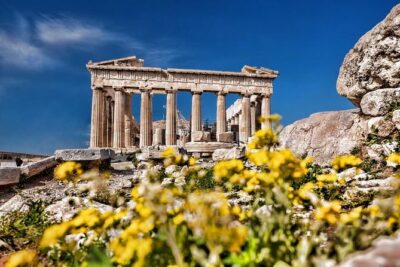
Athens & Acropolis Highlights: Greek Mythology Small-Group Tour
Read our review →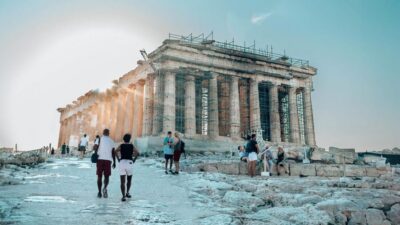
Acropolis and Mythology Highlights Small Group Tour
Read our review →

The History of Athens: Greek Mythology Private Tour
Read our review →
Guided Mythological Walking Tour & Creation Stories
Read our review →
Browse the lists this tour appears in