
Reviewed · ANCIENT CORINTH TOURS
The Apostle Paul’s Missionary Journey in Athens and Corinth
Walking the exact kind of places where ideas bounced around in Paul’s day is what makes this Athens and Corinth outing so interesting. You move from the Ancient Agora to the Areopagus, then across the Isthmus story of the Corinth region, and finally up to Acrocorinth. It’s not just scenery, it’s a way to understand how faith, politics, and everyday life mixed together.
I love the door-to-door pickup from Athens hotels or the port. It saves time and keeps the day from feeling like a logistics puzzle, especially when you have an early start. I also like that it’s truly private for your group, typically 1 to 4 people, which means your driver can tailor explanations and answer your questions without rushing you.
One consideration: you’ll do a fair amount of walking on uneven stone and in sun, so plan for comfortable shoes and hat plus sunscreen. Also, entrance fees for some major archaeological stops are not included, so expect a small extra cost once you arrive.
Key highlights worth planning around
- Door-to-door hotel or port pickup, with an air-conditioned car and water on board
- Paul in context with stops tied to his Athens preaching and his arrival in Corinth
- Areopagus and the Athens church of Saint Dionysius the Areopagite, both free to visit
- Ancient Corinth plus the nearby Corinth Museum, a strong one-two for ruins and artifacts
- Acrocorinth hilltop views that make the day feel like a real journey, not a checklist
- Complimentary onboard Wi-Fi, useful for quick mapping and sharing photos
How this private Athens-to-Corinth route helps you picture Paul’s world
This is built as a single long day, about 8 to 9 hours, that strings together Athens and Corinth with Paul’s story as the thread. You’re not just touring monuments. You’re moving through the kind of city spaces where public debate happened, where travelers arrived, and where new ideas competed.
The private setup matters. When it is just you and your group, the driver is not juggling a large bus. That tends to make the explanations clearer and the pace calmer. It also helps on a day like this, where you’ll switch from modern Athens streets to ancient levels of history in a matter of minutes.
You’ll get a professional English-speaking tour driver with in-depth history knowledge. One detail to keep in mind: the tour does not include a licensed guide who accompanies you inside archaeological sites. The driver can still interpret what you’re looking at, but you should expect to pay entrance fees where required and follow site rules as you explore.
More of Ancient Corinth:
- From Athens: Ancient Corinth Day Trip with Canal & VR Guide
★ 4.6 · 1,073 reviews - Private Biblical Tour Ancient Corinth & Isthmus Canal from Athens
★ 5.0 · 762 reviews - Athens: Ancient Corinth & Nafplio Full Day Trip with Swim
★ 4.8 · 531 reviews
Ancient Agora of Athens: where public life made room for debate
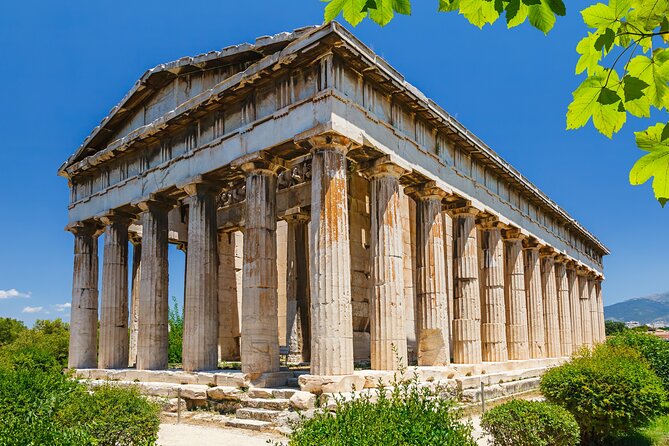
Your day starts at the Ancient Agora, Athens’ old civic center. Think politics, commerce, social life, and religion all mixed together in one place. This is the kind of setting where Paul could speak to philosophers and other thinkers, because it was a real stage for arguments and ideas.
You’ll have about 1 hour here, and entrance tickets are not included. That means you’ll want to be ready to pay admission at the gate and spend your time efficiently once you’re inside. The upside is that the Agora is a strong starting point. It gives you a “how the city worked” lens before you move to the more specific discussion spots tied to Paul.
Practical tip: the ground can be uneven and you’ll likely be walking more than you expect for an “hour.” Comfortable shoes are not optional here. If the sun is bright, this is also a good moment to use your hat and sunscreen early in the day.
Areopagus: the hill where ideas were heard and judged
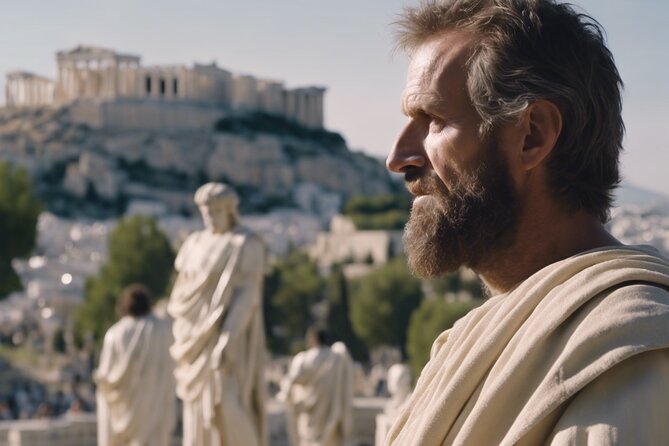
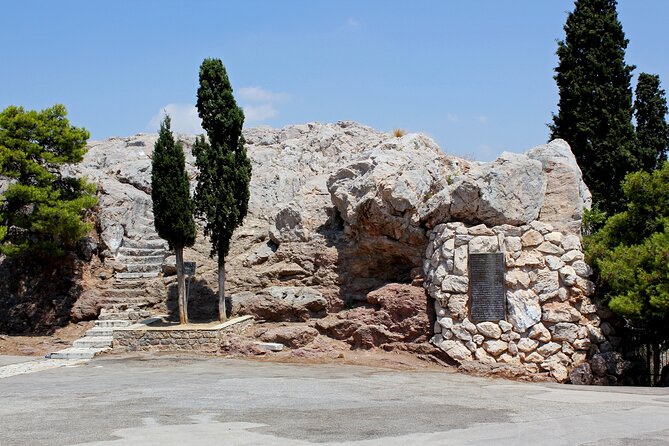
Next comes the Areopagus, just northwest of the Acropolis. In ancient times it served as a meeting place for judicial and political matters. In the Paul connection, it becomes a famous spot for intellectual debate and discussion.
You’ll spend around 30 minutes here, and admission is free. For many people, this is one of the most meaningful stops because it feels like the setting for a careful kind of conversation, not a casual sidewalk chat. Even without going deep into every ancient detail, you can stand in the general area and understand why Paul’s message would have landed in a place like this.
If you like asking questions, this stop is a good one to do it. Your driver’s role becomes especially valuable when you want help connecting what you see in ruins to what Paul is said to have addressed.
Saint Dionysius the Areopagite Church in Kolonaki: a faith story in modern Athens
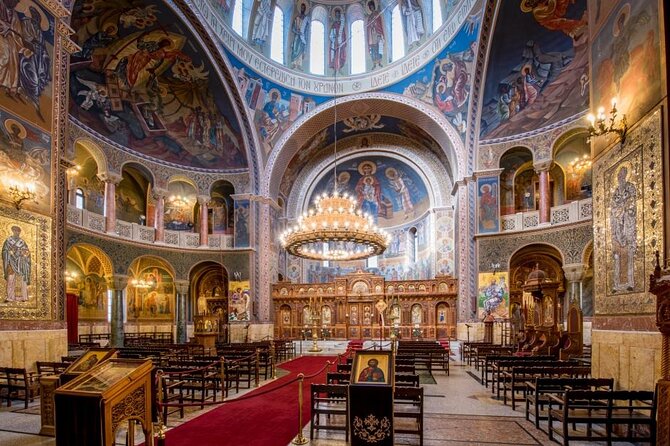
After the hill, you head to the Church of Saint Dionysius the Areopagite, in the upscale Kolonaki area on Skoufa Street. This church honors Athens’ patron saint, Dionysius, traditionally linked to Paul’s early Christian influence. The visit gives you a bridge between ancient Athens and a later Christian tradition rooted in the city.
This stop is about 20 minutes and free to enter. It’s short, but it helps balance the day. Ruins are one side of the story, and living religious heritage is the other. If you prefer your history with context, this church works well because it puts a human name and a local legacy next to the bigger setting of Paul’s preaching.
Dress note: churches often feel cooler inside, but you’ll still be stepping in and out during the day. Keep your layers light and easy to manage.
More days around Athens:
- Athens: Acropolis & up to 5 Archaeological Sites Combo Pass
★ 4.2 · 13,904 reviews - Athens: Acropolis Ticket with Optional Audio or Live Guide
★ 4.2 · 11,055 reviews - Athens: Acropolis, Parthenon & Acropolis Museum Guided Tour
★ 4.8 · 9,316 reviews - The Acropolis, Parthenon & Acropolis Museum Guided Tour
★ 4.7 · 8,493 reviews
Corinth Canal: a modern cut that explains why this region mattered
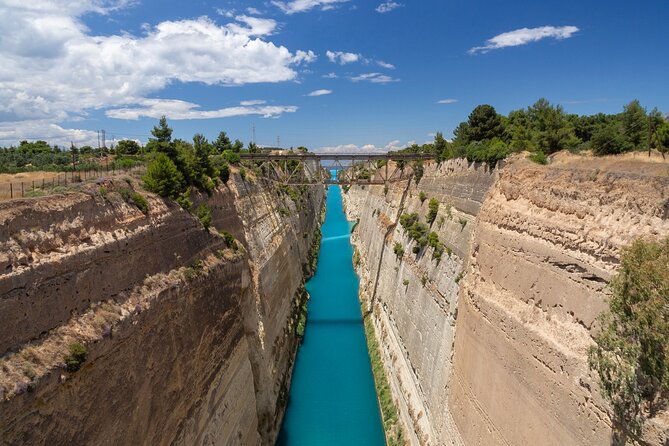
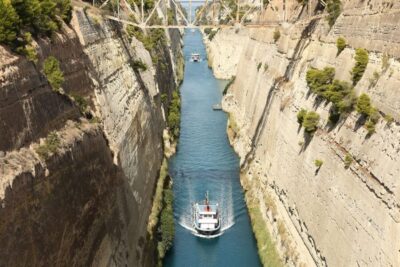
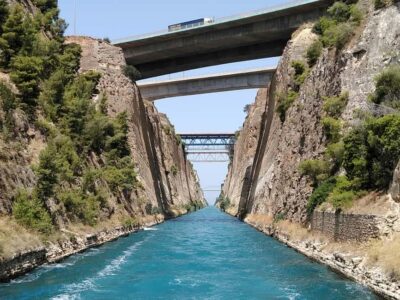
Then you travel to the Corinth Canal, an engineering marvel that slices through the narrow Isthmus of Corinth. It’s not biblical-era construction, but it explains something important: control of movement.
The canal connects the Gulf of Corinth with the Saronic Gulf. That geographic squeeze is exactly why this region mattered for travel, trade, and strategic planning across centuries. It also makes the next part of the day click, because you’ll see how arrivals and routes shaped the life of a port city.
You’ll spend about 20 minutes here, and there are no added admission fees. Treat it as a quick reset between Athens and the ancient Corinth sites you’ll tackle afterward.
Ancient Port of Kenchreai: the arrival point tied to Paul’s mission
Next is the Ancient Port of Kenchreai, also known as Kechrees in many references. This is Corinth’s eastern port, with a role in trade and travel, especially during Roman times. The remains you’ll see are partial, since parts are submerged or in ruins, but you can still sense the port’s layout and its long working life.
This stop is about 20 minutes and free. The key reason it matters for a Paul-focused day is that it is associated with Paul arriving here around 51 A.D. It’s the kind of location where you can imagine the moment of arrival, the practical side of mission work, and the sense that Corinth was not isolated, it was connected.
If you like layered history, this is a satisfying stop. You’ll be looking at Roman engineering features and also hints of early Christian presence, including an early Christian basilica from the 4th century A.D. You don’t need to memorize details to get value here. You just need time to look and let the setting do the talking.
Ancient Corinth (Archaia Korinthos): reading the Bema and the city’s religion
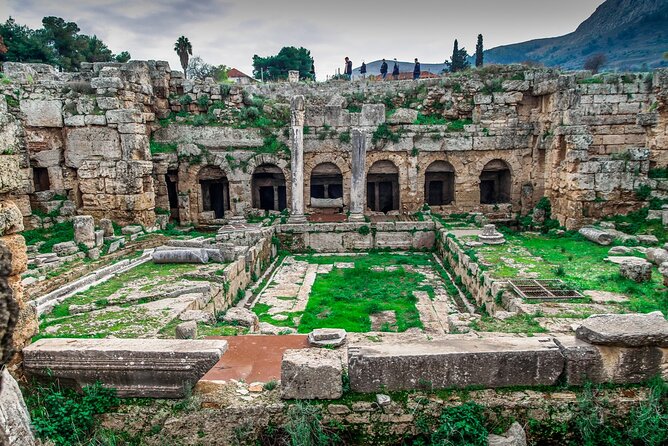
You’ll then move to Ancient Corinth, about 1 hour on site. Entrance tickets are not included. This is the heart of the day for a lot of people because you connect Paul to a specific city space, not just a general region.
One standout location is the Bema, a raised platform in the city center. It’s believed that Paul addressed the community here and also stood trial before the Roman proconsul. Even if you cannot confirm every detail on the ground, the idea of a public platform where legal and civic life met is easy to understand. It fits Paul’s story because his letters are so tied to real community events.
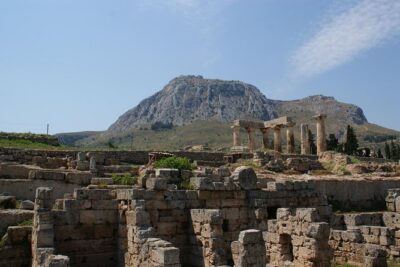
You’ll also get a sense of the Agora, the marketplace area that reflects daily life for Corinthians. And near the ruins you’ll see the Temple of Apollo, a reminder that Corinth’s religious world ran long before and alongside later Christian growth.
Practical warning: this is where the walking and uneven surfaces can really add up. Bring shoes with grip, and keep water in mind since you’ve been out since early in the morning.
Museum of Ancient Corinth: artifacts that make the ruins feel real
Before wrapping up, you visit the Archaeological Museum of Corinth for about 45 minutes. Admission is free, which is a nice bonus and helps balance the day’s extra entrance-ticket moments.
This museum was established in 1932 to safeguard artifacts from the area, and the exhibits do a great job supporting what you’ve just seen outdoors. You can expect finds that connect to prehistoric periods and objects from the Sanctuary of Asklepios, as well as material that reflects everyday life, religious practice, and local art.
If you ever felt that ruins alone are hard to picture, this museum is your fix. You’ll be able to match shapes, materials, and objects to the larger story of a city. It also gives you indoor time, which you’ll appreciate if the day turns hot.
Acrocorinth: temple traditions, fort walls, and big views
The final stop is Acrocorinth, the massive hilltop fortress that guarded Corinth for centuries and also functioned as a religious center. You’ll spend about 30 minutes here, and admission is free.
Acrocorinth is famous for the Temple of Aphrodite tradition, described as having housed up to 1,000 priestesses. Whether you focus on that detail or simply take in the fortifications, what matters is the sense of power and place. This is not a small viewpoint. It’s a commanding position over the Corinth region.
You’ll also get panoramic views, and that is where the day often turns from “interesting tour” to “I really get it.” From here you can imagine travel routes, the movement of people, and why faith and politics could not be separated in a place like this.
If you want the best experience, use your time wisely. Go up with purpose, look around slowly, then take your photos without racing. The sun can be strong, and that can steal your energy if you push too hard.
Price, time, and value around $200.25 per person
At $200.25 per person, this is not a bargain-basement trip. But it can feel like good value if you compare it to what you’d pay for separate transport and separate guiding help across two major ancient regions.
Here’s what you’re really paying for:
- Door-to-door pickup from hotels or the port, plus an air-conditioned car
- A professional English-speaking driver who explains history while you travel
- A private format that keeps the day focused on your group, not a crowd
- Practical perks like bottled water and complimentary Wi-Fi on board
The main value tradeoff is that entrance fees for some sites are not included, and you do not get a licensed guide inside the archaeological areas. Still, the overall structure is efficient. You cover key Athens sites linked to Paul, then get to Corinth the same day with enough time to see ruins and an on-site museum.
Timing-wise, this is a full day. If you’re the type who likes a slower pace, you might feel the fatigue. If you like clear progress and a plan that actually connects the dots, you’ll likely enjoy the way this day is constructed.
What to expect from your driver, and why the small-group format matters
This is a private tour, so only your group participates. For groups of 1 to 4 people, the operator uses sedan vehicles. That keeps the ride comfortable and often makes it easier to get in and out quickly at pickup points.
One more detail I’d underline: you’re not just dropped at each place. Your driver is the interpreter for the day. People have enjoyed days led by guides like Ruslan, Yannis, Kostas, and Karas, praising their clear explanations and calm attention during the day. You should be able to ask questions and get answers that connect Paul’s story to what you see around you.
Also, you can often treat the driver like a smart local contact. Some guides have helped with practical extras like recommending lunch and pointing you toward a more local meal at the end of the day. That’s not something you can demand, but it’s a realistic expectation to ask about.
Who this Paul’s Athens and Corinth day trip fits best
This tour fits you if you want a faith-and-history day that is structured, with real stops tied to Paul’s journey. It also fits you if you like the mix of ancient ruins plus contextual explanation, not just photo ops.
It’s also a good option for couples. Many people end up with that intimate private feel, and it can make the experience feel more reflective and less rushed.
Who should consider another option: if you have mobility limitations or you know you struggle on uneven stone, this may be hard. The day includes several walking segments, and you’ll be outside for much of it in Greece’s sun. Comfortable shoes and realistic pacing matter more than anything else.
Should you book this Apostle Paul tour?
Book it if you want one strong day that connects Paul’s Athens preaching context with Corinth city-life context, without the stress of figuring out transport and timing on your own. The combination of Agora, Areopagus, Kenchreai, Ancient Corinth, the museum, and Acrocorinth is a logical sequence that builds understanding as you go.
Skip it or adjust expectations if you dislike long full days, or if you prefer only completely flat, easy walking routes. Also factor in entrance fees for the major archaeology stops, since that will add to your final spend.
If you’re excited by the idea of standing where debate happened, where people arrived by sea, and where Paul’s story is tied to specific city spaces, this is a day you will remember. You’ll leave with a more personal sense of how the places shaped the messages.
FAQ
How long is the tour?
The tour runs about 8 to 9 hours.
What is the price per person?
The price is $200.25 per person.
Is hotel or port pickup included?
Yes. Hotel or apartment pickup and port pickup are included, and the driver waits outside for hotel pickups and at the arrival area with a signboard for port arrivals.
Is Wi-Fi included?
Yes. Complimentary Wi-Fi is provided on board.
Are entrance fees included?
No. Entrance tickets for archaeological sites and museums are not included. Some stops listed as free include places where no admission ticket is required.
What if weather causes a cancellation?
This experience requires good weather. If it is canceled due to poor weather, you’ll be offered a different date or a full refund.
Just reviewed around Athens
- Athens Airport Arrival Transfer to Hotels or Addresses in Athens★ 3.5 · 45 reviews
- Luxury Catamaran Sunset Semi-Private & Greek Gastronomy in Athens★ 5.0 · 45 reviews
- Port Transfer★ 5.0 · 45 reviews
- Private Luxury Tour: Unveiling the Sacred Mysteries of Eleusis★ 5.0 · 45 reviews
- Acropolis Private Wine Tasting @ Finewine store★ 5.0 · 46 reviews
- Delphi, Thermopylae full day private tour from Athens★ 4.9 · 46 reviews
- From Athens: City & Corinth Guided Day Tour★ 4.8 · 46 reviews
- Ancient Corinth Half-Day Private Tour from Athens★ 5.0 · 46 reviews
Ancient Corinth Tours, compared.
Ancient Corinth Day Trip with Canal & VR Guide
Read our review →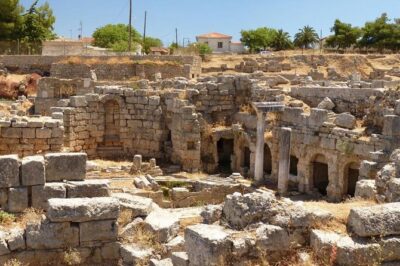
Private Biblical Tour Ancient Corinth & Isthmus Canal from Athens
Read our review →
Corinth Canal, Mycenae & Nafplio Premium Guided Tour
Read our review →
Private Tour of Apostle Paul’s Footsteps in Ancient Corinth
Read our review →
Corinth Half-Day Trip from Athens with Entrance Tickets
Read our review →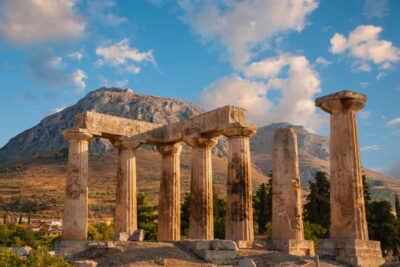
Ancient Corinth Tour with Official Guide & Tickets
Read our review →Browse the lists this tour appears in