Reviewed · ATHENS TOURS
Athens: Women in Ancient Greece
This Athens walking tour is interesting because it reframes familiar landmarks, like the Ancient Agora and the Acropolis, as places where women’s lives were shaped by rules, religion, and power. I love how the stories move from neighborhood life to major civic spaces, so the city feels understandable, not just impressive. One consideration: it is a step-focused walk, so it may not work well if stairs or uneven ground are an issue.
My second big reason I like it is the tone and range. With Maelle as the guide, the tour stays conversational and story-driven, using women like Sappho and Aspasia to show what was possible, not just what was expected.
Key things that make this tour worth your time
- A women-centered lens on Athens’ main ruins so you see the same stones with different questions in mind
- Myth that connects to daily life, using figures tied to roles and rituals, not just dramatic legends
- A strong narrative pace for 2 hours, with short guided stops that keep you moving and looking up
- Real context for social classes of women, not only the famous names you already recognize
- A guide who answers questions and keeps the walk from turning into a lecture
- A small souvenir gift at the end, a nice touch that helps the stories stick
Women in Ancient Greece: how Athens changes when you change the viewpoint

Most Athens tours hand you a highlight reel: big temples, famous buildings, quick dates, and a finish line near the Acropolis. This one asks a different question. Instead of treating women as footnotes, it treats them as people with daily routines, responsibilities, constraints, and occasional chances to break expectations.
That shift matters. When you hear how religion and mythology framed roles, you stop seeing ancient Greece as a fixed set of rules and start seeing it as a system that people navigated, supported, resisted, and sometimes bent. And because the guide links stories to each stop you visit, the city becomes a set of clues. You learn to notice what the space might have meant for women, whether it was civic life, household labor, storytelling, or public identity.
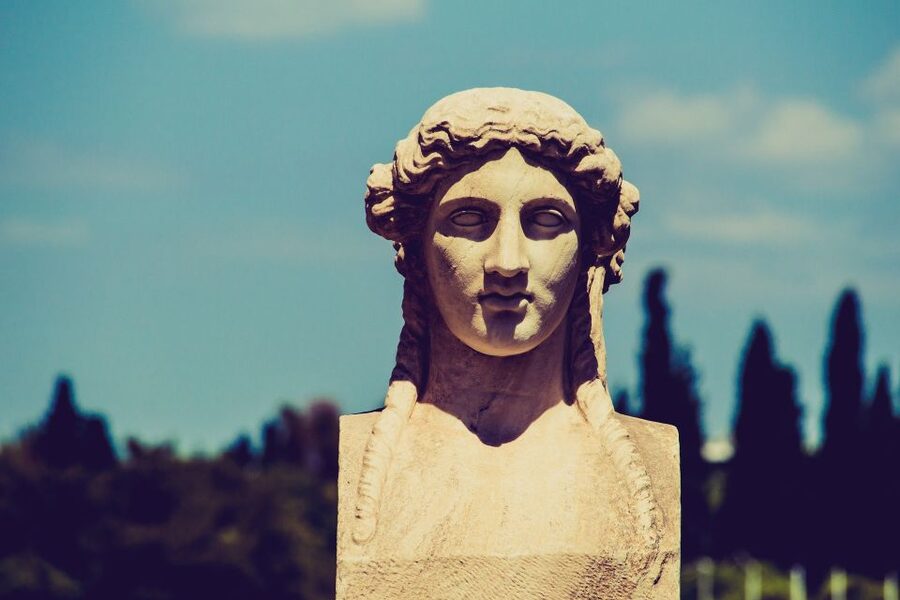
It is also a good mental workout. You get names like Athena, Penelope, Demeter, and Pandora alongside the famous rebels and thinkers such as Sappho and Aspasia. You come away with a clearer picture of how Greek mythology could reinforce social expectations while still leaving room for surprising behavior.
More days around Athens:
- Athens: Acropolis & up to 5 Archaeological Sites Combo Pass
★ 4.2 · 13,904 reviews - Athens: Acropolis Ticket with Optional Audio or Live Guide
★ 4.2 · 11,055 reviews - Athens: Acropolis, Parthenon & Acropolis Museum Guided Tour
★ 4.8 · 9,316 reviews
Where you start on Monastiraki Square, and what to look for
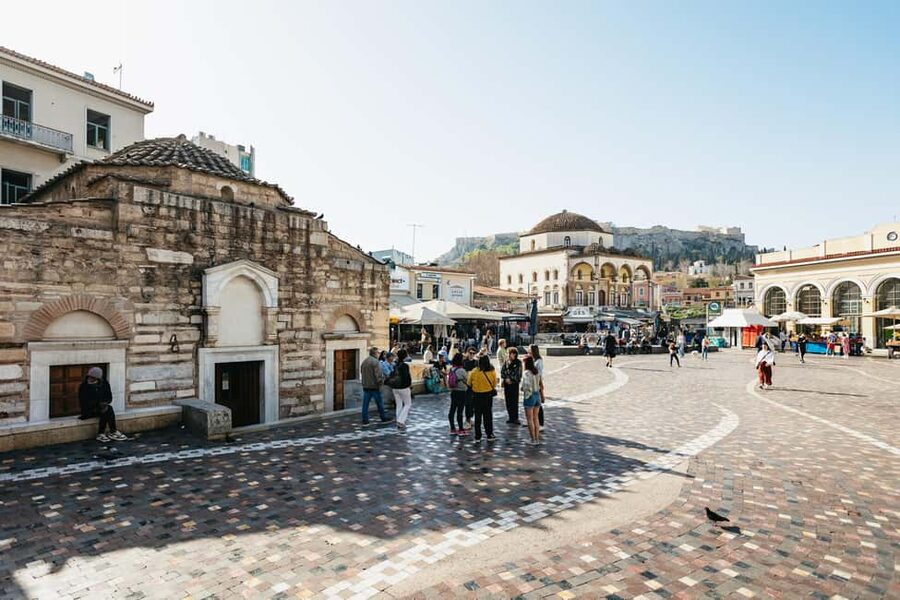
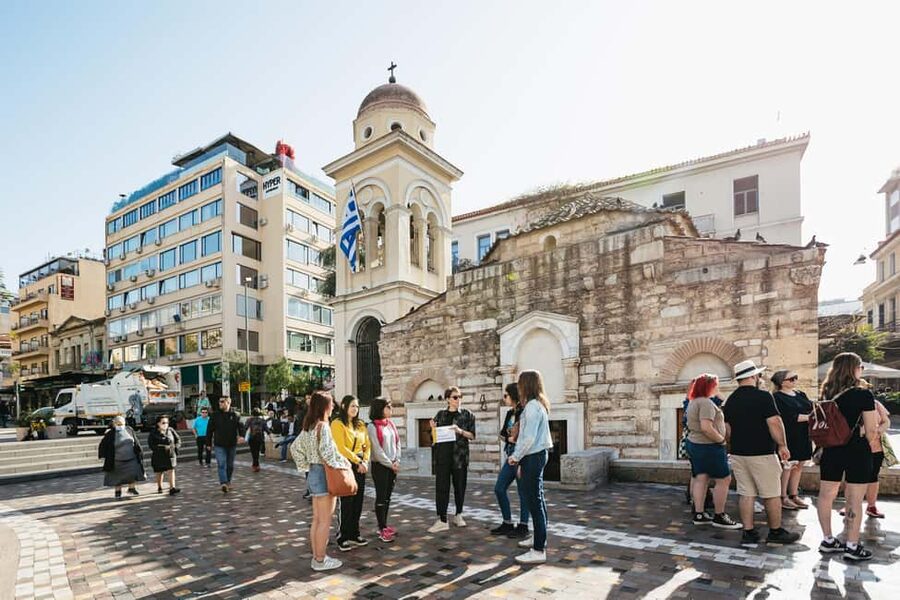
The tour begins on Monastiraki Square at the Church of the Virgin Mary Pantanassa. Your guide meets you there holding a sign that reads Women in Ancient Greece, so you do not have to wonder if you picked the right group.
I like this setup because Monastiraki is one of those practical starting points in Athens. It is central, walkable, and easy to orient yourself. You also get an immediate sense of local life before you step into the ancient story line.
Because this is a walking tour, it helps to wear footwear that grips well. You will also want your practical sun gear. The tour asks you to bring a sun hat, sunscreen, and water, and that matters in Athens where shade can be limited and light can be intense.
The first stops: Hadrian’s Library and the route into the ancient city
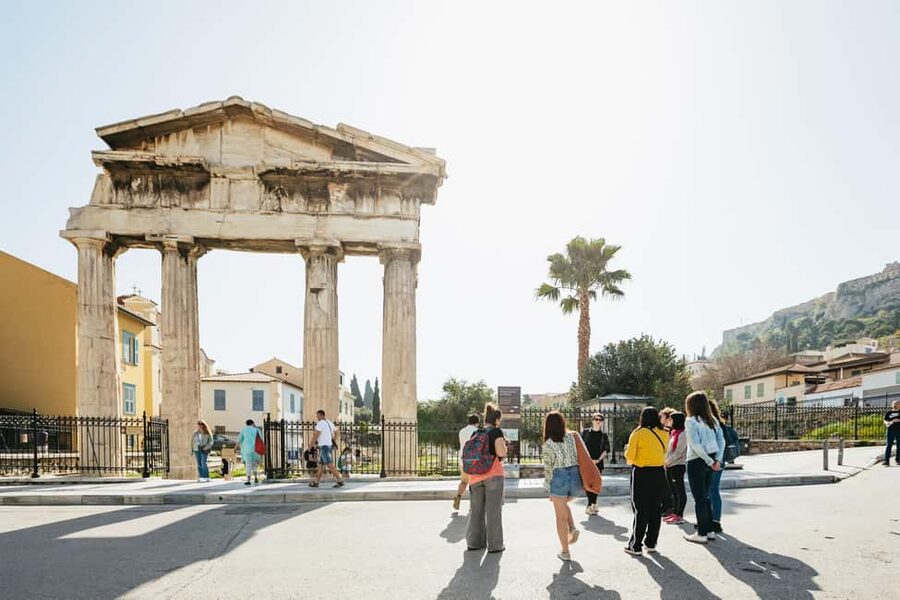
Right after Monastiraki, the walk brings you to Hadrian’s Library, a spot you may have seen from the outside but rarely get explained in a way that connects to people. Here, the guide uses the setting to steer the focus toward how women’s lives were understood in that world.
Even in a quick stop, this kind of framing is valuable. Libraries and public institutions were not just buildings. They were signals about education, authority, and what the society thought was worth preserving. When the guide ties that back to women and cultural roles, you get a better sense of why some voices were emphasized and others pushed aside.
A short pause in Plaka follows. You are not there for shopping. You’re using it as a transition, a way to see how the layers of modern Athens sit over the ancient city’s footprint. Plaka works as a reminder that ancient Athens is not trapped in a museum display. It is still part of your street-level experience.
Gate of Athena Archegetis: mythology that acts like a rulebook
One of the most interesting moments comes at the Gate of Athena Archegetis. Athena is not just a character in a myth. She represents a set of ideals that would have shaped how people thought about roles, intelligence, and protection.
The guide’s approach matters here. Instead of dropping a myth and moving on, you get the sense of how mythology could function like a social script. It influenced expectations around learning, behavior, and how a person’s identity was read in public.
This is also one of those stops where the “female perspective” is more than a theme. It is a method. The guide uses the landmark to ask what might have mattered to women in daily life, and why a goddess like Athena could be more than a story. You start to see myth as cultural infrastructure.
A different way to spend Athens time:
- The Acropolis, Parthenon & Acropolis Museum Guided Tour
★ 4.7 · 8,493 reviews - Athens: Cape Sounion & Poseidon Temple Sunset Half-Day Trip
★ 4.8 · 8,241 reviews - Acropolis: Premium Acropolis and Parthenon Guided Tour
★ 4.8 · 5,208 reviews - Athens: Mythology of Delphi, Museum and Arachova Guided Tour
★ 4.7 · 5,102 reviews
The secret stop: why you should pay attention when you get surprised

There is a secret stop built into the route. That phrase could sound gimmicky, but in practice it does something useful. It keeps the walk from feeling predictable, and it rewards your attention.
Because the guided time at this stop is short, you should stay present rather than mentally scanning your phone for the next photo angle. This is the kind of moment where the guide tends to connect an overlooked detail to the broader story of women in ancient Athens. If you enjoy getting little course corrections in how you look at a place, this stop is one of the payoffs.
The Ancient Agora: icons viewed through everyday constraints
Next comes the Ancient Agora of Athens, where you see how civic space played into identity. The Agora is famous in standard tours, but most of the time the explanations tilt toward male political life and public debate.
Here, the guide pushes you to look at the same space differently. The stories focus on how women’s roles were defined in relation to civic life, family structure, and cultural authority. You also get tales that move beyond Athens proper, including references that broaden the picture to places like Sparta and Thebes.
This is a strong place for value. If you only had time for one ancient area in Athens, the Agora would usually be it. The difference is that this tour tries to help you see the Agora as a lived environment, not just a backdrop for statues and dates.
Pnyx: the meeting of first democratic votes and the limits of who counted
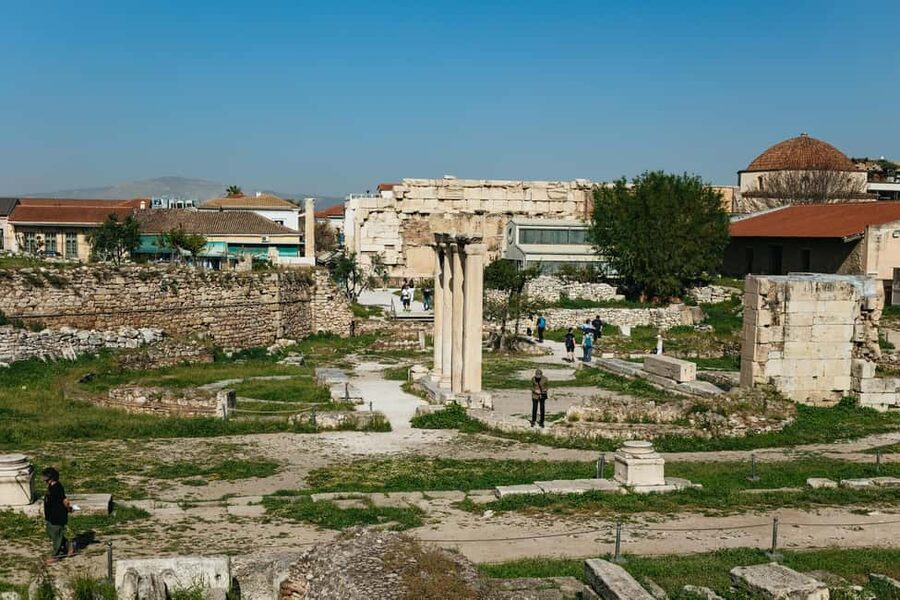
At Pnyx, you get one of the tour’s most striking pairings. You look at the site where the first democratic votes were cast, and you connect that to what women’s participation likely meant in practice.
That tension is the point. Democracy is not only a concept, it is a system. And systems always include rules about who gets to speak, who gets to decide, and who gets excluded. By setting women’s stories beside this civic setting, you get a more honest sense of what democracy looked like from the ground.
The guided time here is a bit longer, which helps. You need a minute to let the location sink in, because Pnyx is not just a scenic spot. It is a reminder that political power in ancient Athens had boundaries.
Views on the way to Filopappou Hill: a practical breather
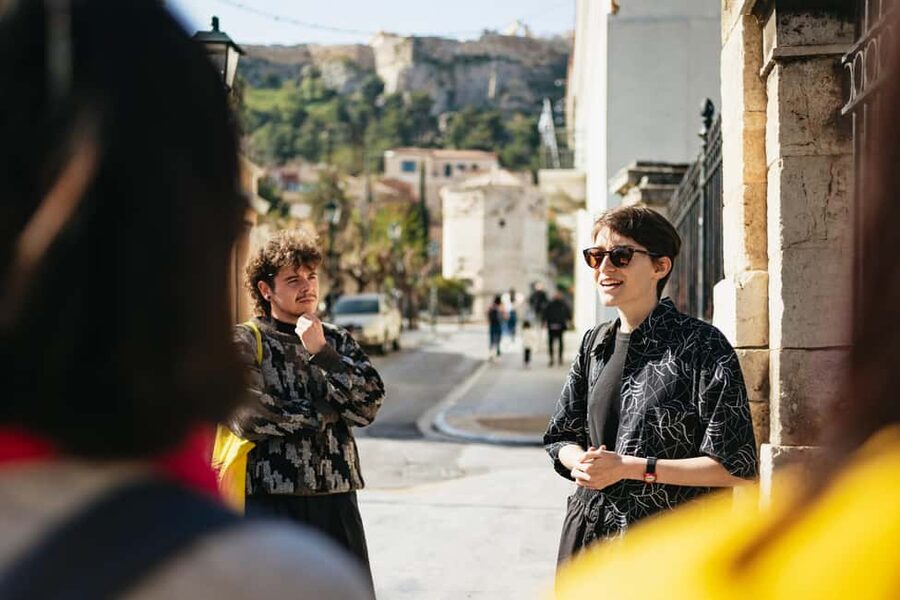
As the walk continues, there are scenic views on the way before you reach Filopappou Hill. This section is useful because it shifts you from dense explanations to a more physical way of learning. You look outward, you notice lines of sight, and you connect the ancient city’s layout to the modern hills and streets.
Filopappou Hill is also a good finishing moment because it gives your brain a place to land. After stories about social roles and mythic figures, you get a visual reset.
The tour ends with two drop-off locations listed as Rovertou Galli 69, Kiosk. That helps if you plan to keep walking or grab a drink afterward, especially since the tour does not include food.
What you learn: myth, famous women, and the everyday side of rules

This is where the tour earns its name. It is not just about famous names, and it is not just about architecture. It’s about the relationship between myth and society, and then between society and daily life.
You hear about women tied to mythology such as Athena, Penelope, Demeter, and Pandora. The guide uses these stories to show how Greek mythology shaped how people understood women’s roles. In other words, mythology becomes a social lens. It explains the “why” behind expectations.
Then you get women who defied expectations, like Sappho and Aspasia, and you also hear about other figures referenced as breaking or challenging norms. There’s also a thread involving a mysterious women’s festival in Athens and the story of kidnapped Spartan girls. These stories are not there to shock you. They’re there to show how women’s lives intersected with power, conflict, and ritual.
And importantly, the guide keeps bringing it back to the real world. You get the sense that women’s lives varied across social situations, not everyone lived the same kind of life, and even in constrained roles people found ways to influence culture.
Pace, group size, and why the tour stays easy to follow
The total time is 2 hours, which is a sweet spot. Long enough to visit multiple ancient points and connect them to the women-centered theme. Short enough that you do not feel like you are being swallowed by Athens for an entire morning.
This is also offered as a private group option. A private group usually means you can ask questions in a way that feels natural, and you can get the guide to clarify what you are seeing as you walk.
The tour runs with a live English and French guide. If you prefer explanations that adjust to your questions, this is a format that fits well.
Price and what you get for $88
At $88 per person for a 2-hour guided walking tour, the value comes from focus and storytelling rather than included site access. There are no archaeological site tickets included, so you are seeing the sites mostly from the outside.
That can sound like a drawback, but it is actually part of the design. It keeps the pacing tight, and it lets the guide spend more time on interpretation. If you want the quick hit of context without committing to multiple ticketed entries, this format makes sense.
It also includes a guide, walking tour, private tour if you select that option, and a small gift. There’s no food or drink included, so plan on water and, if you want, something to eat before or after.
In plain terms: you are paying for a specialized viewpoint and a guide who can connect locations to a theme. If you are the type of traveler who hates vague tours that just point and date, this price is easier to justify.
Practical tips so your legs and your day survive Athens heat
Because the tour includes steps and is not designed for wheelchair users or people with mobility impairments, you should plan this as a walking day. It is also noted as not suitable for people with heart problems.
If you are generally healthy and comfortable walking, you can still make it better for yourself:
- Bring the items listed: sun hat, sunscreen, water
- Wear shoes with good grip
- Pace yourself and let the guide know if you need a slower rhythm
The tour’s end on Filopappou Hill is a nice visual payoff, but it also means you should not plan a marathon afterward. Keep your next activity light.
Who should book, and who might want a different tour
This tour is a strong fit if you want Athens with a point of view. It works well for first-timers who already plan to see the Acropolis but want the rest of the story, too. It is also excellent if you are curious about gender roles in the ancient world and how myth shaped social expectations.
It is also a good match for groups who want something different from the standard “top sights” itinerary, because this walk is built around women’s lives, not a checklist.
You might skip it if your priority is museum interiors and ticketed archaeological access. This experience is set up for exterior views, and it does not include food.
Also, if you need step-free routes or have serious mobility limits, the tour is not suitable based on the information provided.
Should you book Athens: Women in Ancient Greece?
Yes, if you want Athens to feel personal and readable. This is not a generic history walk. It is built around women in ancient Greek society, with mythology used as a tool to explain expectations and stories used to show exceptions. For $88, you’re buying a specialized narrative, a focused route, and a guided connection between city space and social life.
I’d book it especially if you like asking questions and you enjoy tours where the guide turns a street corner into an argument about how people lived. If you can walk the steps comfortably and you’re okay with exterior views only, this tour gives you a fresh angle on the city that will stick long after you leave the stones behind.
FAQ
How long is the Athens Women in Ancient Greece walking tour?
The tour lasts 2 hours.
Where does the tour meet?
Meet your guide on Monastiraki Square in front of the Church Pantanassa. Your guide will be holding a sign that says Women in Ancient Greece.
What is included in the price?
Included items are the guide and the walking tour, plus a small gift. If you select a private option, the tour is private.
Are archaeological site tickets included?
No. Tickets to archaeological sites are not included, and the tour is exterior view only.
Is there food or drink included?
No. Food and drink are not included.
What languages are offered?
The live guide speaks English and French.
Is this tour wheelchair accessible?
No. It is not suitable for people with mobility impairments, wheelchair users, or people with heart problems.
What should I bring?
Bring a sun hat, sunscreen, and water.
Just reviewed around Athens
- Athens Highlights: Myths & Philosophers Walking Tour★ 5.0 · 125 reviews
- Sounio Sea Kayak Tour to the Temple of Poseidon full program★ 5.0 · 126 reviews
- First Access Acropolis Tour, Beat the Crowds, Enjoy the Parthenon★ 5.0 · 128 reviews
- Athens Half-Day Tour: Acropolis, Parthenon & All Major Landmarks★ 5.0 · 127 reviews
- Ancient Corinth, Mycenae, Epidaurus, Nafplio full day private tour from Athens★ 5.0 · 130 reviews
- Athens Cooking Class and Lunch in our beautiful garden in Greece★ 5.0 · 130 reviews
- Athens Highlights by E-Bike: Small-Group Historic Tour★ 5.0 · 131 reviews
- Athens Shore Excursion: Acropolis Walking Tour★ 4.5 · 131 reviews
Athens Tours, compared.
Acropolis & up to 5 Archaeological Sites Combo Pass
Read our review →
Acropolis Ticket with Optional Audio or Live Guide
Read our review →
Acropolis, Parthenon & Acropolis Museum Guided Tour
Read our review →
The Acropolis, Parthenon & Acropolis Museum Guided Tour
Read our review →
Cape Sounion & Poseidon Temple Sunset Half-Day Trip
Read our review →
Acropolis: Premium Acropolis and Parthenon Guided Tour
Read our review →
Mythology of Delphi, Museum and Arachova Guided Tour
Read our review →