
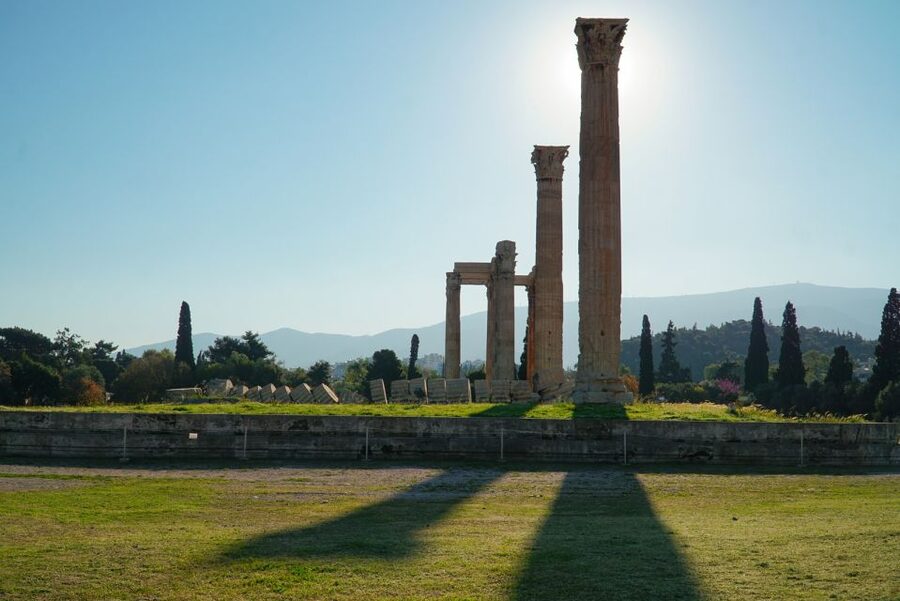
Reviewed · AUDIO TOURS
Athens: Temple of Olympian Zeus Ticket and Audio Tour
The Olympieion is one of those Athens sites that makes you do a double take. You walk into the middle of a colossal ruin, and your phone hands you the stories that explain why it mattered and why it never quite got finished.
I really like two things here: the hassle-free e-ticket and the self-guided audio tour that you can replay as long as you want. It also helps you connect the dots between Zeus myths, the temple’s long construction saga, and what everyday city life might have looked like.
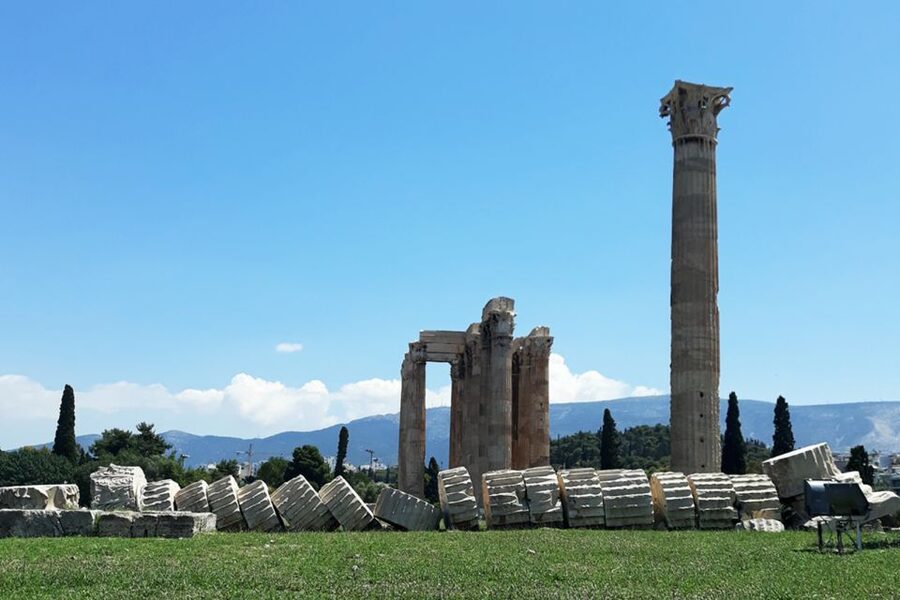
One thing to consider is that there is not a lot of standing temple left, and an update for later in 2025 says construction will start in front of the main exit. That means your view can be partly limited on some dates, so plan for a more story-led visit than a full-on photo moment.
Key points before you go
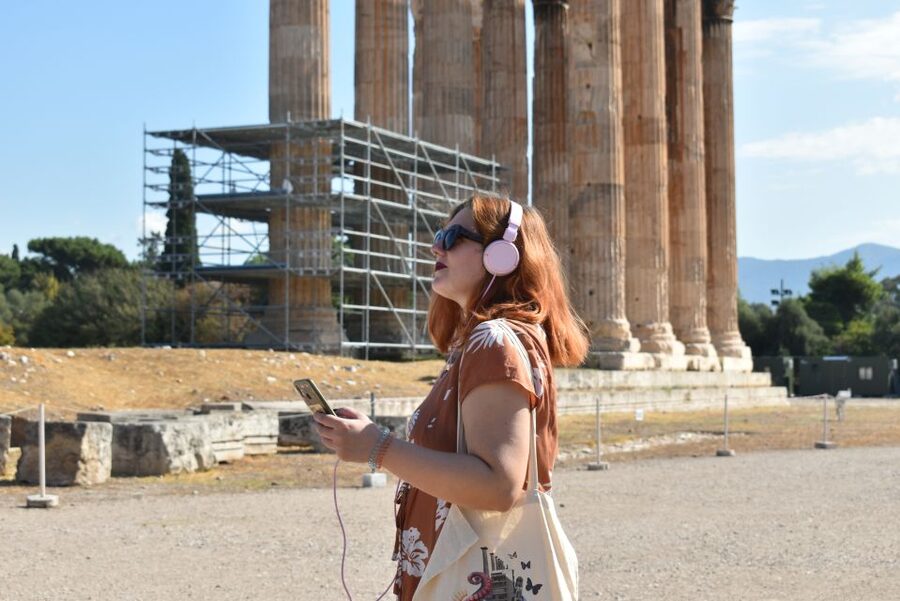
- E-ticket first, no last-minute ticket hunting, so you can start walking fast
- Offline audio and an offline interactive map, useful if your phone signal is weak
- A story-driven route that moves from the Great Propylon to the massive pillar area and then to the bathhouse remains
- Myths plus politics plus disaster, tied into the temple’s 700-year building story
- Good practical pacing for 1 to 2 hours, which is ideal when Athens heat or crowds kick in
- Bench spots and shade can make the experience easier, especially if you take it slower
Temple of Olympian Zeus by e-ticket and phone audio

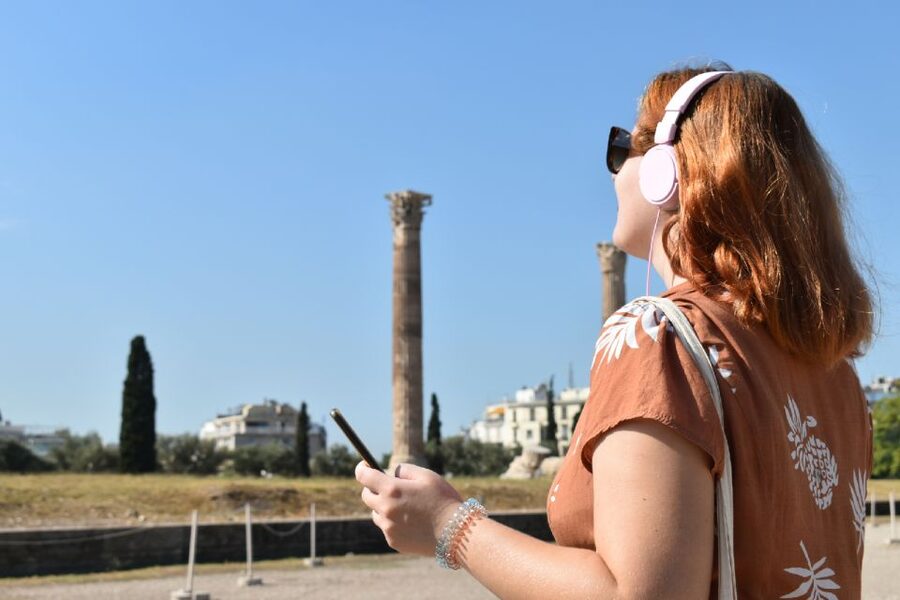
This is not a “bus tour in the background” kind of stop. It is a focused ruin visit where your phone becomes your guide, using an audio track you load onto your smartphone. You get an adult e-ticket for the Temple of Olympian Zeus and then follow the audio route at your own speed, with offline content built in so you are not stuck fighting roaming charges.
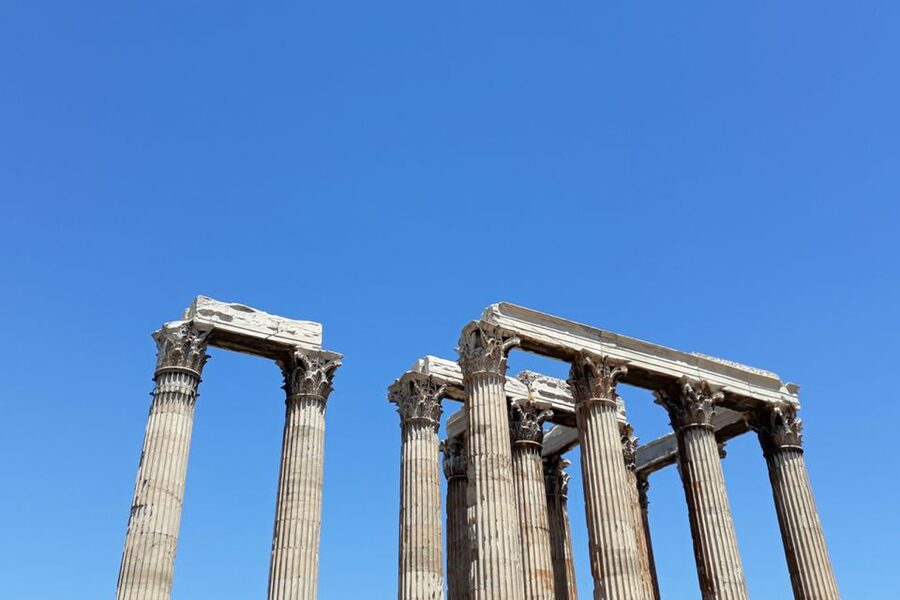
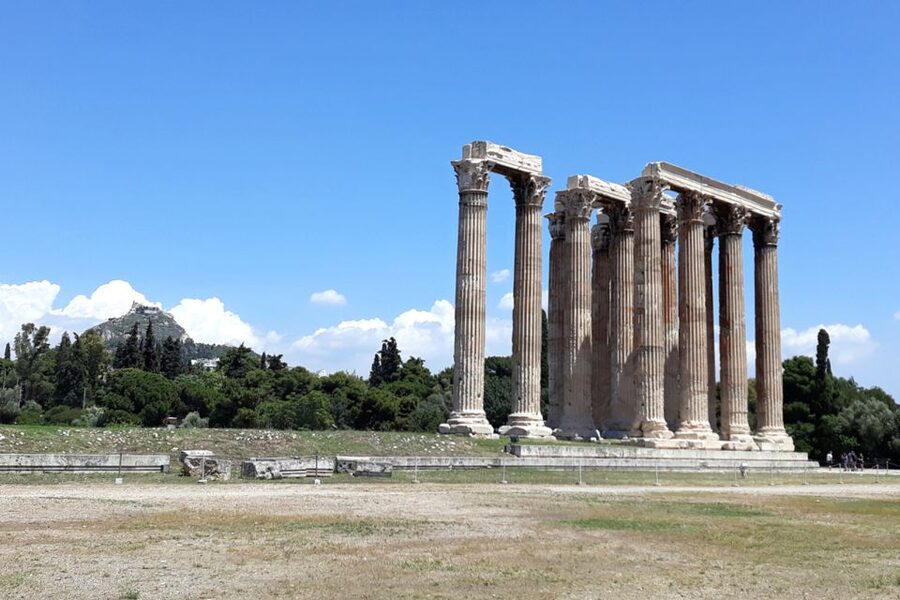
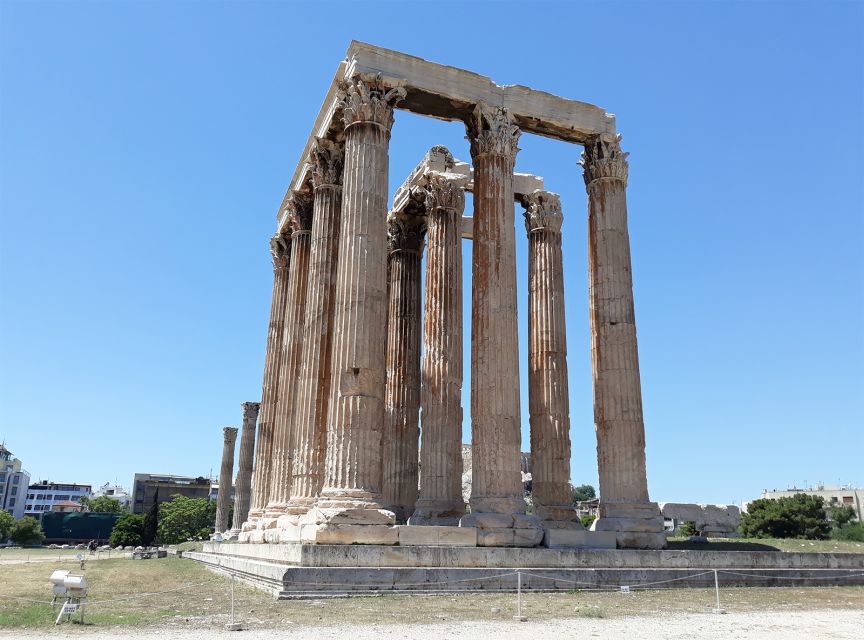
The headline attraction is the Olympieion itself, also called the Temple of Olympian Zeus. Even in partial ruin, it’s hard not to feel the scale. Think 17-meter pillars, huge foundations, and a sense that this place was meant to be enormous in both size and symbolism.
The audio guide does the smart thing: it does not treat the ruins as dead stone. It frames them as a living part of Athens history, from myths and rulers to damage and locals who sensed trouble. If you like when a site explains itself, this format tends to work well.
More Athens days to weigh up
- Athens: Acropolis Ticket with Optional Audio or Live Guide
★ 4.2 · 11,055 reviews - Athens: Cape Sounio & Poseidon Temple Trip with Audio Guide
★ 4.4 · 4,521 reviews - Athens: Acropolis Ticket with Audio Guide
★ 4.0 · 3,575 reviews
Entering the Olympieion: pre-booked ticket and where your story starts
Your experience starts with the pre-booked e-ticket, which is basically the best way to reduce stress in Athens. Instead of standing around while you figure out lines and devices, you can head straight to the entry process and get moving.
Once you are inside, your audio narrative begins around the area near the Great Propylon. That matters because it sets the mood early. Rather than starting with dates, you start with the kind of mythology that people actually told to explain how the world worked, and why gods, weather, and human fate were connected.
I also like that the tour does not rush. You can pause, stand back for a wider look, and then hit play again when you want the next chapter. If you are the type who wants to look first and listen second, this self-guided structure gives you that control.
The Great Propylon and the myth of the Great Deluge
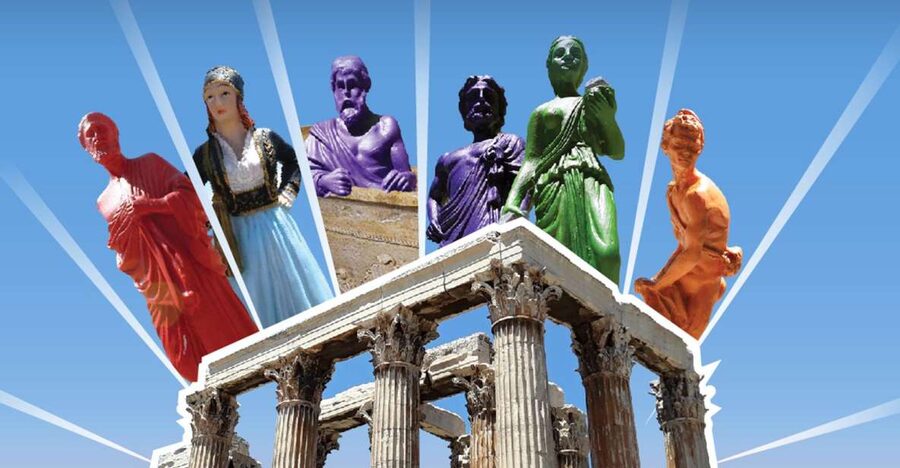
At the start of the walk, the audio nudges you toward Greek mythology, including the story of the Great Deluge. The framing is simple and memorable, Zeus showing a stormy mood and the result for humankind.
This opening does two useful things for you. First, it makes the site feel less like an “ancient landmark you check off” and more like a place tied to belief. Second, it prepares you for the kind of narrative the tour keeps using, a mix of myth and real-world outcomes.
You will also hear connections between thunder, wrath, and the damage that disasters can do to buildings. Even if you already know the basic myth of Zeus, the audio helps you connect that myth logic to what happened here.
Wandering through the 17-meter pillars like you can see the full plan
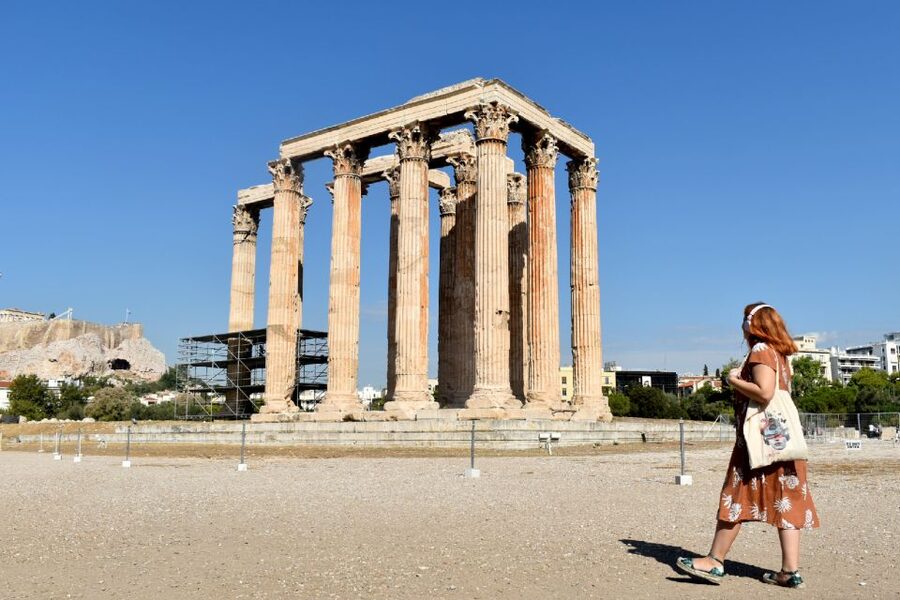
Now comes the physical wow moment. The tour asks you to weave through the enormous pillars, described at about 17 meters. Even if the temple is not intact, that size hits you in the body. You feel how tall and heavy it must have been when complete.
If you have ever stood under a modern tall structure and looked up, you know how your perspective shifts. The Olympieion does something similar, but with a ruin twist. It makes you imagine the completed scale, then shows you the gaps where history cut things short.
This is where the audio’s history thread turns practical. The tour guides you through a roughly 700-year construction story and its fate over time. You are not just learning that it took a long time. You are learning that Athens kept reinterpreting the meaning of the site as power changed hands.
A different way to spend Athens time:
- Athens: Acropolis & up to 5 Archaeological Sites Combo Pass
★ 4.2 · 13,904 reviews - Athens: Acropolis, Parthenon & Acropolis Museum Guided Tour
★ 4.8 · 9,316 reviews - The Acropolis, Parthenon & Acropolis Museum Guided Tour
★ 4.7 · 8,493 reviews - Athens: Cape Sounion & Poseidon Temple Sunset Half-Day Trip
★ 4.8 · 8,241 reviews
700 years of construction chaos, rulers, and why it kept changing hands
One of the most praised parts of this experience is that the audio content is genuinely informative and engaging. The way it is organized helps you follow the temple like a “coming-of-age story” for the city itself.
The construction timeline is described as turbulent, stretching for centuries. As you move, the audio highlights attempts by an Athenian tyrant and a Roman emperor, placing their rule in conversation with the celestial authority of Zeus. That’s a smart way to explain the politics without turning it into a lecture you forget.
You also get a disaster angle, including a ferocious thunderstorm that brought terrible damage to the temple. When you hear about those events while looking at the ruin, it stops feeling random. It becomes a chain of causes and effects, weather and human plans colliding with architecture.
And yes, you do get the dramatic part too. The narrative includes gory details tied to how the city was founded by Theseus, including a bloodbath element. If you are comfortable with myth violence, you’ll probably find it adds real texture. If you are not, you can treat those sections as story flavor and still enjoy the larger historical arc.
When history sounds like people, not just dates
Another thing I like about this kind of audio guide is that it makes the site feel human. You learn about attempts to use Zeus symbolism as a way to legitimize power. You hear about locals in 19th-century Athens and how premonitions of disaster showed up in conversation.
That 19th-century thread is useful because it keeps you from thinking ruins are frozen. Athens kept living around this place. People kept reacting to it, including during periods far removed from ancient construction.
Also, the audio is designed for repetition. Some visitors explicitly enjoy listening to the track more than once on site. Since it is self-guided, you can do that without feeling like you are “slowing the group down.”
The Balaneion finish: stepping out of temple myth into real daily life
The tour does not end at the most famous stones. It ends near the Balaneion, a public bathhouse. This is one of the best ways to make a ruin visit feel complete, because a bath is not myth. It is routine.
You will discover relics of the ancient bathhouse area and learn about the rejuvenating benefits of public baths. Even though you are looking at remains, the concept is relatable. It helps you picture how ordinary people might have used this space, socialized, cleaned up, and built community.
If you like when a tour answers the question “what did people actually do here,” this stop matters. It turns your walk from a temple-focused story into a picture of everyday life thousands of years ago.
Price and value: why $30 can be fair or not
The price listed is about $30 per person for the e-ticket plus audio tour, and I think the value depends on how you like to travel.
If you want independence, this format is usually worth it. You pay once, you do not rely on a live guide’s timing, and you get offline audio you can replay. You also get an offline interactive map, which is a practical feature if your phone signal is spotty.
If you expect a lot of standing temple to explore, manage your expectations. The experience is still recommended, but some people find that there is not much left to see, especially if you hit construction that limits what is visible. In other words, the value is more about story and context than about walking through a perfectly preserved monument.
If you are traveling on a tight schedule, the 1 to 2 hour duration also helps value. It’s long enough to feel like you did something meaningful, but short enough to pair with other central Athens stops.
App basics that affect your experience (in a good way)
This is a phone audio experience, so the app quality directly affects satisfaction. Based on the way people described it, the audio is user-friendly, and it is meant to run offline.
What you should plan for:
- You will need a charged smartphone and headphones (headphones are not included)
- The tour includes offline content and an offline interactive map to help you avoid roaming charges
- You will need the secure promo code access process after downloading the app
One practical note: the tour is not compatible with Windows phones, and it also does not support some older Apple device models. The restrictions listed include iPhone 5/5C or older, iPod Touch fifth generation or older, iPad fourth generation or older, and iPad mini first generation. If you have an older device, check before you reach the site so you do not lose your tour time.
Construction near the exit, plus the date that changes things
A heads-up if you are visiting around late 2025. From October 7, 2025, construction work will begin in front of the Olympieion Archaeological Site exit. The exit will be closed, and the accessible entrance for visitors with disabilities will temporarily serve as both entrance and exit.
How that affects you: you might have to adjust where you finish and how you leave the site. Since this is a self-guided audio visit with no live guide, you want to be comfortable with small plan changes on the fly.
Also note that the tour is not suitable for wheelchair users, which means accessibility needs are limited. If you use mobility aids, it’s worth looking closely at your options before you commit.
Small group option, but no live guide
This is marketed as having a small group available, but it is still a self-guided format with no live tour guide accompanying you. That can be a plus if you like quiet, flexible pacing. It can be a minus if you want a person to ask questions to in real time.
The audio language options include English, French, German, Italian, Spanish, and Greek. If you speak one of those languages, you can stick to it and avoid hearing your history story in a less comfortable voice.
One small limitation: some people wished the audio had more dramatic sound effects. You should treat the audio as narration and guided storytelling rather than a movie soundtrack.
Practical tips so you enjoy it more
This tour is simple on paper, but a few choices can make your walk better.
Wear comfortable shoes, since you will be moving around an outdoor archaeological area. Bring sunglasses and a sun hat, because Athens sun can be relentless even when the day feels mild. And yes, bring headphones, since the audio is for your phone and you will want to hear it clearly.
Also, plan around phone time. You are dealing with a downloadable audio experience plus offline map navigation. If your battery is low, plug in whenever you get a chance before you arrive.
A fun extra detail: one visitor mentioned that the site has a tortoise. That kind of small surprise can make a ruin feel more alive, so keep your eyes open as you walk.
Should you book this Temple of Olympian Zeus e-ticket and audio walk?
Book it if you want an independent visit with audio storytelling that connects myths, architecture, politics, and disaster. It’s a good match for people who enjoy learning at their own pace and who like replays, since the audio can be listened to again right there.
Skip it or think twice if you are mostly looking for a fully intact monument to explore, or if your travel dates overlap with the construction that can reduce what you see near the exit. In those cases, you should treat the visit as a ruin-plus-story experience, not a “walk through the whole temple” experience.
If you have the right phone, headphones, and comfort with a self-guided format, this is one of the smoother ways to experience the Olympieion without turning your day into a scavenger hunt.
FAQ
How long does the Temple of Olympian Zeus audio experience take?
The suggested duration is 1 to 2 hours, depending on availability and starting times.
Is there a live guide with this activity?
No. This is an e-ticket plus a self-guided audio tour. You use your smartphone for the audio, and there is no live tour guide.
Do I need headphones, and can I download the audio for offline use?
You should plan to bring headphones and a charged smartphone. The tour includes offline content and an offline interactive map to help you avoid roaming charges.
What phones are compatible with the audio tour?
The tour requires an Android or iOS smartphone. It is not compatible with Windows phones, and it does not work on older Apple models listed as iPhone 5/5C or older, iPod Touch fifth generation or older, iPad fourth generation or older, or iPad mini first generation.
What languages are available for the audio guide?
The audio tour is available in English, French, German, Italian, Spanish, and Greek.
Where do I meet for the tour?
The meeting point may vary depending on the option booked, so you should check the specific details tied to your reservation.
What should I bring, and are pets or strollers allowed?
Bring comfortable shoes, sunglasses, a sun hat, headphones, and a charged smartphone. Pets and baby strollers are not allowed.
Are there free admission rules for young visitors?
Yes. EU citizens aged 0 to 25 are entitled to free admission, but they must show their ID card or passport and wait in line. Also, children up to age 5 from non-EU countries get free admission with passport verification.
Will construction affect the exit if I visit in late 2025?
From October 7, 2025, construction work will begin in front of the Olympieion Archaeological Site exit. The exit will be closed, and the accessible entrance will temporarily serve as both entrance and exit.
Just reviewed around Athens
- Athens Highlights: Myths & Philosophers Walking Tour★ 5.0 · 125 reviews
- Sounio Sea Kayak Tour to the Temple of Poseidon full program★ 5.0 · 126 reviews
- First Access Acropolis Tour, Beat the Crowds, Enjoy the Parthenon★ 5.0 · 128 reviews
- Athens Half-Day Tour: Acropolis, Parthenon & All Major Landmarks★ 5.0 · 127 reviews
- Ancient Corinth, Mycenae, Epidaurus, Nafplio full day private tour from Athens★ 5.0 · 130 reviews
- Athens Cooking Class and Lunch in our beautiful garden in Greece★ 5.0 · 130 reviews
- Athens Highlights by E-Bike: Small-Group Historic Tour★ 5.0 · 131 reviews
- Athens Shore Excursion: Acropolis Walking Tour★ 4.5 · 131 reviews
Audio Tours, compared.

Acropolis Ticket with Optional Audio or Live Guide
Read our review →
Cape Sounio & Poseidon Temple Trip with Audio Guide
Read our review →
Acropolis Museum Ticket with optional Audio Guide
Read our review →
Acropolis Ticket & Optional Self-Guided Audio Tours
Read our review →
Knossos Palace Entry Ticket with Optional Audio Guide
Read our review →
Browse the lists this tour appears in