
Reviewed · WALKING TOURS
Athens Social and Political Walk
This Athens walk is interesting because it uses real streets and real institutions to explain how modern Greece got shaped, for better and worse. I like the documentary-style street storytelling and how it is tied to recognizable power centers, with Isaac (a political scientist) translating big, messy political shifts into something you can follow outdoors.
I also like the practical support after the walk: a slideshow with photos and extra info on the issues discussed. That matters because politics can sound abstract until you match it to a building, a memorial, and a specific turning point.
One possible drawback is that this is politics first. If you came to Athens for mostly scenery, this 2.5-hour route may feel heavy or too focused on current affairs and hard historical moments.
Key highlights worth your time

- Isaac’s political science lens makes modern Greece easier to understand without hand-waving
- Real institutions on the route connect power, policy, and public life in one continuous loop
- Social themes like religion, language, Europe, and the economy are woven into the story
- Humor and Q and A keep tense topics from turning into a lecture
- A photo slideshow recap helps you keep the details straight after the walk
- Wheelchair accessible with a route designed for guests who need it
Turning Athens power centers into a clear political story
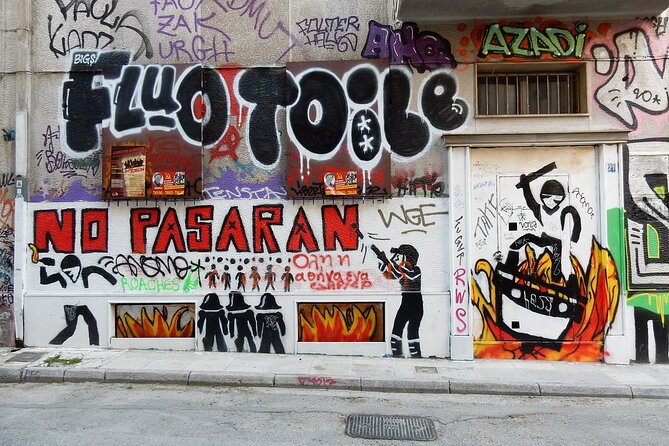
The premise is simple, and it lands fast. Greece is often described with a harsh before-and-after comparison, and this walk explains how that reputation formed, starting from the modern state’s beginnings and moving through today’s economic and social debates.
The tour uses a documentary style approach, meaning you are not just hearing facts. You are hearing the connections, the tensions, and the why, as the guide points at places that still shape daily life. That is the real value here: the politics is not floating in the abstract, it is anchored to Athens.
You also get an explicit goal to help you form your own opinions. The guide is not there to sell you a single conclusion. Instead, the narration sets the timeline, shows the conflicts, and invites questions so you can test what you think you already know.
More Walking Tours in Athens
- Acropolis and Parthenon Guided Walking Tour
★ 5.0 · 4,755 reviews - Greek Food Walking Tour in Athens
★ 5.0 · 4,740 reviews - Athens: Guided Greek Food Walking Tour with Tastings
★ 4.9 · 2,859 reviews
The route from Planetwonk to the state, memorials, and student history
This is a 2.5-hour walking loop through central Athens, with stops that track Greece’s social and political evolution. Even if you do not memorize every date, you will start to recognize how the country’s story is physically laid out in the city.
Starting point and Maximos Mansion
You begin at the Planetwonk meeting point for the walk. From there you head toward Maximos Mansion, a major seat of government, which sets the tone right away: the story is going to be about institutions and how people experience them.
This is a good start if you like context. It tells you the guide is not treating politics like a history chapter, but like something that still affects choices made in real offices.
Presidential Palace and the National Garden buffer
Next up are the Presidential Palace area and then the National Garden. Those places work well in a political story because they sit between authority and public space, and the guide uses that contrast to talk about how power is presented, protected, and interpreted.
The National Garden stop is also useful because it gives you a mental breather. Walking through another stretch of city streets right after serious government discussion can make the next part feel more focused rather than rushed.
A different way to spend Athens time:
- Athens: Acropolis & up to 5 Archaeological Sites Combo Pass
★ 4.2 · 13,904 reviews - Athens: Acropolis Ticket with Optional Audio or Live Guide
★ 4.2 · 11,055 reviews - Athens: Acropolis, Parthenon & Acropolis Museum Guided Tour
★ 4.8 · 9,316 reviews - The Acropolis, Parthenon & Acropolis Museum Guided Tour
★ 4.7 · 8,493 reviews
Hellenic Parliament and the National Historical Museum
You then reach the Hellenic Parliament. This is where the walk turns from describing power to describing arguments about power, party politics, and how the state tries to respond to crises.
From there you move toward the National Historical Museum area. Even if you are not spending hours inside, the museum stop gives the guide a chance to talk about how Greece tells its own story, and why national narratives matter when society is under pressure.
Two quieter detours that sharpen the main theme
Along the way, there are a couple of lesser-known stops the guide uses to keep the story from becoming too institutional. These parts are where the narration tends to slow down and connect political decisions to social life, including how cultural identity and public debate shift over time.
I like these detours because they prevent the tour from feeling like a checklist of monuments. You get more “how it feels” and less “how it looks.”
Korai 4 Memorial Site 1941 to 1944
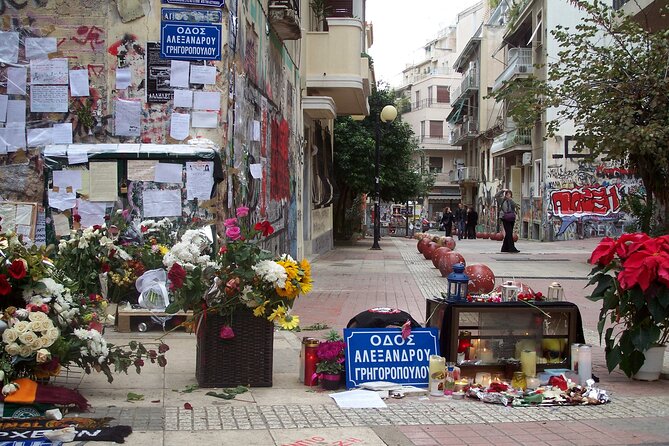
A key stop is the Korai 4 Memorial Site 1941 to 1944. The name alone tells you this is not just about modern parties and economic policy. It anchors the walk in the occupation and resistance era, and it gives context for why trauma and memory still shape political culture.
If you prefer lighter content, this is the point where you should be ready to switch gears. The conversation here is serious, and it is designed to explain what people lived through, not just to mark a spot on a map.
Panepistimiou and the Polytechnic area
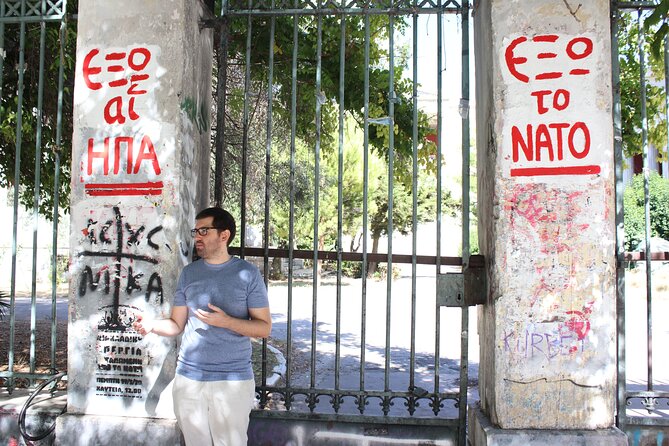
You continue along Panepistimiou, a major avenue that helps frame politics as something that moves through civic space. Then the route reaches the National Metsovio Polytechnic, a site tied to student activism and the kind of public shock that can change a country’s direction.
This is where the guide’s range matters. One review highlights how themes like the student massacre appear in the explanation, and the guide links it to later battles over politics, economics, and social trust. Even if you know Greece from vacation photos, you start seeing how protests, repression, and reform can chain together across decades.
Ending near 28is Oktovriou 42
The walk finishes at 28is Oktovriou 42, Athina 106 82, Greece. This ending location is in central Athens, so you are not stranded miles from the places you want to go next.
What Isaac explains, and why it feels different from a typical history walk
What makes this tour stand out is the way the guide handles complexity. Isaac is described as funny and accessible, and he uses that style to keep the narrative from getting lost in jargon.
You get an interactive storytelling format, not just a lecture. The guide is open to questions, and he also brings reference points from other countries, which helps when you are trying to compare what you know with what Greece is doing.
The themes are wide, but they are not random. The walk connects religion, language, Europe, and the economy to how political parties and social groups formed, competed, and changed. It also brings in major turning points like independence, WWII, post-war politics, neoliberalism, financial crises, immigration, and gentrification.
One of the strongest takeaways is that the guide links current socio-political events in Greece to historical events. That helps you stop treating today’s headlines like a separate story. You begin to see the patterns, including why certain debates flare up again after each crisis.
Stop-by-stop: what to look for and what each place is really teaching
This is the kind of tour where you get more out of it if you pay attention to what the guide asks you to notice. Each stop has a role, and the role changes as you move from institutions to memory and civic spaces.
Maximos Mansion, a lesson in executive power
At Maximos Mansion, the narration gives you a way to understand how decisions concentrate at the top. You also get hints about the social consequences of policy, not just how the machinery works.
If you are the type who wants to know who actually holds authority, this is a strong early anchor.
Presidential Palace and the symbolism of authority
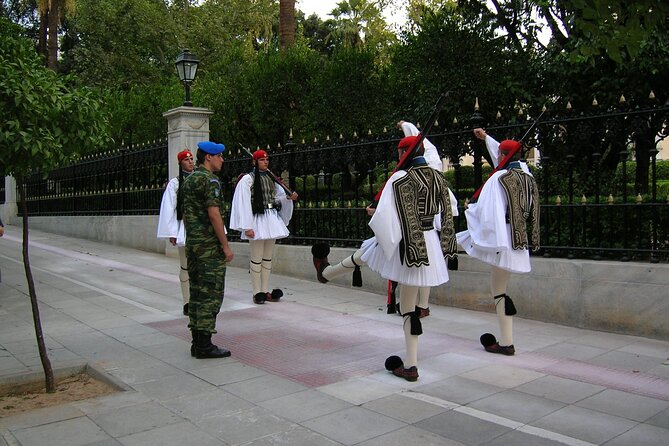
At the Presidential Palace stop, the guide uses symbolism. It is not only about what the building represents, but how the public reads authority through places like this.
This part is useful if you have ever wondered why politics is so emotional in some countries. Here, buildings are part of the messaging system.
National Garden, public space between state and society
The National Garden stop plays a balancing role. It helps the story shift from formal power to everyday life, and it makes the political discussion feel less trapped inside government walls.
It is also a good moment to mentally reset. When you move right after, the next institutional stop lands with more clarity.
Hellenic Parliament, the arguments of democracy under pressure
At the Hellenic Parliament, you can expect the guide to connect Greek politics to the broader idea of democratic negotiation under stress. This is where party politics and competing visions become easier to picture.
A note for your expectations: this is not a sightseeing stop. The point is to explain tension, not to photograph the facade.
National Historical Museum area, how narratives get built
The museum stop supports a different kind of learning. It is about how societies preserve memory and explain change, and why those narratives can become political tools.
If you like museum-style context but do not want a long indoor break, this is a good compromise.
Korai 4 Memorial, why memory matters in politics
At Korai 4 Memorial Site 1941 to 1944, the focus shifts to what happens when violence and occupation leave lasting political scars. This is where the walk can feel less comfortable, but it also becomes more meaningful.
If you are sensitive to WWII-era topics, consider that the guide will likely give enough historical framing to make the memorial’s dates matter.
Panepistimiou and the Polytechnic, civic space and youth politics
Along Panepistimiou, you move through the kind of city fabric where public debate becomes visible. Then the National Metsovio Polytechnic stop ties that civic energy to youth activism and shock events that change the political mood.
This is also where the guide’s humor can be valuable. Serious topics can still be explained without sounding grim, and that tone helps you stay engaged for the full loop.
Price and timing, and whether $47 feels like a good deal
The price is listed as $47 per person, and the duration is 2.5 hours. For Athens, that is a practical length: long enough to build connections between stops, short enough to still keep your afternoon open for museums, food, and walks.
The value comes from the format. You are not just seeing sites, you are getting a narrated political framework plus an included slideshow with photos and extra info. That means you can turn what you learn into something you remember, not just something you heard while walking past buildings.
This tour is especially good as an early Athens experience in your trip. It gives you context before you get swallowed by museum labels and casual talk about the economy. After this, you start recognizing the human and social side of headlines.
Who this walk suits best
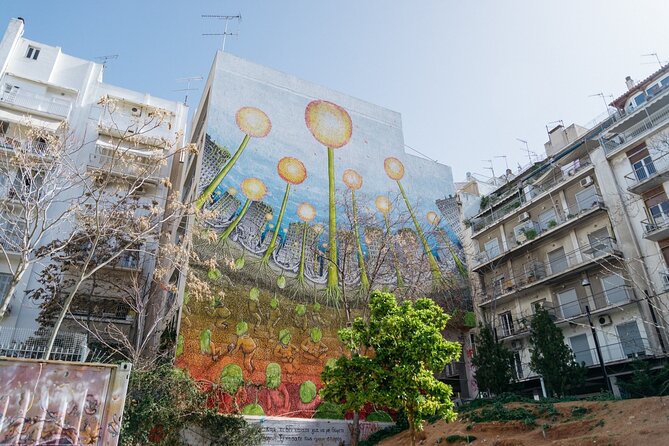
This is a strong fit if you fall into any of these groups:
- You want modern Greece explained through power, society, and history, not only archaeology.
- You like guides who answer questions and keep complex topics clear.
- You want Athens to feel like a living textbook, not just a postcard city.
It is less ideal if your travel style is mostly about light sightseeing with minimal discussion. This tour makes politics the main event, and it will spend time on hard themes like WWII memory and social conflict.
Practical comfort notes for a 2.5-hour political walk

Because it is a walking experience that lasts 2.5 hours, you should plan for time on your feet and a steady outdoor pace. The good news is that it is wheelchair accessible, so there is a level of planning built into the route.
Language options are listed as Spanish and English, so you can pick what keeps you comfortable while the guide is moving quickly through ideas.
Taking the story with you after the walk
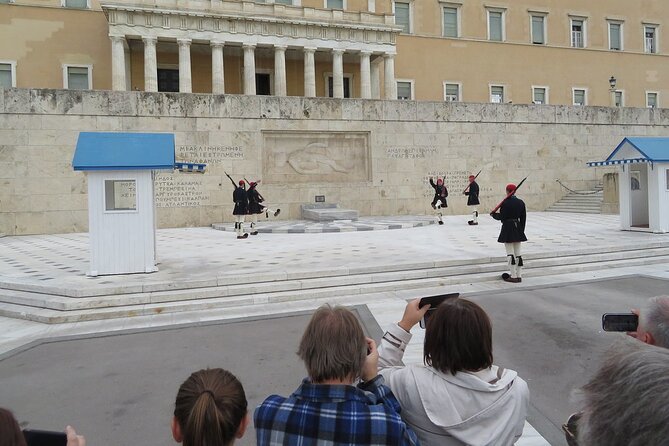
The experience includes a slideshow with photos and extra info on the issues discussed. I like that feature because politics can blur together when you are walking from site to site.
If you want to make this tour pay off, look at the slideshow soon after you finish. It acts like a fast mental filing system, turning names, themes, and turning points into something you can recall later when you talk with Greeks or read the news.
Should you book this Athens social and political walk?
Book it if you want a short, high-impact introduction to modern Greece through the lens of social change and political power. This is the kind of tour that helps you connect the dots from independence through WWII, post-war battles, financial crises, and the social consequences you see today.
Skip it if you prefer politics to stay in the background during your vacation. Also skip it if you dislike serious historical framing, because the route includes memory and conflict themes designed to be taken seriously.
If you do book it, go in with one simple mindset: ask questions. This tour works best when you treat the guide like an expert you can challenge, rather than a voice you quietly listen to while admiring Athens scenery.
FAQ
How long is the Athens Social and Political Walk?
The tour lasts 2.5 hours.
How much does it cost?
The price is $47 per person.
What languages are available?
The live tour guide offers Spanish and English.
Who leads the walk?
A live tour guide leads the experience, and the concept is framed around having a political scientist guide the storytelling.
Is the tour wheelchair accessible?
Yes, the tour is wheelchair accessible.
What is included in the tour?
It includes a slideshow with photos and extra info on the issues discussed during the experience.
Is there free cancellation?
Yes, you can cancel up to 24 hours in advance for a full refund.
Can I reserve now and pay later?
Yes, you can reserve your spot and pay nothing today.
Where does the tour finish?
The tour finishes at 28is Oktovriou 42, Athina 106 82, Greece.
Just reviewed around Athens
- Athens Highlights: Myths & Philosophers Walking Tour★ 5.0 · 125 reviews
- Sounio Sea Kayak Tour to the Temple of Poseidon full program★ 5.0 · 126 reviews
- First Access Acropolis Tour, Beat the Crowds, Enjoy the Parthenon★ 5.0 · 128 reviews
- Athens Half-Day Tour: Acropolis, Parthenon & All Major Landmarks★ 5.0 · 127 reviews
- Ancient Corinth, Mycenae, Epidaurus, Nafplio full day private tour from Athens★ 5.0 · 130 reviews
- Athens Highlights by E-Bike: Small-Group Historic Tour★ 5.0 · 131 reviews
- Athens Cooking Class and Lunch in our beautiful garden in Greece★ 5.0 · 130 reviews
- Athens Shore Excursion: Acropolis Walking Tour★ 4.5 · 131 reviews
Walking Tours, compared.


Acropolis monuments & Parthenon Walking Tour with Optional Acropolis Museum
Read our review →
Knossos: Knossos Palace Skip-the-Line Guided Walking Tour
Read our review →
Acropolis, Parthenon & Athens Old City Heritage Walking Tour
Read our review →
Athens Authentic Greek Food Walking Tour (Small Group)
Read our review →Browse the lists this tour appears in