

Reviewed · MUSEUMS
Athens: National Archaeological Museum Private Guided Tour
This tour is interesting because you get a focused plan inside the biggest archaeology museum in Greece, not just a self-guided shuffle. I love the way the licensed guide connects ancient Greek art to the bigger story of the civilization, and I especially love the clear spotlight on the Antikythera mechanism, the world’s oldest analogue computer. You’ll be in good hands with guides such as Christos Theodoropoulos, and the pacing aims to make sense of a lot of rooms fast.
The main consideration is time. With only 2 hours, you will see many highlights but not everything, and you still need to budget for the museum entry ticket (10 EUR) since it is not included.
Key Takeaways Before You Go
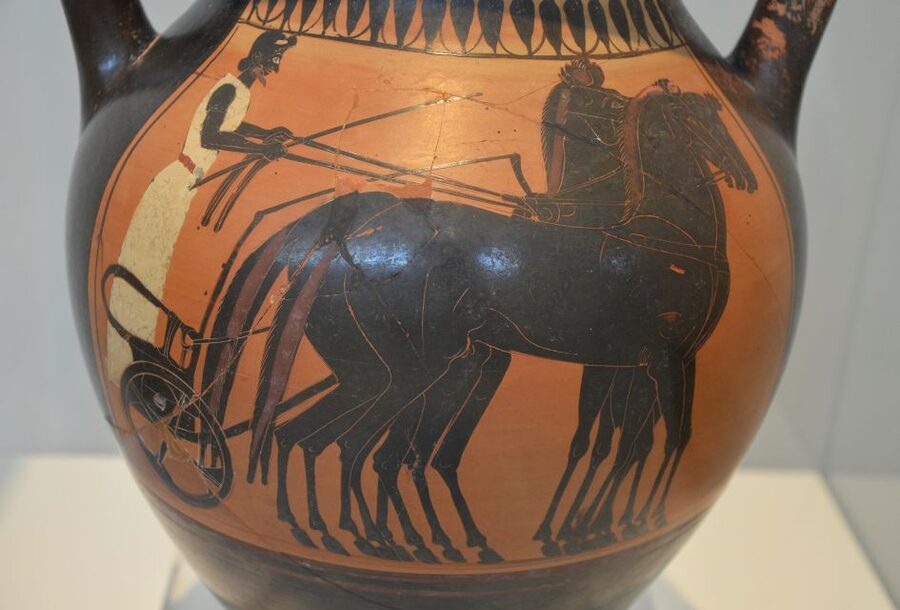
- Antikythera mechanism focus: A science-smart highlight that breaks the usual museum rhythm
- Licensed archaeologist guide: You get interpretation, not just labels on glass
- Private group, up to 6: Easy to ask questions and move at your pace within the tour window
- A “whole Greece” museum in one building: Prehistory, sculpture, vases, bronze, and even Egypt and Near East finds
- Two-hour format that keeps you oriented: Built for people who feel overwhelmed by big museums
Why The National Archaeological Museum Feels Like the Main Character in Athens
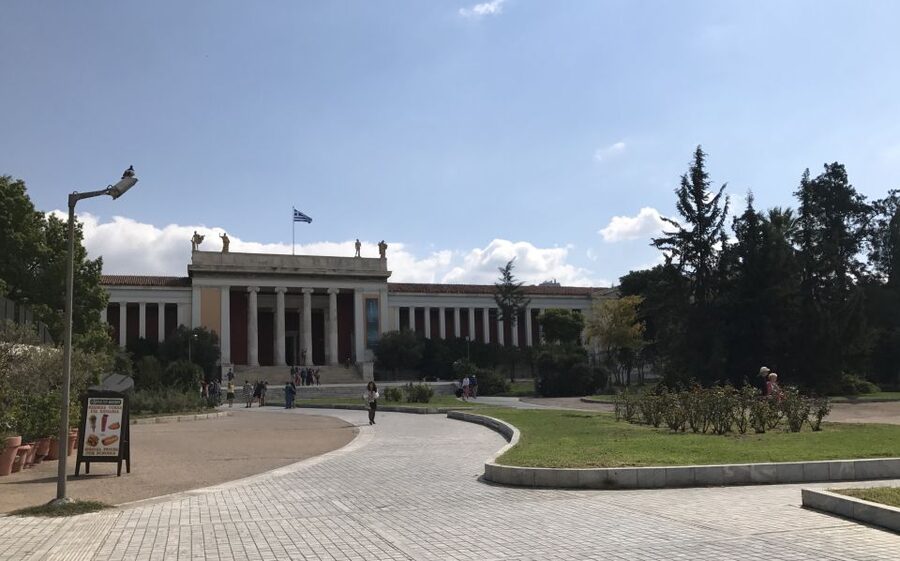
Athens can drown you in ancient stuff. Temples and streets are amazing, but they can also trick you into thinking archaeology is only about big stones and dramatic ruins. The National Archaeological Museum is different. It is where the story gets slower, clearer, and more human, because you see objects that sat in workshops, homes, sanctuaries, and graves.
What makes this private tour work is that it compresses a huge museum into a sensible route. You get the museum’s big picture, then you hit the stops that actually help your brain lock onto what you are seeing. In other words, you walk out with names, timelines, and a sense of why Greek art changed over centuries.
I also like the fact that you’re in a neoclassical building that feels grand before you even reach the galleries. The structure was designed by L. Lange and later remodeled by Ernst Ziller. That matters because it sets the tone: this is not a small local museum. It is a national collection meant to hold the finds, and it shows.
More Museums in Athens
- Athens: Acropolis, Parthenon & Acropolis Museum Guided Tour
★ 4.8 · 9,316 reviews - The Acropolis, Parthenon & Acropolis Museum Guided Tour
★ 4.7 · 8,493 reviews - Athens: Mythology of Delphi, Museum and Arachova Guided Tour
★ 4.7 · 5,102 reviews
Meet at the Main Entrance Steps, Then Get Oriented Fast
You meet at the steps in front of the main entrance of the Athens National Archaeological Museum, address 44 Patission Street, 10682. Starting there is helpful because the museum is big, and a clear meetup point saves time and stress, especially if you are arriving from a busy Athens route.
Once you’re inside, the guide’s real value shows up: orientation. In a museum with five major permanent collections, you can easily end up bouncing between rooms without connecting them. The guided format helps you understand how the displays map onto broad periods, from early prehistory through late antiquity.
This is also a tour built for real conversation. It is private, and it runs for 2 hours, so you can ask short questions without the whole group losing momentum. The guide offers live interpretation in Turkish, English, German, and Greek, so language should not be a deal-breaker.
If you have ever walked into a museum and immediately felt your thoughts go blank, this kind of structure can rescue you. You are not just looking at art. You are learning how to read it.
The Antikythera Mechanism Stop, Where Ancient Greece Meets Practical Science

If there is one highlight that turns heads, it is the Antikythera mechanism, often described as the world’s oldest analogue computer. Even if you know nothing about it, you will understand why it matters the moment you see it. This is not decorative. It is a device built for calculation, tracking, and measurement.
What I like about having this on a guided route is context. A standalone exhibit can feel like a curiosity. With a guide, it becomes a bridge to the skills behind ancient Greek engineering and scientific thinking. You start asking better questions: Who built this kind of tool? What problems were people trying to solve? Why would such knowledge matter in daily life and astronomy?
It is also a smart emotional rhythm inside a museum tour. After a few rooms of sculpture and pottery, the mechanism offers a reset. You get your brain out of “aesthetic mode” and into “how does this work” mode. That makes the rest of the visit easier to remember.
How the Two-Hour Private Format Helps You See the Right Rooms
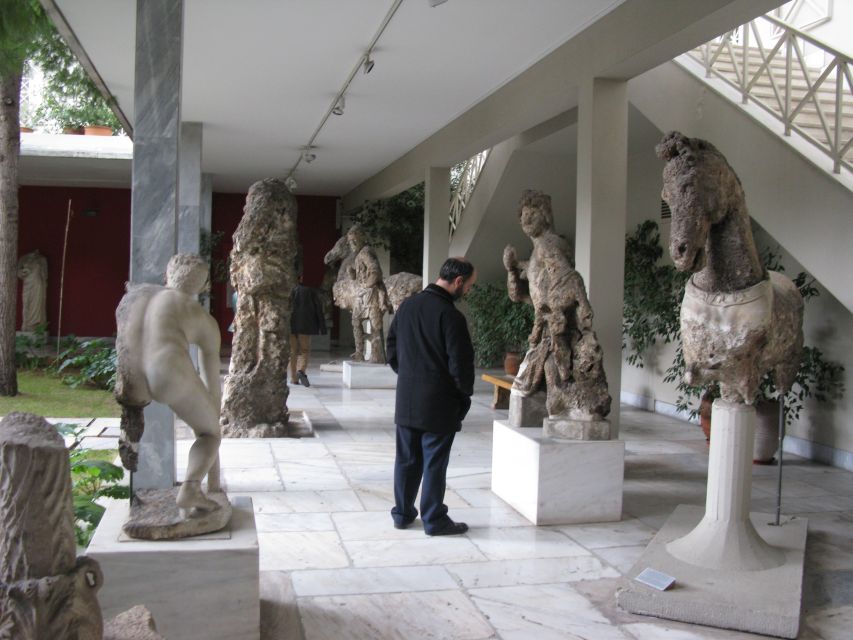
Two hours sounds short until you face a museum with more than 11,000 exhibits and around 8,000 square meters of gallery space. Without a plan, you either rush and miss details, or you slow down and never finish. This private tour aims for the middle ground.
Here is the practical effect: the guide can prioritize, so you see the most important artifacts and get meaning from them. You are not expected to read every placard. You get a guided narrative that gives you anchors, then you can enjoy the objects themselves.
The pace can be quick, and that is not a flaw. Big museums are like big cities. You either pick routes, or you wander until your energy runs out. After the guided portion, you can keep browsing on your own if you want more time in specific rooms.
Private also means flexibility. With a small group, the guide can adjust the walk depending on interests and questions. If you have a niche focus, this is one of those experiences where you should use that power. For example, if you care about ancient jewelry, tell the guide during the tour. You might be able to spend extra time in areas not always shown as standard, if timing allows.
A different way to spend Athens time:
- Athens: Acropolis & up to 5 Archaeological Sites Combo Pass
★ 4.2 · 13,904 reviews - Athens: Acropolis Ticket with Optional Audio or Live Guide
★ 4.2 · 11,055 reviews - Athens: Cape Sounion & Poseidon Temple Sunset Half-Day Trip
★ 4.8 · 8,241 reviews - Acropolis: Premium Acropolis and Parthenon Guided Tour
★ 4.8 · 5,208 reviews
Prehistory Rooms: From Early Aegean Cultures to a Greek Identity
The museum’s collections give you a panorama of Greek civilization from prehistory to late antiquity. That is a big promise, but it can be overwhelming if you do not know where to start.
A guided route helps you start at the beginning without getting lost in dates. The Collection of Prehistoric Antiquities covers works developed in the Aegean from the 6th millennium B.C. to 1050 B.C. That includes Neolithic, Cycladic, and Mycenaean cultures, plus finds from the prehistoric settlement at Thera.
Why this matters for you: it changes the way you look at later Greece. Modern people often think of Greek culture as a sudden “classical” arrival. Prehistory shows the gradual build-up of skills, styles, and ideas. Seeing these objects early helps you recognize continuity, not just sudden breakthroughs.
Also, seeing prehistory inside a national museum gives it weight. You are not treating these as small “prologue” exhibits. You’re seeing them as foundations, which makes the later sculpture and pottery feel earned rather than random.
Sculpture and Pottery: The Pieces That Teach You How Greek Art Evolved
Greek sculpture and pottery are not just pretty. They are like visual essays that show changes in taste, technique, belief, and power. This tour gives you a path through that evolution.
In the Sculptures Collection, you see the development of ancient Greek sculpture from the 7th to the 5th centuries B.C. The museum holds unique masterpieces, and a guide helps you notice what to look for: style shifts, the feeling of motion or calm, and what kinds of figures are being emphasized.
Then there is the Vase and Minor Objects Collection, which covers ancient Greek pottery from the 11th century B.C. to the Roman period. It also includes the Stathatos Collection, described as a corpus of minor objects from all periods. This is where a private guide really helps, because “minor objects” can sound optional until someone shows you why they matter.
Why it is worth paying attention to: pottery connects directly to everyday life. The shapes and decorations are social signals, storytelling tools, and sometimes status markers. With a guide, you can move from “pretty designs” to “this design had a job.”
If you are the type who likes to take photos, bring your phone, but also give yourself a few seconds of slow looking at key objects before you photograph. I find that the guide’s commentary locks in what you should capture.
The Bronze Collection and the Room That Makes You Rethink Size and Detail
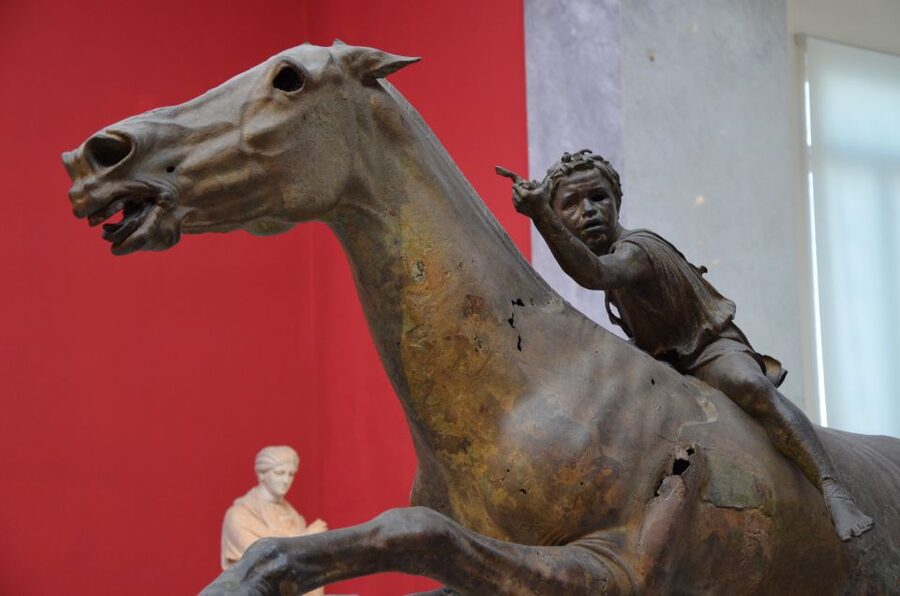
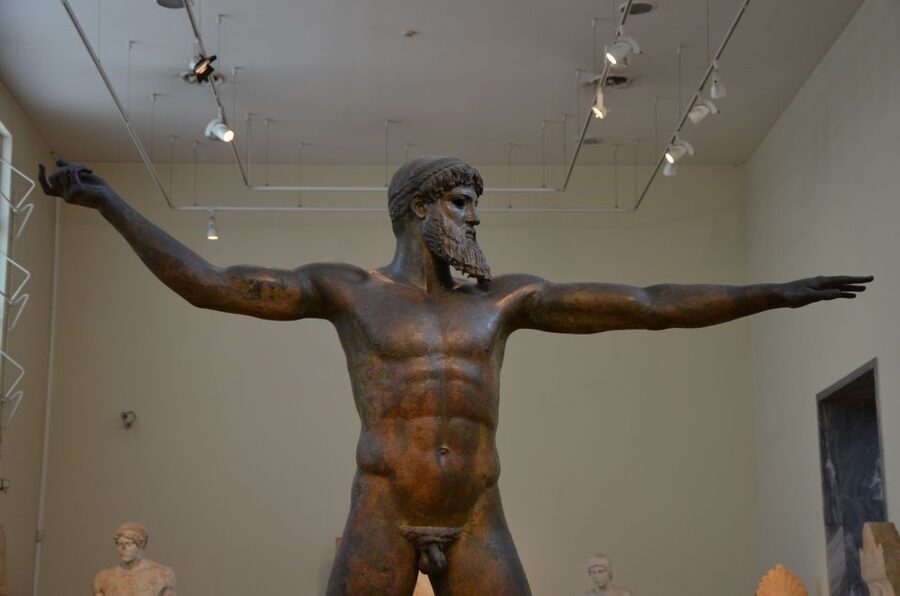
Bronze might sound heavy and intimidating, but it often brings surprises. The Bronze Collection includes fundamental statues, figurines, and minor objects.
What I like about this in a guided visit is that it balances the tour. Sculpture and vases can dominate your attention, but bronze pieces often feel more immediate, more “alive” in your mind. They can also challenge your assumptions about what ancient art looked like and how objects were used.
Since the guide is choosing highlights, you will not get stuck staring at the first display for 30 minutes while the rest of the museum disappears. You get a guided selection, then you can decide if you want to return for extra time after the tour ends.
Egypt and the Near East: Why It Changes Your View of Greece
Greece did not develop in a vacuum. That is the message behind the museum’s Egyptian and Near Eastern Antiquities Collection, the only one of its kind in Greece. The exhibits date from the pre-dynastic period (5000 B.C.) through the Roman conquest.
This section is not there for trivia. It is useful because it reminds you that trade, influence, and contact were real. You get a broader Mediterranean frame, and your Greek story stops being too neat.
If you are a comparison person, this part can be a highlight. It gives you a chance to notice different materials, motifs, and functions, and to see how the Greek world fits into a bigger network of cultures.
Price and Value for a Private Tour Up to Six People
The price is $400 per group up to 6 for 2 hours, and the museum entry ticket is 10 EUR not included. Hotel transfer is not included, so you will handle getting to the museum on your own.
How I judge value here is simple: the museum is huge, and your time is short. A licensed archaeologist guide is not just a nice add-on. In a big museum, interpretation is what you pay for, and it saves you from wandering without direction. If you split the group cost, the math can look very fair compared with two separate individual tours.
This is also a good deal if you are traveling with family or a mixed group of ages. In the stories I’ve heard about this tour format, the guide does a structured crash course that works even when different people have different interests. You get enough explanation for teens and adults, and you can still keep it fun.
One more value point: it is private. You are not stuck waiting your turn to ask a question. That is a big deal when you are trying to connect the dots across centuries.
What to Bring, and How to Pace Yourself in a Big Museum
Because the museum is large, you should plan your energy. Wear comfortable shoes, and give yourself a moment to breathe when you enter the neoclassical building. Once you start, you’ll be moving between galleries and collecting information quickly.
Since the tour is 2 hours, think of it as a guided route plus an orientation session. After the tour, if you still feel curious, you can linger in the collections you liked most. That is usually when museum visits turn from educational to genuinely satisfying, because you are now looking with purpose.
If you have a theme you care about, tell the guide. A few guides have been known to adjust the focus, and you may be able to spend extra time in special rooms when possible. It is not guaranteed, but it is a smart thing to ask early, while the guide can still shape the route.
Who This Private Museum Tour Is Best For
You will like this tour if you want more than a photo walk. It is ideal for:
- People who feel intimidated by big museums and want a plan
- Anyone who wants the Antikythera mechanism explained in a way that connects to the broader Greek world
- Families with teens and adults who want structure without feeling lectured
- Small groups who can share the cost and keep the experience personal
If you are the type who loves to read every label and go room by room at your own speed, you might still enjoy a guided orientation and then continue independently. The guide’s route gives you the backbone, and your free time can be the fun part.
Should You Book This Athens National Archaeological Museum Private Guided Tour?
Book it if you want the best use of a short time in Athens and you care about understanding what you’re seeing. For $400 per group up to 6, you are paying for interpretation by a licensed archaeologist, and the tour highlights include major anchors like the Antikythera mechanism plus the museum’s key permanent collections.
Skip or reconsider if you hate guided routes, want to spend your whole visit reading quietly without talking, or you know you only have enough energy for a quick browse. In that case, self-guided can work, but you will have to do the connecting yourself.
If your goal is to leave with a clearer story of ancient Greece, this private format is a strong choice. It turns a huge museum into something you can actually remember.
FAQ
How long is the guided tour?
The tour lasts 2 hours.
Is the museum entry ticket included?
No. The museum entry ticket costs 10 EUR and is not included.
What is the price and group size?
The price is $400 per group up to 6 people.
Where do we meet the guide?
Meet at the steps in front of the main entrance of the Athens National Archaeological Museum, 44 Patission Street, 10682.
What languages are available for the live guide?
The guide is available in Turkish, English, German, and Greek.
What is included in the tour cost?
The tour includes an experienced licensed archaeologist guide.
Can I cancel and can I reserve without paying right away?
Cancellation is free up to 24 hours in advance for a full refund. You can also reserve now and pay later.
Just reviewed around Athens
- Athens Highlights: Myths & Philosophers Walking Tour★ 5.0 · 125 reviews
- Sounio Sea Kayak Tour to the Temple of Poseidon full program★ 5.0 · 126 reviews
- First Access Acropolis Tour, Beat the Crowds, Enjoy the Parthenon★ 5.0 · 128 reviews
- Athens Half-Day Tour: Acropolis, Parthenon & All Major Landmarks★ 5.0 · 127 reviews
- Ancient Corinth, Mycenae, Epidaurus, Nafplio full day private tour from Athens★ 5.0 · 130 reviews
- Athens Highlights by E-Bike: Small-Group Historic Tour★ 5.0 · 131 reviews
- Athens Cooking Class and Lunch in our beautiful garden in Greece★ 5.0 · 130 reviews
- Athens Shore Excursion: Acropolis Walking Tour★ 4.5 · 131 reviews
Museums, compared.

Acropolis, Parthenon & Acropolis Museum Guided Tour
Read our review →
The Acropolis, Parthenon & Acropolis Museum Guided Tour
Read our review →
Mythology of Delphi, Museum and Arachova Guided Tour
Read our review →
Acropolis monuments & Parthenon Walking Tour with Optional Acropolis Museum
Read our review →
Athens All Included: Acropolis and Museum Guided Tour with Ticket
Read our review →
Combo: Acropolis & Acropolis Museum with Optional Tours
Read our review →
Acropolis Museum Ticket with optional Audio Guide
Read our review →
Small-Group Delphi, Museum & Arachova Day Trip
Read our review →Browse the lists this tour appears in