
Reviewed · COOKING CLASSES
Athens: Kerameikos Stone House Cooking Class
This is the kind of Athens food experience that feels like a real life detour, not a tourist stop. You cook with a local team inside a 1920s stone house in Kerameikos, then sit down to eat what you made in a garden setting. I like that the class pairs practical cooking steps with hands-on participation, and you finish with recipes you can use again.
Two standout things I love are the market run (often at the Tuesday farmers market right in front) and the fact that you learn six distinct dishes, from yemista to loukoumades. One possible drawback is that the menu can shift with seasonal ingredients, so the exact lineup you see may not match every day.
Key takeaways before you go
A stone house in Kerameikos makes the class feel like someone’s home, not a studio.
Shop for ingredients like a local with a short walk to the market (Tuesday sessions often start there).
Cook six dishes hands-on including recognizable favorites like tzatziki, plus less common options like ndakos.
Eat in the garden after cooking and settle in with the included wine.
Recipes come digitally so you can recreate the dishes at home without guessing.
Kerameikos stone house and garden meal, in plain terms
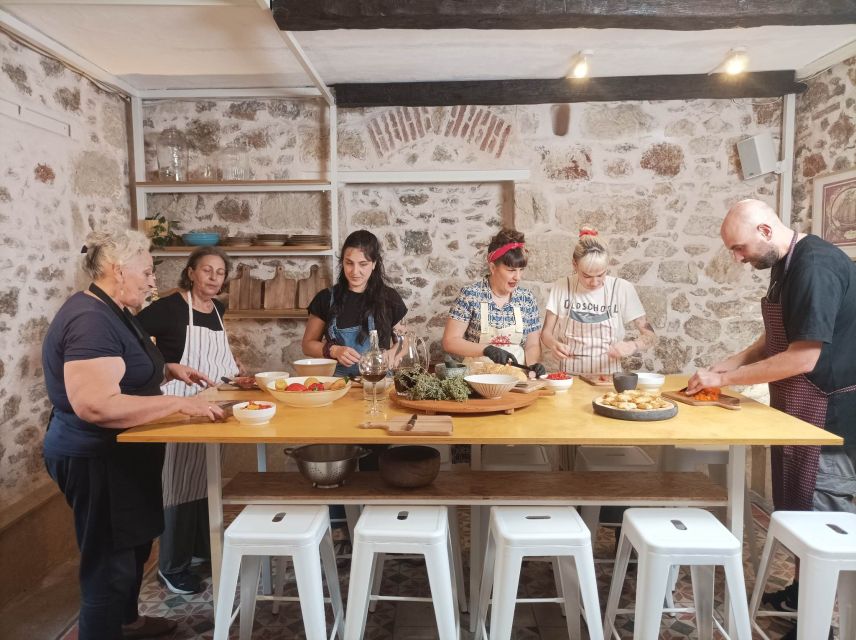
Kerameikos sits close enough to central Athens that you can base yourself there, yet it still feels more local than postcard Athens. This cooking class leans into that vibe. You meet at Mama’s Roots in the neighborhood and head to a restored 1920s stone house, with an old-world feel that keeps the experience calm and focused.
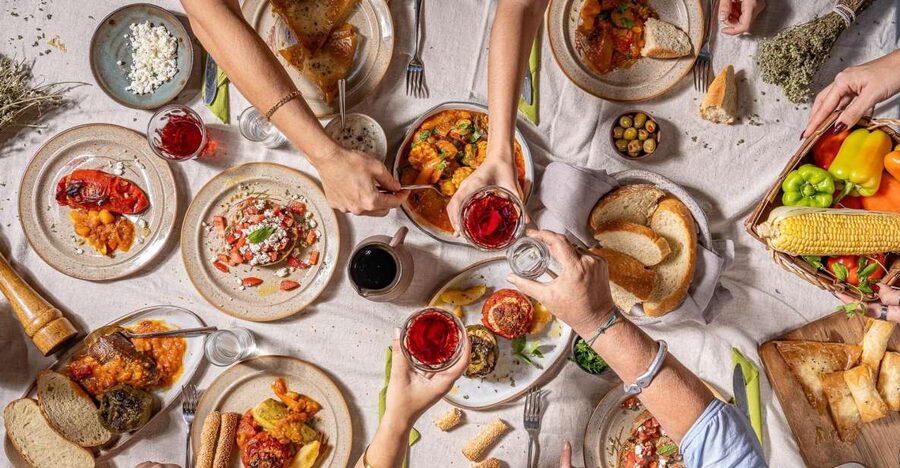
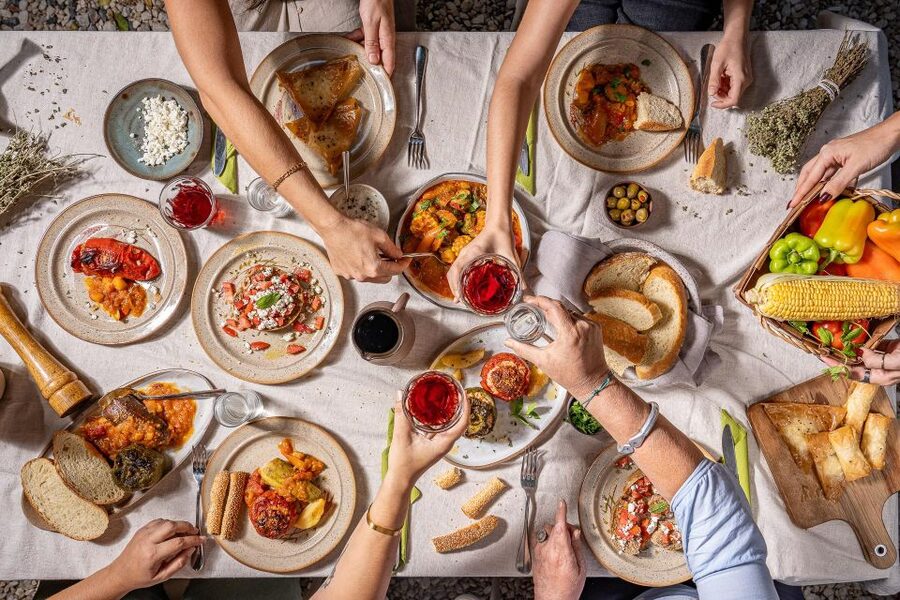
The flow matters. A cooking class works best when you are not watching from the sidelines. Here, the setup supports participation. You spend time preparing dishes, you see how ingredients are handled, and you get to taste as you go. Then you move into the garden for the shared meal, which is a big part of why this does not feel like just another activity you check off.
It’s also a great reminder that Athens food culture is more than tavernas and souvlaki. You get practical dishes that ordinary people actually cook at home, like spinach cheese rolls and tzatziki, plus comforting classics like Greek scrambled eggs (kagiana) that are easy to overlook when you only order restaurant menus.
More Cooking Classes in Athens
- Athens: Classic Cooking Class with Market Visit and Wine
★ 5.0 · 1,101 reviews - Athens: Food Market Visit and Cooking Class with Wine
★ 4.9 · 1,087 reviews - Greek Cooking Class in Athens Including Rooftop Dinner with Acropolis View
★ 5.0 · 826 reviews
Meeting at Mama’s Roots, then finding the rhythm
You’ll start at Mama’s Roots in Athens. From there, you transition into the house kitchen and cooking stations. The lesson runs about 3 to 3.5 hours, which is a sweet spot. It’s long enough to actually cook six dishes without feeling rushed, but short enough that you still have the rest of your day (or evening) free.
English instruction is included, and the format is small group. Based on what people describe, groups tend to be intimate, often around the single digits. That matters, because cooking is slower when you have too many people competing for counter space. In a smaller group, you get more direct guidance and you actually complete each step.
If you want a low-pressure social experience, this is also set up for it. People report chatting with the instructor and working together as a team while they cook. You’re not stuck listening to a lecture. You are doing the work, which makes it easier to meet fellow travelers too.
The market stop: a quick shopping lesson that pays off
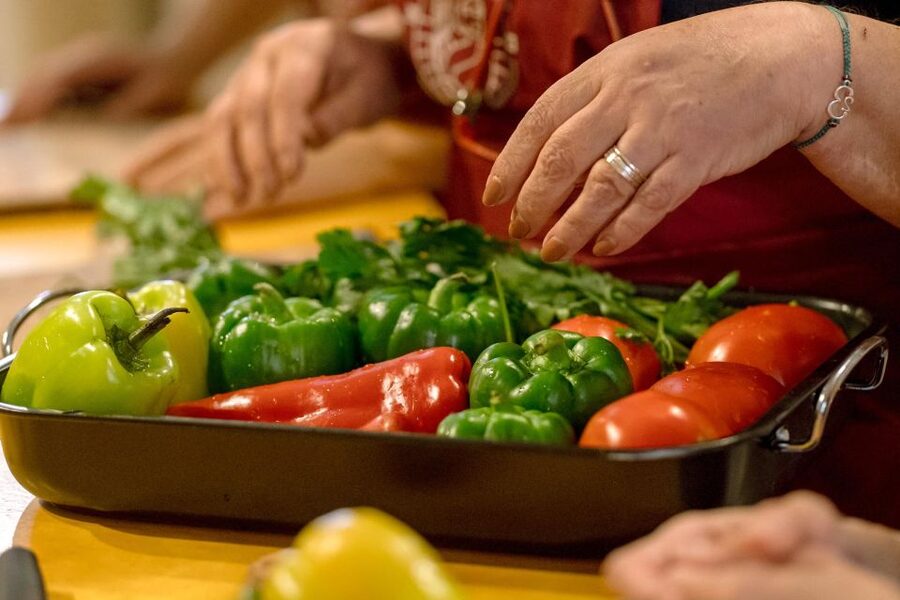
One of the most useful parts is the food shopping. Depending on the day, you’ll often walk through the area market experience for a short window. On Tuesdays, the farmers market takes place right in front of the place, and you usually spend about 15 minutes there picking up fresh ingredients.
Why this matters: Greek cooking is ingredient-driven. Olive oil quality, herbs, and the right vegetables make the difference between bland and memorable. This short market stop teaches you what to look for, and it helps you understand how locals shop. You’re not learning abstract cooking. You’re learning what you can realistically buy and then reproduce.
Also, the market approach helps your brain after the class. When you get home, you know what those ingredients are supposed to taste like. You know what to buy instead of settling for whatever is on the shelf.
Six dishes, each teaching a different Greek skill
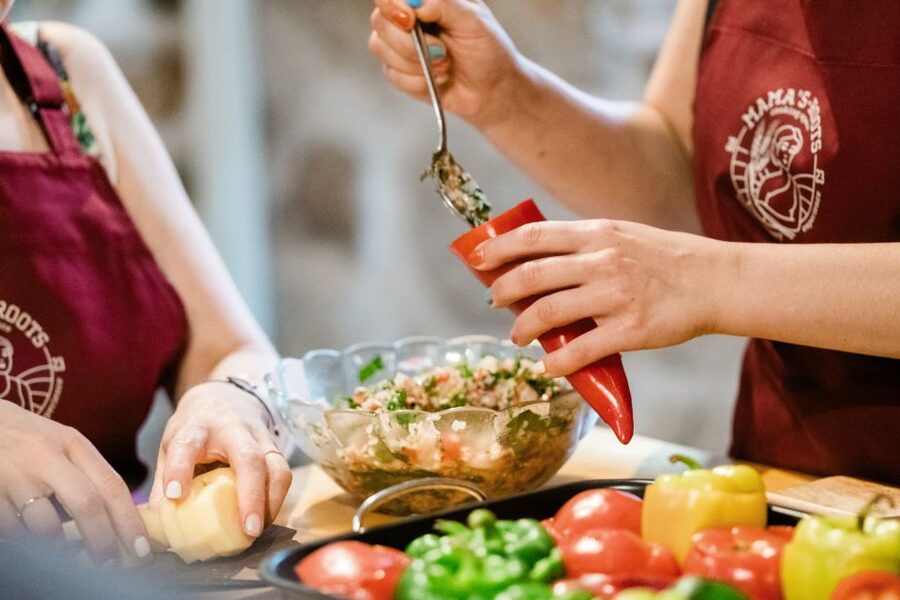
You cook six traditional Greek dishes and eat the meal together. The exact menu can change based on seasonal availability, but these are the dishes that are listed most often. Here’s what each one is really teaching you, and why it’s worth your time.
A different way to spend Athens time:
- Athens: Acropolis & up to 5 Archaeological Sites Combo Pass
★ 4.2 · 13,904 reviews - Athens: Acropolis Ticket with Optional Audio or Live Guide
★ 4.2 · 11,055 reviews - Athens: Acropolis, Parthenon & Acropolis Museum Guided Tour
★ 4.8 · 9,316 reviews - The Acropolis, Parthenon & Acropolis Museum Guided Tour
★ 4.7 · 8,493 reviews
Yemista: stuffed tomatoes and peppers with rice, herbs, and olive oil
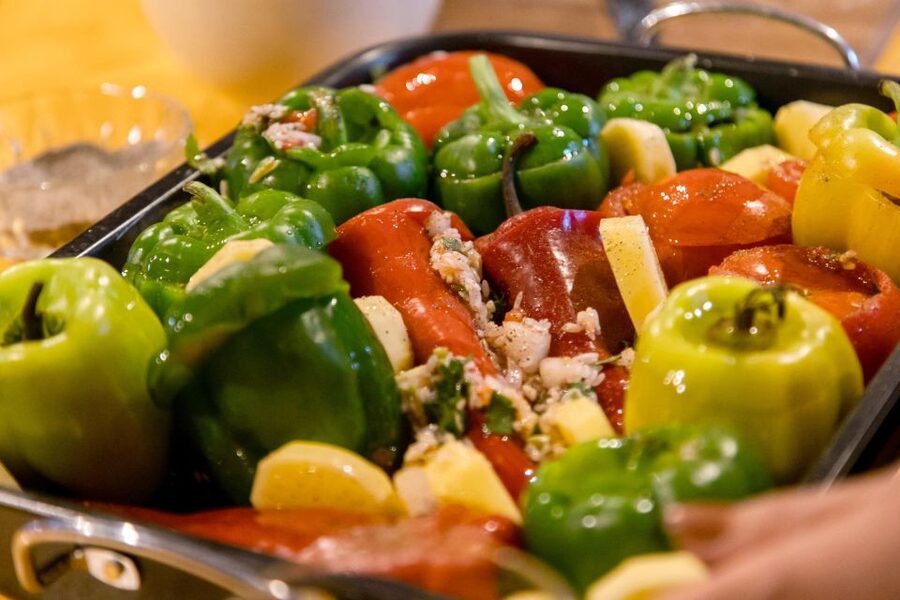
Yemista is classic Greek comfort food. You’ll learn how to make the stuffed vegetable component, typically with oven-baked tomatoes and peppers filled with rice, vegetables, herbs, and extra virgin olive oil.
This dish builds skill in two ways. First, it trains you to respect the balance between the filling and the vegetable shell. Second, it shows how olive oil and herbs carry flavor in a simple, not fancy, way. Once you make it, you understand why yemista shows up on so many Greek tables.
Spinach cheese rolls: mini phyllo pies with feta and herbs
These are crunchy mini pies made with feta cheese, fresh spinach, herbs, and phyllo dough, baked in the oven. It’s a hands-on dish because phyllo work rewards patience and good technique.
Even if you’re not a “pastry person,” this is a smart choice for a cooking class menu. It teaches you structure, layering, and baking without needing complicated equipment. People mention that the spinach pie is often a favorite, and that makes sense. It’s flavorful, shareable, and it tastes like something you would actually bring to a potluck.
Cretan Ntakos salad: barley rusks with olive oil and mizithra
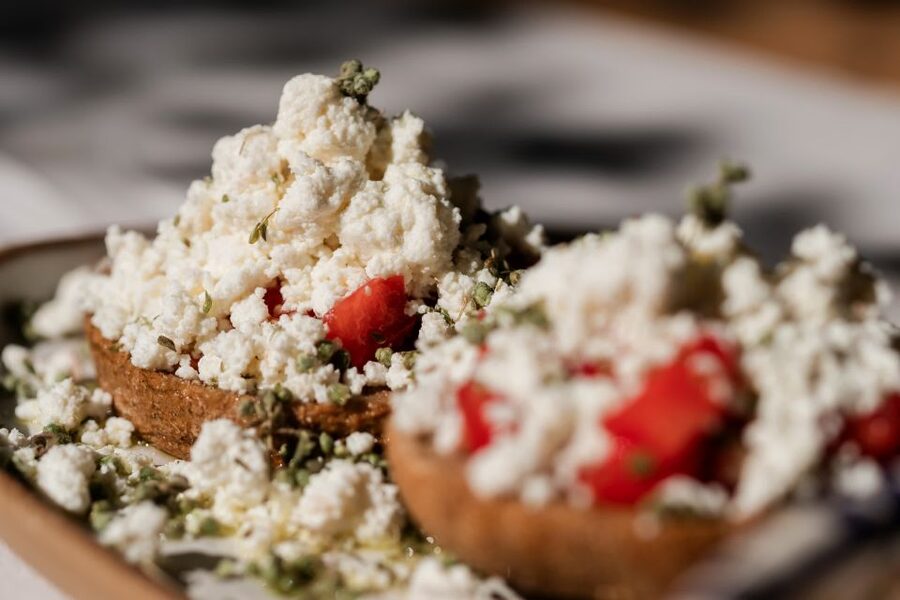
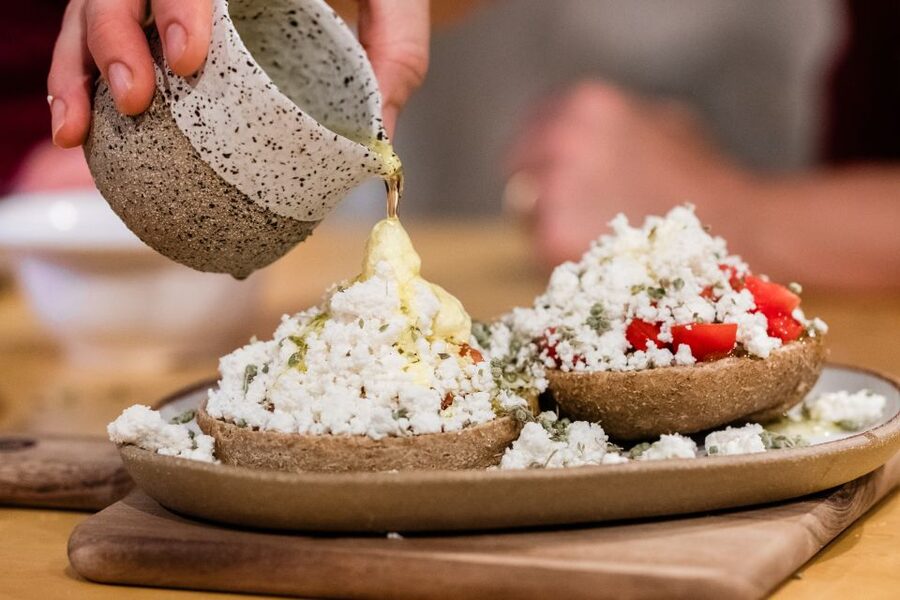
This one stands out because it’s not the standard salad formula. Cretan ndakos uses crunchy barley rusks soaked with olive oil, then topped with diced tomato, capers, oregano, and sour mizithra cheese.
What you learn here is timing and texture. The rusks soften at the right moment only if you manage the soaking. It’s also a great example of how Greek cooking blends pantry staples with fresh flavor. After this, you’ll see why recipes like this travel well and can be built with what you can find.
Kagiana: Greek scrambled eggs with grated tomato, peppers, and feta
Kagiana is scrambled eggs with grated tomatoes, peppers, and feta cheese. It’s comforting, but it also teaches you how Greek kitchens treat vegetables and eggs together.
This dish helps you cook with a flavor base. You’re not just salting eggs and hoping for the best. You’re building depth with vegetables and herbs. It’s also one of those meals that feels simple after you learn the method.
Tzatziki sauce: garlic, yogurt, and cucumber done the Greek way
Tzatziki is listed plainly, and that’s the point. You’ll learn a classic mix of garlic, yogurt, cucumber, and it becomes the cool, creamy anchor for many Greek meals.
In a cooking class, tzatziki is more than eating sauce. It’s practice with grating, mixing, and getting the texture right. If you remember only one thing, remember the balance between garlic punch and creamy yogurt, because that’s what makes restaurant tzatziki so addictive.
Loukoumades: small honey and cinnamon doughnuts
Finish with loukoumades, small round doughnuts served with honey and cinnamon. People often love this because it’s a Greek dessert you can actually replicate later, and it rewards your attention to dough texture and frying.
In classes like this, dessert can be the final “wow” moment. Even if you do not become a pastry chef overnight, you walk away with an easy-to-follow framework for dough and topping.
Who teaches this, and how the class feels
The main instruction is in English, and you might meet different instructors depending on the day. Names that come up include Kostas, Elena, Vasilis (Billy), and Bill, with assistants mentioned too. They’re described as patient and encouraging, and they do more than direct you through steps. Many incorporate ingredient background and stories as you cook.
That storytelling matters because it makes technique stick. When you know why something is used, you stop guessing at home. It’s also why people come away feeling like they learned real Greece from the kitchen side, not just a list of recipes.
The pace is another big theme. People describe the class as well organized and not chaotic. In practical terms, that means you do not spend the whole time waiting for the next instruction. You’re always doing something, chopping, mixing, rolling, baking, or assembling.
Wine and the meal you actually get to eat
Wine from local producers is included to accompany the meal. It’s part of the experience, not just an extra perk. You cook first, then you sit down in the garden area and eat together.
This is one of the easiest ways to judge value. If the class only taught techniques but you didn’t eat, it would feel like work. Here, you eat what you make, and people describe leaving comfortably full. Some even get help packing up leftovers so you can continue eating later, which tells you the portions are substantial.
The garden setting also changes the mood. Cooking classes can be sweaty and cramped. Here, the outdoor space helps you slow down. You can taste, talk, and compare notes with your small group.
Value check: does the $106 price make sense?
At about $106 per person for roughly 3 to 3.5 hours, this is not a budget class. But it is also not just a meal ticket.
Here’s the value math that matters:
- You cook six dishes, not one appetizer.
- You get wine included with the meal.
- You receive digital recipes, so you can repeat the dishes later.
- You get hands-on instruction from an English-speaking team in a small group.
If you simply ate out, you might spend that amount on a couple of dishes and drinks, and you would still not know how to recreate them. The big payoff is skill transfer. You come home with a tzatziki method, a stuffed vegetable approach, a pie-building framework, and a salad assembly that uses barley rusks in a specific way.
Also, many people treat this as a highlight because it feels like home cooking with a host who cares. That kind of host time is hard to buy in a restaurant.
Practical tips so you enjoy it even if cooking is not your thing
A few common-sense pointers help you get the most out of the session:
- Come hungry. You’ll be cooking and then eating the meal you make, so try not to schedule this right after a heavy lunch.
- Expect active participation. This is hands-on, so you’ll likely handle components like mixing, rolling, assembling, and tasting.
- Be ready for a changing menu. Seasonal availability can shift details, so focus on the skills and techniques, not just the exact dish list.
- Scan the recipes on your phone. The class provides recipes digitally, usually accessible by QR code, so keep your phone charged.
One more practical point: the neighborhood is Kerameikos. If you want to pair this with sightseeing, the class timing can still work, since you end with enough energy to walk afterward.
Who should book this cooking class in Athens?
This is ideal if you want:
- a hands-on Athens food experience that goes beyond restaurant ordering
- a small group activity that feels social but not overcrowded
- practical recipes you can recreate at home, including pies, sauces, and a dessert
It’s also a great choice for couples and friends. The small group format helps you connect without feeling like you’re on a conveyor belt. Families can also enjoy it, since many tasks are approachable and the kitchen team helps people participate.
If you hate kitchens, have mobility limits, or want a purely observational tour, you might find a hands-on class less comfortable. But if you’re open to getting flour on your hands, this experience fits beautifully.
Should you book Athens Kerameikos Stone House Cooking Class?
I think you should book if you want your Athens trip to include real food skills, not just tasting. For the price, the combination of six dishes, included wine, and digital recipes is strong. Add the stone house setting in Kerameikos and the market ingredient run, and you get a memorable half-day that still gives you something to do at home.
Skip it only if you prefer passive sightseeing, or if you know you will not enjoy being actively involved in cooking. Otherwise, this is one of those experiences that makes you feel like you learned a Greek household habit, not just a restaurant trick.
FAQ
How long is the Athens Kerameikos Stone House cooking class?
It lasts about 3 to 3.5 hours.
What dishes will I cook in the class?
The menu includes six traditional Greek dishes. The listed examples are yemista, spinach cheese rolls, Cretan ndakos salad, kagiana (Greek scrambled eggs), tzatziki sauce, and loukoumades. The menu can change based on seasonal availability.
Is the class taught in English?
Yes, the instructor provides the class in English.
What is included in the price?
The class includes a hands-on cooking lesson, the six dishes, wine from local producers with the meal, and digital recipes.
Where do I meet for the class?
You meet at Mama’s Roots in Athens.
Do we visit a market as part of the experience?
Yes. The experience includes a market visit to pick up ingredients like locals do. On Tuesdays, the farmers market is in front of the place, and you usually spend about 15 minutes there.
What is the cancellation policy?
You can cancel up to 24 hours in advance for a full refund.
Just reviewed around Athens
- Athens Highlights: Myths & Philosophers Walking Tour★ 5.0 · 125 reviews
- Sounio Sea Kayak Tour to the Temple of Poseidon full program★ 5.0 · 126 reviews
- Athens Half-Day Tour: Acropolis, Parthenon & All Major Landmarks★ 5.0 · 127 reviews
- First Access Acropolis Tour, Beat the Crowds, Enjoy the Parthenon★ 5.0 · 128 reviews
- Ancient Corinth, Mycenae, Epidaurus, Nafplio full day private tour from Athens★ 5.0 · 130 reviews
- Athens Cooking Class and Lunch in our beautiful garden in Greece★ 5.0 · 130 reviews
- Athens Highlights by E-Bike: Small-Group Historic Tour★ 5.0 · 131 reviews
- Athens Shore Excursion: Acropolis Walking Tour★ 4.5 · 131 reviews
Cooking Classes, compared.
Classic Cooking Class with Market Visit and Wine
Read our review →
Food Market Visit and Cooking Class with Wine
Read our review →
Greek Cuisine Cooking Class in Santorini with Recipes and Wine
Read our review →
Half-Day Cooking Class at Basiliko Family Tavern
Read our review →
Greek Cooking Class in Athens Including Rooftop Dinner with Acropolis View
Read our review →
Greek Small-Group Athens Cooking Class & Dinner
Read our review →
Exclusive Cooking Experience in our Cave Home by Petra Kouzina
Read our review →
Authentic Cooking Class in the White Mountains
Read our review →Browse the lists this tour appears in