
Reviewed · WALKING TOURS
Athens Highlights: Myths & Philosophers Walking Tour
Step into Athens and treat it like a thinking city, not just a photo stop. This is a private walking tour that links everyday streets and famous monuments to the big ideas of ancient Greek philosophy, from Socrates to pre-Socratics, with myth stories braided in.
I like how it feels question-friendly, not lecture-y. You can ask along the way, and guides such as Bianca (a philosophy degree is mentioned) are praised for turning big concepts into real conversations while you walk. One watch-out: it is still a 4-hour walk, and several key sights may require you to pay for entry if you want inside access, so plan for that.
Key highlights at a glance
- Private and discussion-led so you can ask questions as you go
- Plato, Socrates, Thales, and more tied to specific Athens sites
- A sequence of Athens contrasts, from the Academy area to the Areopagus viewpoint
- Switches between myth and philosophy, including Hermes and Aiolos (keeper of the winds)
- Coffee or tea plus bottled water to keep you comfortable during the walk
A Half-Day Walk Where Plato Still Feels Present
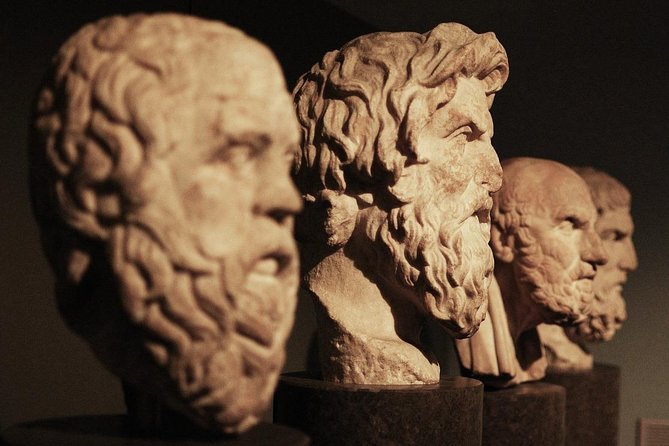
Athens has a way of making ideas feel physical. On this tour, you don’t just read about philosophers in a book. You connect names like Plato and Socrates to actual streets, public spaces, and buildings you can see with your own eyes. That turns history into something you can walk through.
I also like the pacing. The stops are short, so you get motion and variety. And at each one, the guide pushes you to think, then offers myth and context so it sticks. If you like your travel with a side of conversation, this tour hits the right note.
The vibe is also intentionally human. Guides described the experience as interactive, even calling it something like a Socratic circle. In practice, that means you are not stuck watching a slideshow. You are walking, looking, asking, and making connections in real time.
More Walking Tours in Athens
- Acropolis and Parthenon Guided Walking Tour
★ 5.0 · 4,755 reviews - Greek Food Walking Tour in Athens
★ 5.0 · 4,740 reviews - Athens: Guided Greek Food Walking Tour with Tastings
★ 4.9 · 2,859 reviews
Price and value: what $102.80 really buys you
At about $102.80 per person for roughly 4 hours, this is not the cheapest way to see Athens. But it can be strong value because you are paying for a private guide who keeps the day moving and customizes the discussion to your interests.
What’s included is practical:
- Coffee and/or tea
- Bottled water
What is not included:
- Entrance fees to points of interest (some stops explicitly note admission not included)
So your real cost depends on how much you want to go inside versus just view from outside. If you are the type who likes to see and learn but does not feel compelled to pay for every interior space, you can keep it more affordable.
Also, the tour is in English and uses a mobile ticket. That helps on arrival, especially if you want fewer logistical headaches.
Route overview: from the Academy to Areopagus views
The walk starts around Panepistimio (PanepistimioAthens 106 79, Greece) and ends on Areopagus Hill (Theorias 21, Athina 105 55). You are moving through central Athens, with stops that blend modern landmarks and older sites.
Because it is near public transportation, you can usually build the rest of your day around it easily. You can pair it with an afternoon meal in Plaka afterward, then roll into sunset views from a nearby spot if your legs still work.
Expect about 4 hours total, and confirmations happen at booking time. The tour also requires good weather, which matters because many of the most interesting parts are outdoors.
Stop-by-stop: what you’ll see and why it matters
Here’s what the day feels like, stop by stop, and what you’ll take away from each place.
A different way to spend Athens time:
- Athens: Acropolis & up to 5 Archaeological Sites Combo Pass
★ 4.2 · 13,904 reviews - Athens: Acropolis Ticket with Optional Audio or Live Guide
★ 4.2 · 11,055 reviews - Athens: Acropolis, Parthenon & Acropolis Museum Guided Tour
★ 4.8 · 9,316 reviews - The Acropolis, Parthenon & Acropolis Museum Guided Tour
★ 4.7 · 8,493 reviews
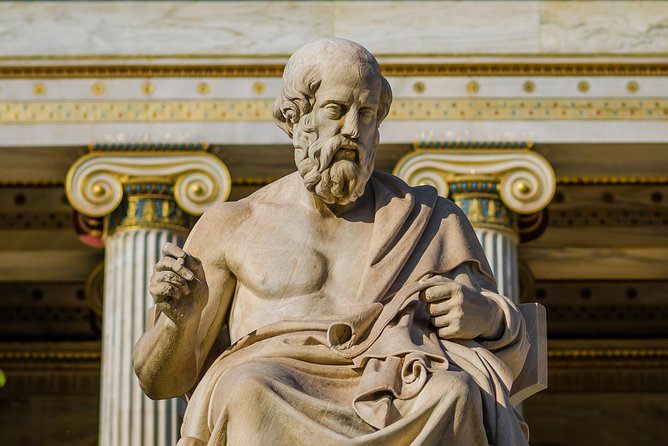
Academy of Athens: meet the philosophical movements in stone
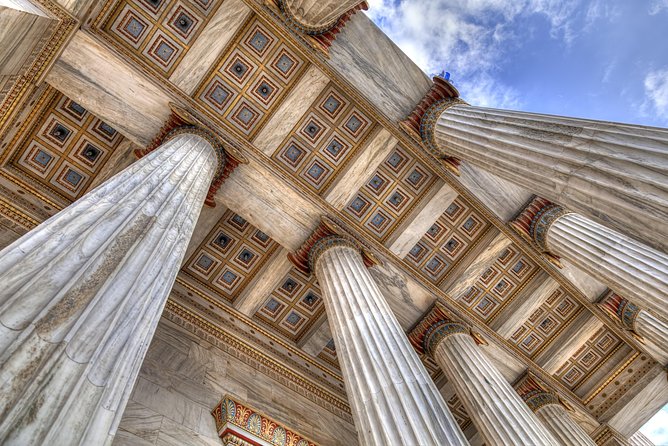
You begin at the Academy of Athens, where you get a view of the Trilogy of Athens. This is a good opener because it sets the theme right away. Ancient Greek philosophy is not treated like a museum topic. It’s treated like a living tradition that shaped later thinking.
Time here is short, about 15 minutes, and admission is not included for this stop. That means you’ll mostly focus on the exterior and the guide’s explanation of how the area connects to Greek philosophical history.
If you want a quick anchor for the whole day, this is it. You start with a big concept and get oriented before the tour threads through the city.
Hellenic Parliament: watch the Presidential Guard tradition
Next comes the Hellenic Parliament. Outside, you’ll see the Changing of the Presidential Guard, described as one of the oldest traditions in Greece. It’s a very “modern Athens” moment, but the guide uses it as a bridge: public rituals reflect civic life, and civic life is where ethics, politics, and ideas show up.
This is about a 15-minute stop and is free. It’s also a great breather because the guard ceremony gives you something concrete to watch while your guide talks philosophy and civic values.
National Garden: democracy, physics, astronomy, ethics
The National Garden stop is both restful and smart. You walk around and connect Greek philosophy to practical sciences and ethics. The tour frames philosophy as applied thinking, not just wordplay.
Time is again about 15 minutes, and it’s free. This stop is a useful shift if you have been in Athens heat or crowds earlier. You get a little greenery and a lot of conceptual payoff.
The big takeaway is that ancient Greek thinking did not stay in theory. It was meant to shape how people lived.
Ermou Street and the Church of Panthanassa square: myths through a street-level lens
Then you move to Ermou Street, where the story turns toward Hermes, the mischievous god. This is not just myth trivia. The guide ties myth to the way cities carry meaning through naming, movement, and everyday places.
There’s also a specific mention that the area is named after the Church of the Pantanassa, located within the square. So you get a sense of how religious landmarks and street life overlap in Athens.
Everything here is free, and the stop is short, about 15 minutes. It’s a good change of pace because you go from formal institutions to the texture of the city.
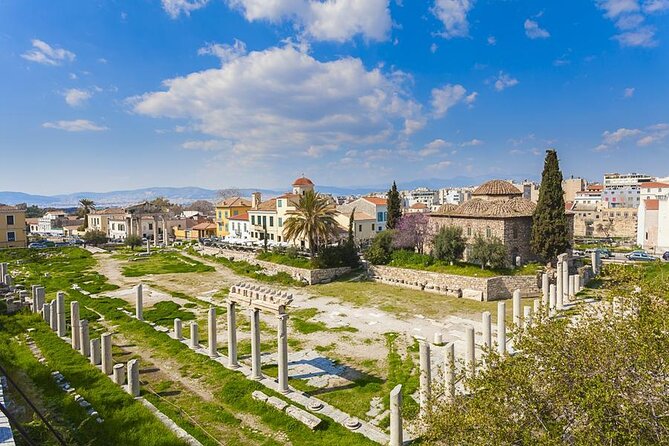
Ancient Agora of Athens: where Stoic ideas connect to a specific spot
The Ancient Agora of Athens is the place where you connect philosophy to civic space again, but with a different thread. Here, the tour focuses on Stoic philosophy being born in the Poikile Stoa.
This is about 15 minutes, and admission is not included. That’s worth planning for. You may not be paying for full entry, so let your expectations match what you’ll actually access. Still, even exterior viewing plus a strong explanation can be powerful because the Agora is so foundational to Athens.
If you like your philosophy grounded in real locations, you’ll probably enjoy this stop most.
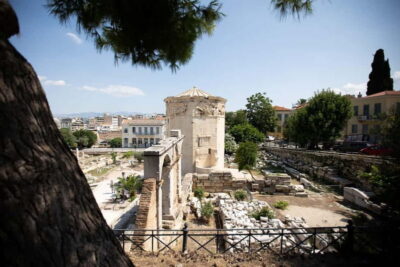
Tower of the Winds: Aiolos and a built-in science story
At the Tower of the Winds, you’ll learn about Aiolos, the keeper of the winds. The cool part here is how the guide connects myth to real-world observation. Winds are not just a poetic subject. They affect travel, weather, and daily life.
Time is about 15 minutes, and admission is not included. Again, plan on viewing and learning rather than deep interior exploration unless you decide to add it separately.
Anafiotika in Plaka: Cynic philosophers near the Acropolis
Then you head to Anafiotika, on the foot of the Acropolis in the Plaka area. This stop focuses on Cynic philosophers, which is a fun angle because the Cynics are tied to ideas about simplicity, independence, and rejecting excess.
Time here is about 20 minutes and it’s free. It also works well visually. Anafiotika’s atmosphere gives your brain a break from big monumental spaces and puts you into a more human scale neighborhood feel.
If you like small streets and character, this stop can become the “linger for a photo or two” moment. Just keep your timing for the end of the tour.
Areopagus Hill: finish with the myths and the Acropolis view
The tour ends on the Areopagus hill with a view of the Acropolis and myths about the Olympian gods. This is the perfect closing move because the scenery does part of the teaching. You look at the city, then your guide turns to stories about gods and moral questions that were baked into ancient thinking.
Time is about 15 minutes and it’s free. If the weather cooperates, this final view can feel like the day’s reward.
Why the private, Q&A format changes everything
A regular group tour can be efficient. But it often turns Athens into a checklist. This format is different because it’s private, and the guide explicitly encourages questions along the way.
That matters most if you have a specific interest, like:
- how Socrates approached questioning
- how Plato’s ideas connect to civic life
- what pre-Socratic thinkers meant by explaining nature
In the experience, the interaction has been described as discussion-based, including the idea that it can feel like you are in a Socratic circle. That’s the best-case scenario because you are not stuck receiving facts. You are making meaning and asking for clarity.
I also like how guides are praised for adjusting the pace. Some groups have young adults, some have classicists in the family, and some have total beginners. A good guide can match you without talking down.
Guides mentioned in the experience include Bianca, John, Gianni, and Effrosyni. Bianca, in particular, gets called out for philosophy training and for making conversation feel natural instead of teacher-mode. That combo, passion plus clear explanation, is exactly what turns a theme tour into an actual highlight.
What makes this itinerary feel balanced, not random
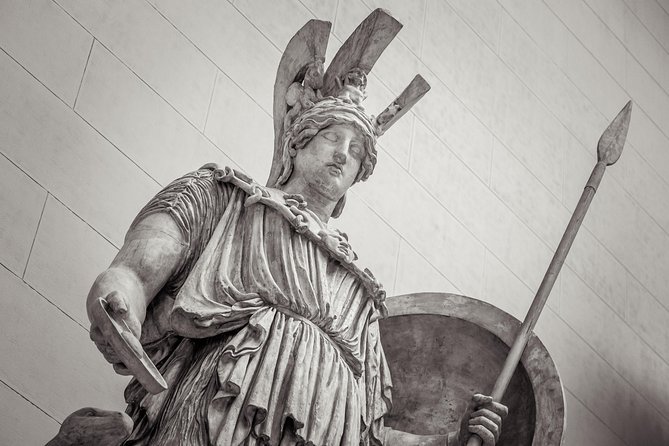
This tour does something smart with sequencing. It doesn’t just bounce between tourist attractions. It repeatedly returns to a theme: how ideas show up in public life.
You get:
- civic institutions like the Parliament
- civic space like the Agora
- ethical and practical learning threads like democracy and applied sciences in the National Garden
- myth explanations that connect to names and places, like Hermes and Aiolos
- an ending that combines myth with an actual skyline view
So even when the stops are short, the day has a shape. It feels like you are walking through a mind-map of Athens rather than zigzagging randomly.
If you have visited Athens before and seen the big headline sites, this can be a useful second layer. It takes the same city and interprets it through philosophy and myth.
Practical tips so you enjoy every minute
A tour like this lives or dies by comfort. You will be on your feet for about 4 hours, mostly outdoors.
Here’s how to set yourself up for success:
- Wear comfortable walking shoes. You’ll want grip on uneven sidewalks.
- Bring a layer. Even in warm months, evenings can cool off, and outdoor conversation gets more pleasant with a light jacket.
- Think about shade. The tour includes breaks and short stops, and guides often choose good spots for talking, but you should still plan for sun.
- Use the included coffee and water as part of your pacing, not an afterthought.
Also, the experience works best when you show up curious. If you arrive asking zero questions, you can still learn plenty. But the format is designed for you to ask, and the best moments are usually the ones where you say, wait, how does that connect?
Who should book this tour

This experience fits best if you:
- like philosophy and myths, even if you only know a few names
- want a guide to explain why a place matters, not just what it is
- enjoy conversation while walking, especially with family or a mixed-interest group
- have already done the classic Acropolis and want a different angle on Athens
It can also work well for first-timers, because it starts with orientation points and ends with a view. Just keep in mind that entrance tickets to some points may not be included, so you might want to be flexible about what you can see inside.
If you prefer pure monument sightseeing with minimal discussion, this may feel more talk-heavy than you want. The upside is that you control the questions, so you can steer the day toward what you care about.
Should you book this Athens myths and philosophers tour?
My take: yes, if you want Athens with an active brain. This is a private, question-led walking day that connects major Greek figures, including Socrates and Plato, to real places across central Athens. The guides named in the experience are consistently praised for turning philosophy into something you can talk about, not just hear.
Skip it or treat it carefully if you:
- hate walking for 4 hours
- need fully included admission for every stop
- want a mostly silent sightseeing experience
If you book, go in with one simple goal: ask at least one question you genuinely care about. The tour is built for that, and it’s usually when the day clicks from interesting to memorable.
FAQ
How long is the Athens Highlights: Myths & Philosophers Walking Tour?
It runs for about 4 hours.
Is this tour private or shared?
It is a private tour/activity, so only your group participates.
What language is the tour offered in?
The tour is offered in English.
What is included in the price?
Coffee and/or tea and bottled water are included.
Are entrance fees included for the sites on the route?
Entrance fees are not included for some points of interest. The tour notes that admission is not included for certain stops, while other stops are listed as free.
Where does the tour start and where does it end?
It starts at PanepistimioAthens 106 79, Greece and ends at Areopagus HillTheorias 21, Athina 105 55.
Does the tour depend on weather?
Yes. It requires good weather. If it is canceled due to poor weather, you will be offered a different date or a full refund.
Is free cancellation available?
Yes, you can cancel up to 24 hours in advance for a full refund.
Just reviewed around Athens
- Sounio Sea Kayak Tour to the Temple of Poseidon full program★ 5.0 · 126 reviews
- First Access Acropolis Tour, Beat the Crowds, Enjoy the Parthenon★ 5.0 · 128 reviews
- Athens Half-Day Tour: Acropolis, Parthenon & All Major Landmarks★ 5.0 · 127 reviews
- Ancient Corinth, Mycenae, Epidaurus, Nafplio full day private tour from Athens★ 5.0 · 130 reviews
- Athens Cooking Class and Lunch in our beautiful garden in Greece★ 5.0 · 130 reviews
- Athens Highlights by E-Bike: Small-Group Historic Tour★ 5.0 · 131 reviews
- Athens Shore Excursion: Acropolis Walking Tour★ 4.5 · 131 reviews
- Paul’s Biblical and Ancient Corinth Half-Day Tour★ 4.9 · 131 reviews
Walking Tours, compared.


Acropolis monuments & Parthenon Walking Tour with Optional Acropolis Museum
Read our review →
Knossos: Knossos Palace Skip-the-Line Guided Walking Tour
Read our review →
Acropolis, Parthenon & Athens Old City Heritage Walking Tour
Read our review →
Athens Authentic Greek Food Walking Tour (Small Group)
Read our review →Browse the lists this tour appears in