
Reviewed · WALKING TOURS
Athens Highlights: Myths & Philosophers Private Walking Tour
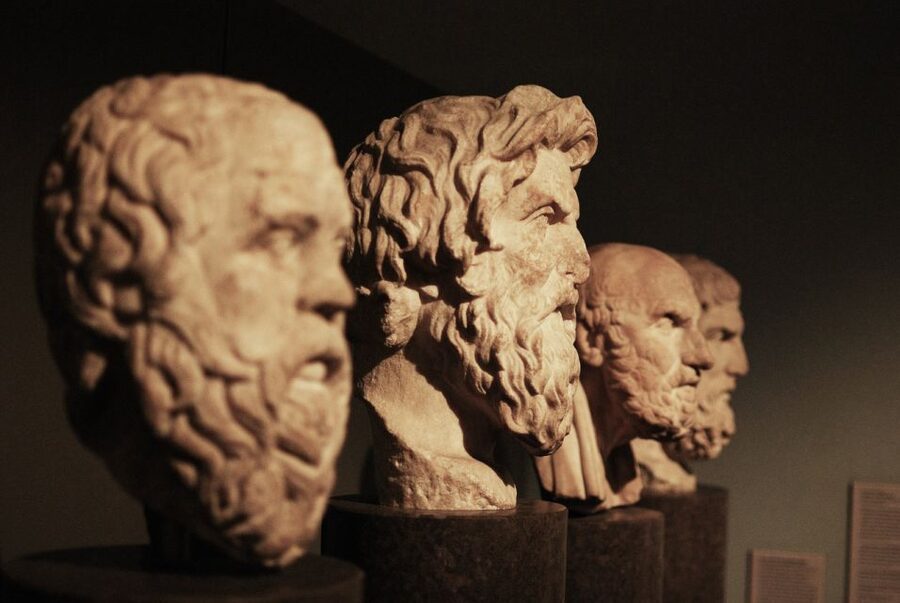
Walking with a local guide through Athens while tying real street corners to Socrates, Plato, Aristotle, Epicurus, and other thinkers is the kind of tour that changes how you see the city. You also get the myth side of the story, with gods like Apollo, Athena, Hermes, and Aiolos showing up in the same places you’d normally just rush past.
I especially like how the route uses famous Athens monuments to explain philosophical ideas in plain terms, not textbook notes. I also love the built-in break, where you can sip a Greek coffee and keep the conversation going with a view in the Thissio area.
The main consideration is that it is a walking tour and it is not suitable for people with mobility impairments, so plan for lots of steps and uneven sidewalks.
Key highlights to look for

- Socrates and Plato talk tied to the Trilogy of Athens and the grandeur of Theofilus Hansen’s 19th-century architecture
- Epicurus in the National Gardens, plus the idea of the Garden as a living way to think
- Ermou Street and Hermes, connecting commerce, myth, and how Athenians moved through the city
- Kapnikarea and Aristotle’s Lyceum, with the temple standing out as a time bridge
- Poikile Stoa and the birth of Stoic philosophy, grounded right next to the Ancient Agora
- Areopagus Hill views, finishing with myths and the sense that you are literally above the old arguments
Step into Athens by way of philosophers, not guidebook stops
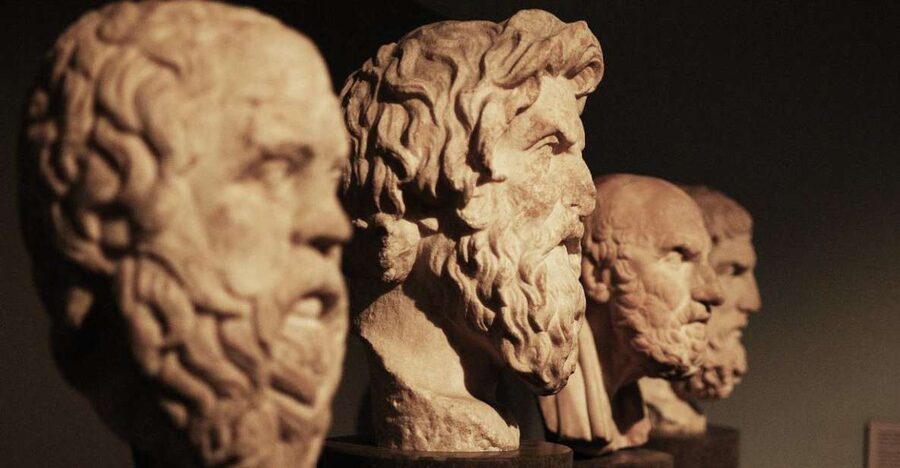
This is a private, 4-hour walking tour that treats Athens like a classroom you can actually walk through. You meet outside Panepistimio Metro Station, and from the start you’re not just looking at landmarks, you’re being asked to connect them to how Greek thought formed over 2,500 years ago.
I like that the tour blends philosophy and mythology without feeling forced. You can talk about ideas, then the guide points to the exact city feature that sparked the story. It’s the difference between learning names and understanding why people believed those names mattered.
Your group is private, the tour is in English, and you get an expert guide plus one Greek coffee or other traditional refreshment per person. Entrance fees to sites are not included, so if you want to go inside anything, you’ll need to plan that separately.
More Walking Tours in Athens
- Acropolis and Parthenon Guided Walking Tour
★ 5.0 · 4,755 reviews - Greek Food Walking Tour in Athens
★ 5.0 · 4,740 reviews - Athens: Guided Greek Food Walking Tour with Tastings
★ 4.9 · 2,859 reviews
The first stretch: Panepistimio, Hansen’s Trilogy, and myth meeting street-level Athens
Your walking day starts near Panepistimio Metro Station, with two possible starting points depending on what you book: Πανεπιστήμιο (University) as the common reference point. Right away, you’re set up for an easy win: the guide uses the city itself to frame what comes next.
From there, you begin with the Trilogy of Athens, an architectural work by Theofilus Hansen. This is where I think the tour earns its keep. The statues and buildings here are dramatic, and the guide uses that drama to talk about how Greeks saw beauty, order, and meaning. You’ll admire statues by famous 19th-century sculptors, and as you look, you’ll also talk through two big thinkers: Socrates and Plato.
What I find smart is the way the guide treats these philosophers as living personalities in the places where people once argued. You’re not just memorizing lines. You’re getting the sense that ideas had locations, audiences, and purposes.
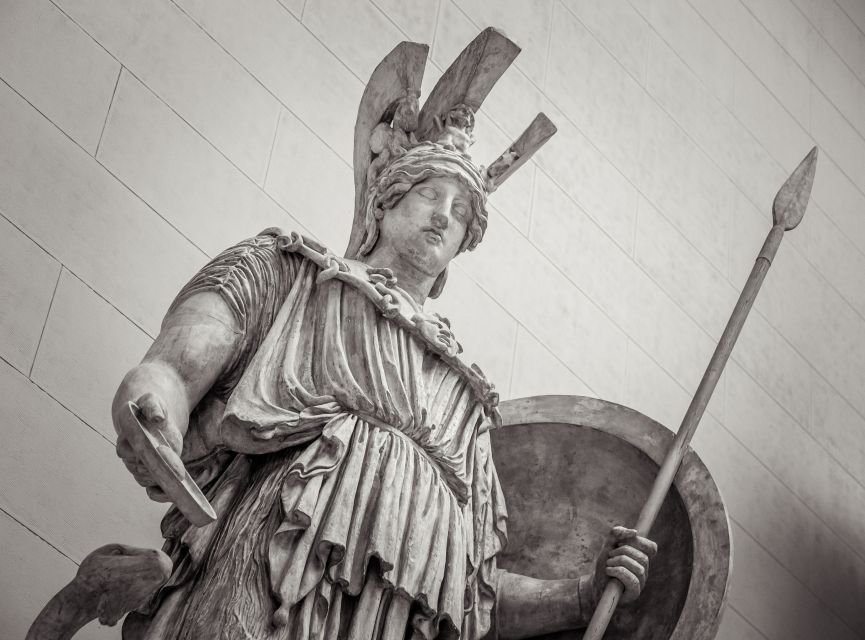
This part also brings in Apollo and Athena. Apollo and Athena are presented as totally different gods, but the tour highlights that they share more similarities than you’d expect. That myth connection matters, because it helps you see Greek gods less like random characters and more like a way Athenians organized their world.
Practical tip: wear comfortable shoes early. The first part is a setup, but you’ll still be walking continuously.
From Hellenic Parliament to the National Gardens: Epicurus’s Garden as a real place to breathe
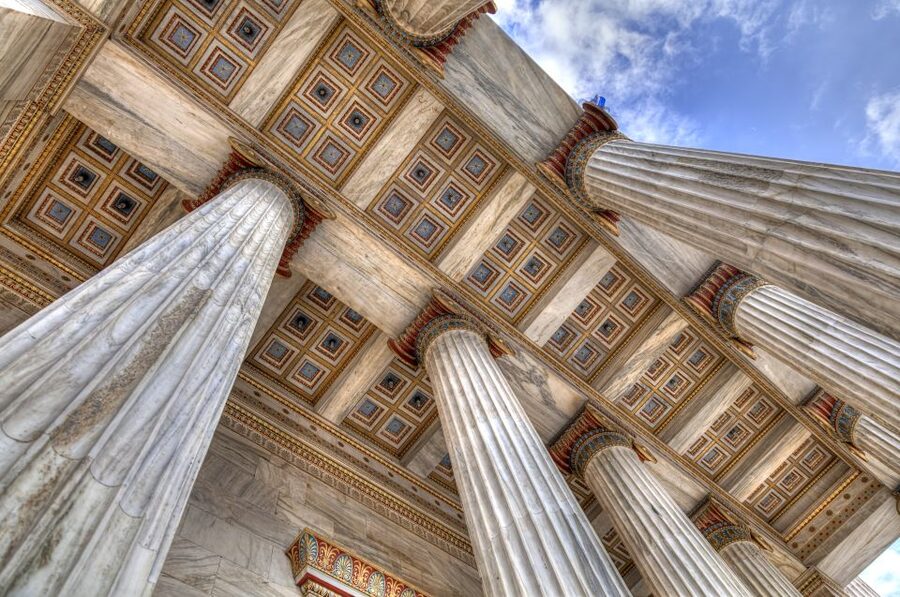
Next up you head toward the Greek Parliament and the National Gardens. This stretch helps you shift from big monumental Athens to a more human pace.
The National Gardens stop is specifically about Epicurus and his school, known as the Garden. What makes this moment work is that the guide frames Epicurus as someone who valued practical thinking about life, not just abstract debate. Even if you only remember one thing later, it’s likely to be this: philosophy can be a guide for how to live day to day.
Then you return to street life with Ermou Street, one of Athens’s most commercial streets. The guide ties it to Hermes, the god associated with commerce and merchants. This is a subtle but powerful move. The city becomes a map of belief, where economic life and mythology share the same sidewalks.
If you’re the type who likes your history with context, this is one of the most satisfying parts of the tour. It explains why philosophy did not live in a separate world from everyday Athenians.
Ermou Street, Monastiraki, and Kapnikarea: Aristotle’s Lyceum and a temple that survived the centuries
As you walk further through central Athens, the tour threads through Monastiraki and into the Plaka area. This is where the city becomes more layered in feel, with shops, snack smells, and the kind of streets where you can imagine people doing ordinary errands long ago.
A key stop here is Kapnikarea, an 11th-century temple. You’ll have the chance to admire it and hear how the guide connects it to Aristotle and the Lyceum philosophical school. Even if you’ve heard of Aristotle before, linking him to a physical, still-standing place makes him harder to forget.
I also like that the tour does not ignore the everyday Athens vibe. You are not only learning in front of temples. You’re walking through the same general neighborhoods where Athenians still move around, shop, and pause.
Where this can be a drawback: if you prefer quiet museums over city walking, the commercial streets can feel like noise. The guide’s job is to keep the conversation useful in that environment, and from the way this tour is praised, they typically do.
A different way to spend Athens time:
- Athens: Acropolis & up to 5 Archaeological Sites Combo Pass
★ 4.2 · 13,904 reviews - Athens: Acropolis Ticket with Optional Audio or Live Guide
★ 4.2 · 11,055 reviews - Athens: Acropolis, Parthenon & Acropolis Museum Guided Tour
★ 4.8 · 9,316 reviews - The Acropolis, Parthenon & Acropolis Museum Guided Tour
★ 4.7 · 8,493 reviews
Thissio coffee break and the pre-Socratic conversation you did not expect
At a cozy café in the Thissio area, you take a pitstop for Greek coffee. One important detail: the tour includes one Greek coffee or other traditional refreshment per person, so you’re not scrambling to find a place to sit and pay extra.
This coffee stop is not just a break. It’s built into the learning flow. You get a chance to chat about Pre-Socratic philosophers while you’re still in an easy, comfortable part of town. That works well because by now you’ve already met the major later thinkers, so hearing about earlier ideas feels like seeing the roots after you’ve seen the branches.
Some guides also add an extra visual treat, and one guide-led experience included a rooftop terrace moment with a drink and a view. If that happens on your date, it’s a nice way to cap the morning with a change of perspective.
Tip for the break: take the time to ask one question you’ve been carrying since the start. This tour is private, and the conversation style is a big part of why people rate it so highly.
Ancient Agora and Poikile Stoa: where Stoicism gets its birthplace
After the coffee stop, you head toward the Ancient Agora area. Next, you discover the place where Stoic philosophy was born in the Poikile Stoa.
This is another moment where I think the route makes clever sense. Stoicism can sound like a set of rules you read in a book. But when your guide points to the physical site and explains how the idea formed, it turns into something more human: a way to handle power, uncertainty, and daily pressure.
The Poikile Stoa setting matters because it places philosophy right beside civic life. You get the sense that arguments were part of the city’s rhythm, not something that happened behind closed doors.
If you like your history applied to human behavior, this is one of the stops that can stick with you long after your trip.
Plaka, Anafiotika, and the Tower of Winds: Cynics, Aiolos, and myths you can point to
The tour continues into the Plaka area and Anafiotika, on the foot of the Acropolis. The guide keeps the tone lively, with mentions of Cynic philosophers close by. This is where Athens feels especially theatrical because the streets around the Acropolis carry so much story in every direction.
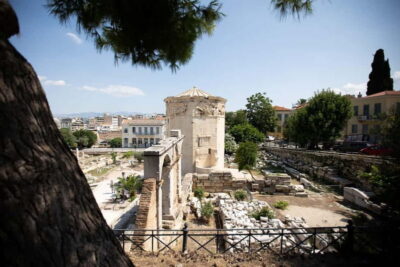
Near this area you’ll encounter the Tower of Winds. The guide uses it to talk about Aiolos, the keeper of the winds. This is a fun kind of myth lesson because it’s tied to something physical. You can actually see the structure and connect it to the Greek idea that forces in nature had personalities.
This is also a great section for photos. Even if you’re not a big picture person, the Tower of Winds stop gives you a clean landmark to remember. More importantly, it gives your brain a hook for the myths.
One more thing I appreciate: this part keeps balancing the head and the heart. You hear about ideas, then you get the sense of why those ideas lived in stories and city design together.
Areopagus Hill finale: a view that puts myths on top of old arguments
The tour concludes on Areopagus Hill, with a breathtaking view of the Acropolis. From that height, it’s easier to feel why Athens was such a magnet for debate and mythmaking. Big ideas look different when you can see the city’s layout.
The guide also shares some more myths about the Olympian gods as you finish. You end with the sense that the stories were not just entertainment, they were a way to explain power, nature, and human behavior.
This final stretch is the payoff moment. It’s where the tour feels less like a checklist and more like a narrative you can carry forward.
Practical tip: go slow on the hill if you’re feeling tired. It’s an uphill ending for a reason, but don’t sprint through it.
Price and value for a $100 private half day in central Athens
At $100 per person for a 4-hour private tour, this is not the budget option. But it does have a clear value proposition.
You’re paying for:
- A private, English-speaking guide who can connect myths and philosophy to specific places
- A route that uses major Athens landmarks plus smaller, meaningful stops
- Included coffee or a traditional refreshment
- All taxes and fees included in the price
For many visitors, the biggest value is the explanation, not the monuments themselves. If you already know Greek philosophy basics and you want a deeper, site-based perspective, this tour can feel like a fast way to get that context without reading a stack of books.
If you prefer self-guided wandering with audio apps, you might find this price less convincing. But if you like asking questions and getting answers tied to real locations, the private format is where this becomes worth it.
Who should book this Athens philosophy and mythology walk
I’d point you toward this tour if:
- You want a story-driven Athens experience with Socrates, Plato, Aristotle, Epicurus, Stoics, and Cynics woven into the city
- You enjoy discussion, not just sightseeing
- You like myth, but you also like when myths are explained in terms of what they meant to people
I’d think twice if:
- You need a low-walking, step-light experience, since it is not suitable for people with mobility impairments
- You want only inside-the-museum time, because much of the value comes from walking and viewing from the street
Also, it’s a strong first-day or early trip tour. It helps you get your bearings fast, and it gives you a mental map of philosophical Athens instead of only tourist Athens.
Should you book this tour?
Yes, if you want Athens to feel like a place where ideas matter. The best part of this tour is how it links landmarks to thinkers in a way that stays conversational and practical, with a coffee break that keeps the tone human.
Book it if you’re excited by the intersection of Greek mythology and philosophy, and you like learning with a live guide who can answer follow-up questions. Skip it if you dislike walking, or if you want a purely self-guided experience with no discussion.
If you’re deciding between this and a standard highlights tour, choose this one when you care about meaning, not just photos. Athens is famous for ruins. This tour helps you see the arguments hiding inside the stones.
FAQ
How long is the Athens Highlights: Myths & Philosophers Private Walking Tour?
It lasts 4 hours.
Where does the tour start?
You meet outside Panepistimio Metro Station. There are two starting location options referenced as Πανεπιστήμιο (University).
Is the tour private and in English?
Yes. It is a private group tour and the live guide speaks English.
What’s included in the price?
The tour includes an expert tour guide, 1 Greek coffee or other traditional refreshment per person, and all taxes and fees.
Are entrance fees included for sites on the route?
No, entrance fees to any point of interest are not included.
Is Greek coffee guaranteed during the tour?
You get 1 Greek coffee or other traditional refreshment per person as part of the tour.
Is the tour suitable for people with mobility impairments?
No, it is not suitable for people with mobility impairments.
What should I bring for the walking portion?
Bring comfortable shoes, sunglasses, and sunscreen.
Can I cancel and get a refund?
Yes. Free cancellation is available up to 24 hours in advance for a full refund.
Just reviewed around Athens
- Athens Highlights: Myths & Philosophers Walking Tour★ 5.0 · 125 reviews
- Sounio Sea Kayak Tour to the Temple of Poseidon full program★ 5.0 · 126 reviews
- First Access Acropolis Tour, Beat the Crowds, Enjoy the Parthenon★ 5.0 · 128 reviews
- Athens Half-Day Tour: Acropolis, Parthenon & All Major Landmarks★ 5.0 · 127 reviews
- Ancient Corinth, Mycenae, Epidaurus, Nafplio full day private tour from Athens★ 5.0 · 130 reviews
- Athens Cooking Class and Lunch in our beautiful garden in Greece★ 5.0 · 130 reviews
- Athens Highlights by E-Bike: Small-Group Historic Tour★ 5.0 · 131 reviews
- Athens Shore Excursion: Acropolis Walking Tour★ 4.5 · 131 reviews
Walking Tours, compared.
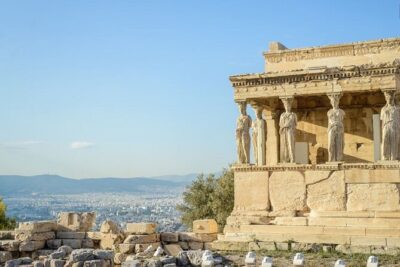


Acropolis monuments & Parthenon Walking Tour with Optional Acropolis Museum
Read our review →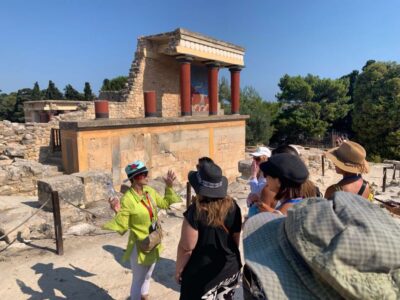
Knossos: Knossos Palace Skip-the-Line Guided Walking Tour
Read our review →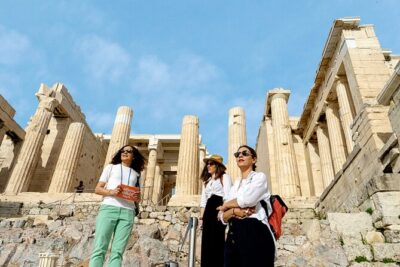
Acropolis, Parthenon & Athens Old City Heritage Walking Tour
Read our review →
Athens Authentic Greek Food Walking Tour (Small Group)
Read our review →Browse the lists this tour appears in