

Reviewed · CITY TOURS
Athens: City of Rebellion
This tour is interesting because it stitches Athens street corners into one long story of resistance, from Ottoman rule to modern-day protest life. I love the way the route pushes you from tourist-center monuments toward Syntagma Square, where political energy still shapes daily reality.
I also like the focus on Exarchia, especially how the tour frames it as a living neighborhood, not a theme park for politics. And I get why some people might find the tone heavy, since it takes on topics like fascism, oppression, and police violence.
Key things to know before you go
- Monastiraki start, rebellion narrative first: you begin in the neighborhood most visitors pass through, then learn why it matters to the city’s later fights
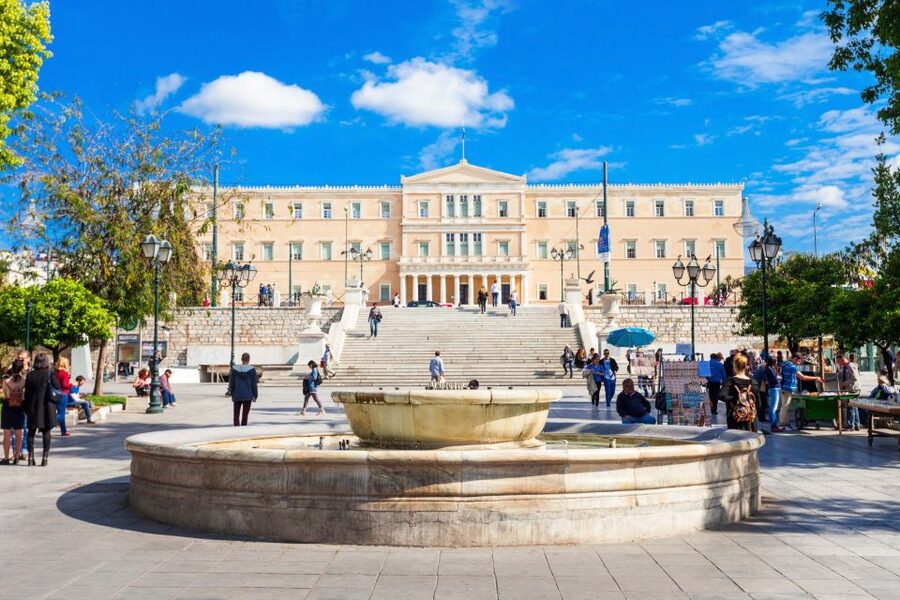
- Syntagma Square as a turning point: the tour connects the square to protest culture and civic pressure
- Hellenic Parliament area context: you get historical and modern meaning attached to what you see in front of you
- Exarchia as a social ecosystem: the tour talks about activism communities that include anarchists, refugees, LGBT+ people, and artists
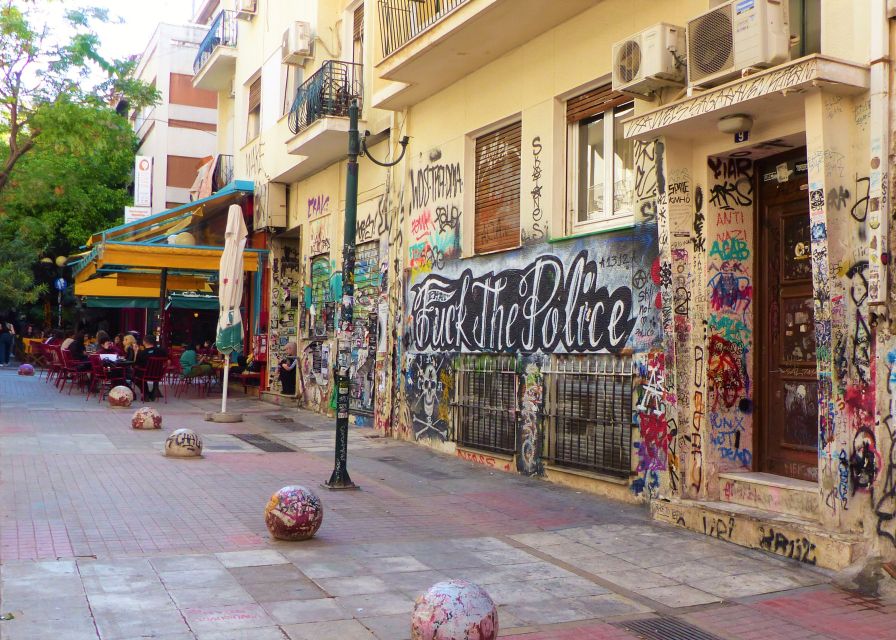
- Street-level details: you might notice street art references, like names and symbols that show up in local political memory
- A practical pace: it is about 150 minutes of walking and standing, and it is not for mobility impairments
From Ottoman rule to today, Athens tells one long protest story
Athens is famous for temples and statues, but the city’s other identity comes through when you look at how people resisted being controlled. This experience takes that theme seriously, moving in a clear line from life under Ottoman rule to the Greek Revolution era, and then forward into modern conflicts that still shape neighborhoods and attitudes.
What makes it work is that the tour does not treat rebellion like a tidy museum exhibit. You walk through real, current parts of the city, and you learn how modern Athenians interpret their past while dealing with today’s issues. That is why the title fits: City of Rebellion.
Guide Maelle is the engine here. Across the stops, she keeps the story anchored to what you can see, what you might hear in the streets, and why local communities formed the way they did. Reviews also highlight how she answers questions and adapts the pace to the group, which matters on a route that includes standing and uneven sidewalks.
More City Tours in Athens
- Athens: City Sightseeing Hop-On Hop-Off Bus Tour
★ 4.3 · 4,520 reviews - City Sightseeing Athens, Piraeus & Beach Riviera Hop-On Hop-Off Bus Tours
★ 4.0 · 1,887 reviews - Athens: City Electric Bike Tour with Acropolis Visit Option
★ 4.9 · 1,017 reviews
Why this is good value for an Athens “first meaning” tour
At $88 per person for about 150 minutes, you are paying for a private guide experience that has a tight purpose. In a city where you can get basic sightseeing quickly, this tour sells something different: interpretation. You are not just collecting facts about Athens, you are learning how the city thinks about freedom, power, and social justice.
I see the value in two ways. First, you get context that makes the rest of your trip click, especially if you spend time around the major political sites. Second, the route ends in a neighborhood that is hard to understand from guidebooks alone, so your money buys time with someone who knows how to connect dots without turning local life into a spectacle.
If you tend to enjoy modern history, political sociology, or how communities evolve over time, this feels like a smart investment. If you want a lightweight stroll that stays entirely away from politics, you might feel the tone is too direct.
Meeting in Monastiraki, then quickly out of “standard Athens”
You meet in Monastiraki Square, in front of Pantanassa Church, and your guide will have a sign that says Athens City of Rebellion. Starting here is practical because Monastiraki is a transit-friendly hub and also a good place to orient yourself fast.
The beginning matters because it sets the method. Instead of starting with ancient monuments and working forward in time, the tour starts with a theme and keeps time moving. You do a short introduction in Monastiraki, then the route turns toward major civic spaces.
A small practical tip: wear comfortable shoes and plan for sun. The tour is only 150 minutes, but Greece sun does not care how “short” your day is. Bring water, sunscreen, and a sun hat so you do not spend the tour thinking about fatigue.
Monastiraki, where the story starts in everyday streets

The Monastiraki portion is short, but it is a useful launchpad. You get a guided look that frames the city as something people built through conflict and decision-making, not just monuments.
I like this start because it breaks the pattern of Athens tours that feel like you are always walking from one brochure stop to another. You begin with atmosphere and meaning, then the route gradually shifts into the political core.
A different way to spend Athens time:
- Athens: Acropolis & up to 5 Archaeological Sites Combo Pass
★ 4.2 · 13,904 reviews - Athens: Acropolis Ticket with Optional Audio or Live Guide
★ 4.2 · 11,055 reviews - Athens: Acropolis, Parthenon & Acropolis Museum Guided Tour
★ 4.8 · 9,316 reviews - The Acropolis, Parthenon & Acropolis Museum Guided Tour
★ 4.7 · 8,493 reviews
Passing the Metropolitan Church of Athens, then spotting the “not on every list” moments
After the initial orientation, you pass the Metropolitan Church of Athens. It is a quick visual pause, but it helps you stay anchored in the real city around you, not only the symbolic places.
Then comes one of the tour’s strengths: short side stops in places most visitors miss. These are the segments described as hidden or secret stops in the route. You should expect the guide to use them to connect broader themes, like who resisted, how authorities responded, and how people built networks of support.
Because the exact sites for these short stops are not specified by name, you should think of them as “story checkpoints.” They are designed to keep the tour from turning into a straight walk between headline locations.
Syntagma Square, where protest culture lives in the present

Then you move toward Syntagma Square, which is the heartbeat of modern protest in Athens. This is not just a location you look at and move past. You learn why this square became such a magnet for public anger, public demands, and public organizing.
The tour ties Syntagma to the idea that rebellion is not only about big historical uprisings. It is also about how people use visible civic spaces to pressure leaders and expose injustice. When you reach the square, your mind is primed to interpret what you see as part of a continuing story.
A practical note: Syntagma is busy and open. It can feel crowded even with a small private group, so you might spend moments standing and listening. If you prefer constant walking, this part may feel like a more “stationary” chapter.
Hellenic Parliament and the Tomb of the Unknown Soldier
From Syntagma, you spend time around the Hellenic Parliament area and also visit the Tomb of the Unknown Soldier. This is where the tour grounds its theme in national symbolism.
You will likely connect dots between state power and public response. That is the point. You see places built for national memory, then you understand why those narratives can also create friction when people feel the state is not protecting them.
The Tomb stop tends to be short, but it adds contrast. You learn how national identity is presented, then you shift back into the idea that ordinary people have pushed back against forces they felt were oppressive.
Kolonaki and the shift in mood toward Exarchia
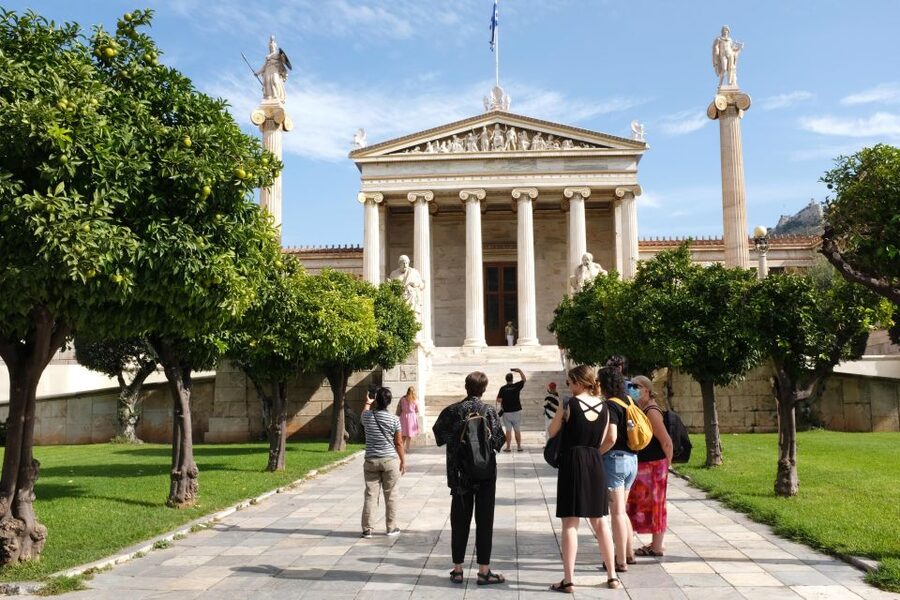
The tour passes through Kolonaki, which helps you notice a change in atmosphere as the route transitions. This part is brief, but it gives you an important comparison point. Kolonaki is often read as more polished and central. Exarchia, which comes next, is read as more confrontational and socially charged.
Even if you do not care about neighborhoods by reputation, it helps your brain understand why Athens has multiple “public faces.” Different areas carry different histories of social agreement and social conflict.
Academy of Athens, then stepping from monuments to movements
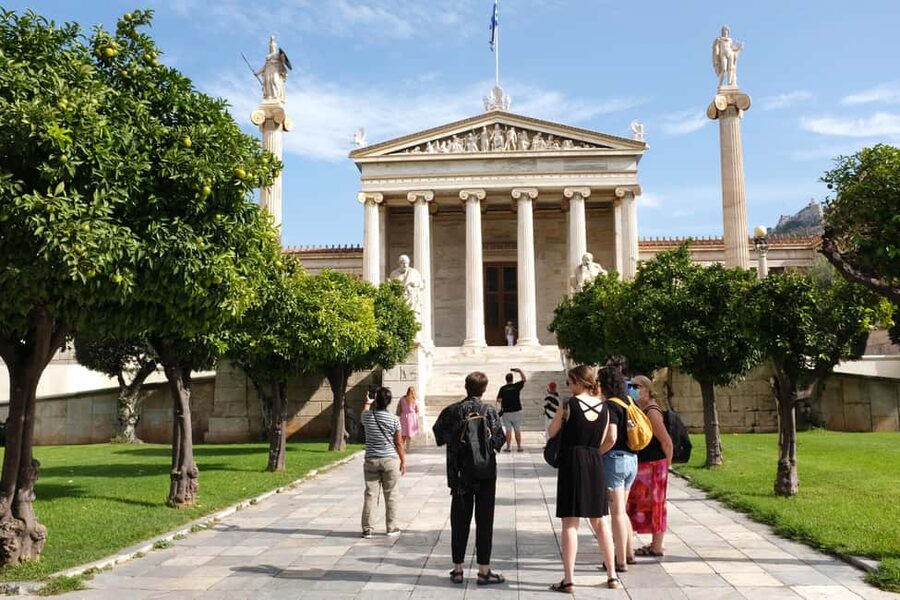
At the Academy of Athens, the tour includes another guided stop. Here, the story usually connects education, national institutions, and the way societies define themselves. In a rebellion-focused tour, this matters because institutions do not only represent culture. They also represent authority, legitimacy, and who gets to set the rules.
After that, you head toward Exarchia, and the tone changes. You stop treating Athens like a timeline of famous dates, and you start treating it like a place where communities argue, create, and survive together.
Exarchia: artists, refugees, LGBT+ community, and activism as everyday reality
The Exarchia segment is the emotional center for many people. This is where the tour frames resistance as social fabric. You are not just hearing about protests from long ago. You learn why Exarchia became known as a hotbed of resistance and activism, and why that identity includes multiple communities.
The tour specifically highlights that Exarchia welcomes anarchists, refugees, the LGBT+ community, and artists. That mix is key. It suggests rebellion is not one single political costume. It is also mutual support, alternative culture, and solidarity.
From the way this tour is described, you should expect to walk in a way that respects residents. You will likely notice the guide making choices that keep the experience from feeling like sightseeing someone else’s home. That care is part of what makes the tour feel more ethical and less performative.
If you have any interest in street art, Exarchia is often where you see why it matters. You might encounter references to local artists and political symbols, and you will learn how graffiti and visuals can act like public memory.
Secret stops and extra corners near Exarchion Square
The final stretch includes additional short guided stops, including a “secret stop” and more short moments before reaching Exarchion Square. Even without the exact site names, the purpose is consistent: to add layers to what Exarchia looks like, and to explain why the community fights certain changes.
You will also end with meaning, not just walking directions. The guide ties the story back to how Athens got shaped by waves of resistance. The final point, Plateia Exarcheion, is where you get that sense of arriving at a living chapter of the city, not finishing at another postcard.
A small drawback consideration: because there are multiple short story checkpoints, the tour can feel mentally intense even if the walking distance is manageable. If you like to process slowly, plan for a quiet rest after.
How to get the most out of this tour in your schedule
I recommend you do this on one of your earlier days, ideally before you spend a lot of time making your own itinerary. When you have this context, you interpret Athens differently. Syntagma, Parliament, and neighborhood streets stop looking random and start looking like parts of a social map.
You should also pair it with time to explore lightly afterward. Exarchia is not a “one-stop” place. If you feel curious, you can return later for a second look, using what you learned to decide where to linger.
And if you are coming from ancient sites, you will probably feel a shift in pace. Ancient Athens tells you what power looked like in sculpture and stone. This tour helps you understand what power looks like in daily choices, organization, and pushback.
Who should book Athens City of Rebellion
This is a great fit if you want Athens through modern social history, not only ancient monuments. It suits you if you care about how communities build solidarity, and if you want to understand why some places become symbols for protest.
It also fits well if you like interactive guides. The tour format is private, and the guide is described as engaging and responsive, with plenty of chances to ask questions.
It is not for you if you want a purely neutral sightseeing walk with no political framing. The theme is rebellion by design. If you prefer to keep politics off the table, you might feel uncomfortable or bored.
And if mobility is an issue, note that it is not suitable for people with mobility impairments, so you’ll need another option.
Should you book it? My practical take
Book this tour if you want Athens to feel like a real place with ongoing debates, not just a backdrop for photos. For $88, you are paying for a focused 150-minute guided perspective with a clear theme, and that is a smart way to get value in a city where time is always limited.
Skip it if you are only chasing classic ancient highlights and prefer to keep your sightseeing strictly non-political. Also skip it if you cannot manage standing and walking for about two and a half hours.
If you do book it, the best strategy is simple: come with curiosity, wear good shoes, bring water, and ask questions. The tour is strongest when you treat it like a conversation about how Athens became what it is.
FAQ
Where do I meet for Athens City of Rebellion?
You meet in Monastiraki Square, in front of Pantanassa Church. Your guide will have a sign that says Athens City of Rebellion.
How long is the tour, and what pace should I expect?
The tour lasts about 150 minutes. It is a walking experience with stops that include sightseeing and guided segments, so you should expect to spend time standing and walking.
What language is the tour guide?
The tour guide speaks English and French.
Is this experience private?
Yes. It is listed as a private group with a guide.
What should I bring with me?
Bring comfortable shoes, a sun hat, sunscreen, and water.
Is it refundable if my plans change?
Yes. There is free cancellation up to 24 hours in advance for a full refund.
Just reviewed around Athens
- Athens Highlights: Myths & Philosophers Walking Tour★ 5.0 · 125 reviews
- Sounio Sea Kayak Tour to the Temple of Poseidon full program★ 5.0 · 126 reviews
- First Access Acropolis Tour, Beat the Crowds, Enjoy the Parthenon★ 5.0 · 128 reviews
- Athens Half-Day Tour: Acropolis, Parthenon & All Major Landmarks★ 5.0 · 127 reviews
- Ancient Corinth, Mycenae, Epidaurus, Nafplio full day private tour from Athens★ 5.0 · 130 reviews
- Athens Highlights by E-Bike: Small-Group Historic Tour★ 5.0 · 131 reviews
- Athens Cooking Class and Lunch in our beautiful garden in Greece★ 5.0 · 130 reviews
- Athens Shore Excursion: Acropolis Walking Tour★ 4.5 · 131 reviews
City Tours, compared.


City Sightseeing Athens, Piraeus & Beach Riviera Hop-On Hop-Off Bus Tours
Read our review →
City Electric Bike Tour with Acropolis Visit Option
Read our review →
Acropolis, Parthenon & Athens Old City Heritage Walking Tour
Read our review →
City Pass with Acropolis, Museums, HoHo & Transport
Read our review →
Browse the lists this tour appears in