
Reviewed · MYCENAE & EPIDAURUS TOURS
Ancient Corinth, Mycenae, Epidaurus, Nafplio full day private tour from Athens
What makes this tour fun is the way it strings together myth, religion, and engineering into one long, air-conditioned day. I especially like having private pickup and a driver who talks history as you ride, like Notis, Spiros, or George. And I really appreciate the practical comfort, Wi-Fi plus bottled water, because you will be on the road for hours between ancient stops.
One thing to plan for: you will do real walking on uneven ground, and some key sites charge entrance fees that are not included. If you hate stairs or you want a slow pace, this day can feel like footwork overtime.
Key highlights you will actually feel
- Corinth Canal viewpoints in minutes: a short stop with big views over the narrow channel that slices the Isthmus of Corinth.
- Ancient Corinth context, not just ruins: the museum on site helps you place what you are seeing.
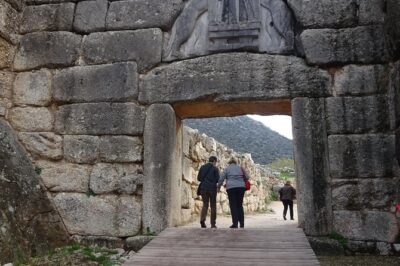
- Mycenae’s Bronze Age power symbols: Cyclopean walls, the Lion Gate, and the famous Treasury of Atreus.
- Epidaurus Theatre with legendary acoustics: one of the best-preserved ancient theatres to see in Greece.
- Nafplio at your tempo: time for lunch, photos, and harbor views, plus the option to tackle Palamidi’s hilltop fortress.
- Driver storytelling in fluent English: you can ask questions, and many drivers use their local knowledge to make the day click.
Private Athens pickup, Wi-Fi car comfort, and why the pacing works
You start with hotel pickup and return in a private, air-conditioned vehicle. That matters here, because this is a full day, roughly 9 to 10 hours, and you will spend time driving between sites across the Peloponnese.
The car setup is also practical: bottled water on board and Wi-Fi to keep your phone useful when you want directions, maps, or to post a photo while it is still fresh. In the past, people have also praised how safe and confident the driving felt, plus the good habit of keeping the day running smoothly.
Also, a heads-up that keeps expectations realistic: the drivers are not licensed tour guides who walk through every site with you. Still, they share commentary in fluent English and can answer questions about what you are looking at. If you request a licensed guide and availability lines up, that option exists.
More Full-Day Tours in Athens
- All Day Cruise -3 Islands to Agistri,Moni, Aegina with lunch and drinks included
★ 5.0 · 4,958 reviews - From Athens: Delphi Full Day V.R. Audio Guided Tour
★ 4.6 · 3,028 reviews - Athens Full Day Private Tour
★ 5.0 · 2,903 reviews
Corinth Canal: the short stop with the wow-factor
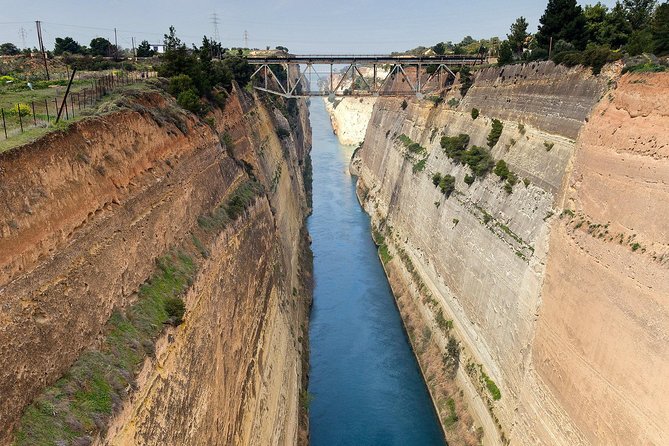
The Corinth Canal is not a long visit, but it is a great opener because it explains a big geographic idea fast. The canal connects the Gulf of Corinth in the Ionian Sea with the Saronic Gulf in the Aegean Sea, cutting through the narrow Isthmus of Corinth and effectively separating the peninsula from mainland Greece.
From higher viewpoints, you get the best perspective: steep limestone walls down to the channel, and ships threading their way through. It is also a neat engineering detail to keep in mind while you look, since the canal is about 6.4 kilometers long and only around 21.4 meters wide at the base, with no locks. The vessels cannot fit through if they are too large, so you will mostly see smaller traffic.
Budget tip: the canal stop is free, so it is a good way to start without worrying about ticket lines.
Ancient Corinth and the museum: Paul, Romans, and what to look for
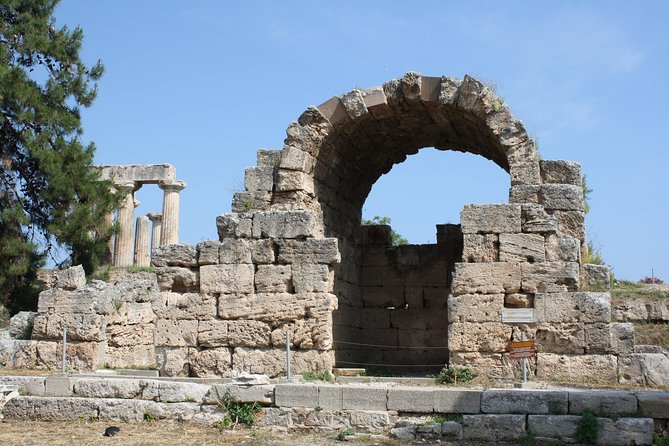
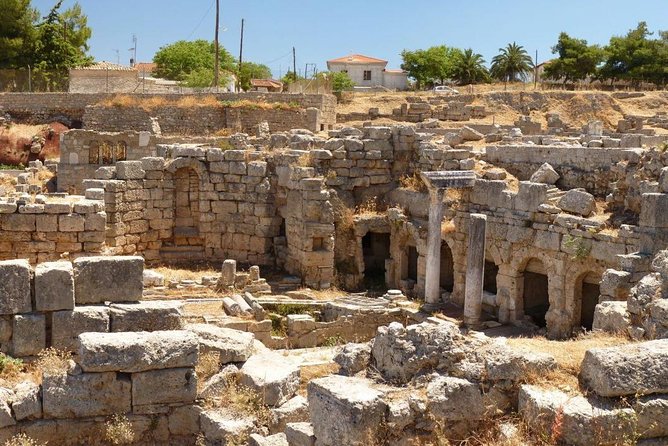
Ancient Corinth sits near the modern city of Corinth, about 5 kilometers away from the ruins. This is one of those places where you can feel the timeline in layers. It was a major city-state on the isthmus, and for Christians it is tied to Saint Paul’s two letters to the Corinthians in the New Testament, plus references in Acts of the Apostles. If you have read Paul, this stop gives you a real map in your mind, not just a name.
The Romans destroyed Corinth in 146 BC, then rebuilt a new city in 44 BC and later made it a provincial capital. That shift is part of what you are seeing as you move through the site.
The Archaeological Museum of Corinth is a smart add, because it is built within the archaeological area. Spend a bit of time here and the open-air ruins start making more sense. You will be able to connect themes and locations around the site, including the spring associated with Hadgimoustafa, the Lechaion Road, the Fountain of Peirene, and parts of the civic layout like the agora and stoa.
Even with limited time, I like using the museum moment to decide what you want to hunt for outside. If you can, scan for everyday life, civic space, and religious elements, then look for those same themes when you step back into the ruins.
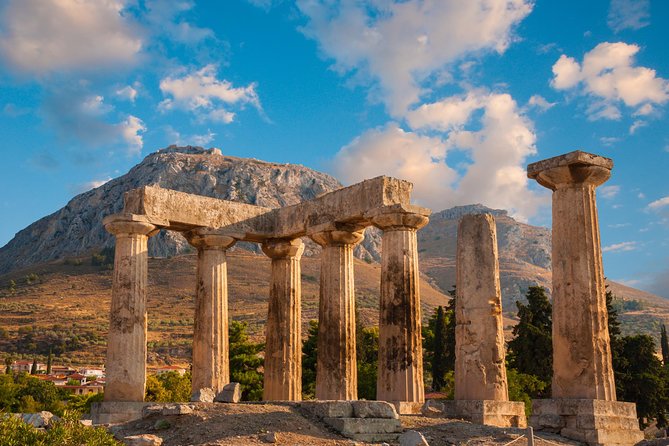
Temple of Apollo: a quick, free pause that sharpens the story
The Temple of Apollo stop is brief, but useful. The Temple of Apollo at Corinth was constructed around 550 BC, which helps anchor the site in a longer rhythm than the Roman-era rebuilding stories.
Because the stop is short and free, it works well as a reset between bigger moves. You can look, breathe, and then go into Mycenae with clearer context.
More of Mycenae and Epidaurus:
- From Athens: Small-Group Mycenae, Epidaurus & Nafplio Trip
★ 4.8 · 2,805 reviews - From Athens: Mycenae, Epidaurus & Nafplio Full-Day Tour
★ 4.5 · 2,530 reviews - Mycenae, Epidaurus and Nafplio Tour from Athens
★ 4.6 · 2,201 reviews - 4-Day Classical Greece Tour: Epidaurus, Mycenae, Olympia, Delphi, Meteora
★ 4.5 · 732 reviews
Mycenae: Lion Gate, Cyclopean walls, and the Treasury of Atreus
Mycenae is the stop that many people remember as the turning point of the day. It is the fortified citadel linked to the mythical King Agamemnon, and the scale and preservation can hit you even if you are not a hardcore history person.
What you are seeing is a Bronze Age stronghold that gave its name to the Mycenaean civilization. At its peak, the citadel and lower town held about 30,000 people and covered roughly 32 hectares, so this was not a small backwater.
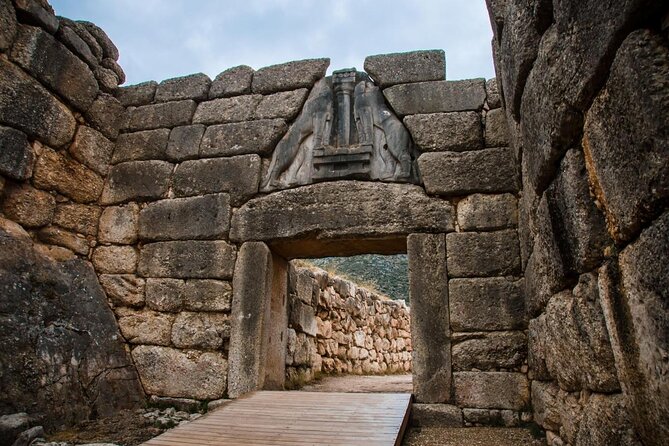
If you only focus on one symbol, make it the Lion Gate. It was the main entrance to the citadel, built in the 13th century BC, around 1250 BC. The naming comes from the relief above the doorway, where two lionesses or lions appear in a heraldic pose inside the stonework. Even better, this gate is one of the most famous examples of Mycenaean monumental sculpture that survived, meaning it is a rare image still readable today.
Walk the area thoughtfully and keep an eye on the Cyclopean walls. These are the massive fortifications that make the citadel feel like a fortress built to last forever.
Then, the highlight with the wild details: the Treasury of Atreus, also called the Tomb of Agamemnon. It is a tholos or beehive tomb on Panagitsa Hill, constructed around 1250 BC. The doorway lintel is famously heavy, with estimates around 120 tons, and it sits above a structure that still feels engineered to impress.
There is also a museum option at the entrance of the site, the Archaeological Museum of Ancient Mycenae, which can help you switch from wandering to understanding. If you love artifacts and context, you will likely enjoy it in that moment before moving on.
Epidaurus: a theatre you can feel, plus Asclepius healing sanctuary
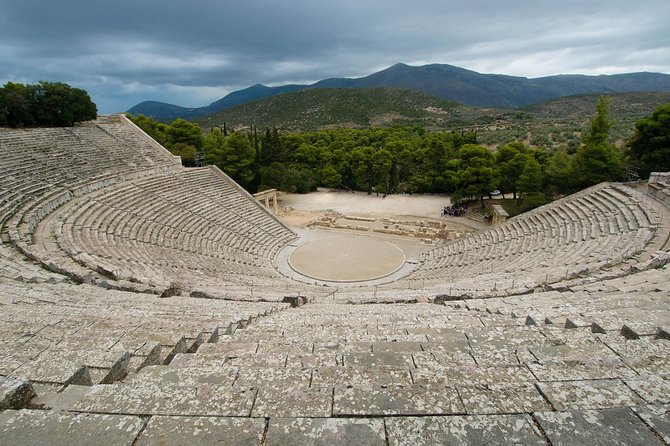
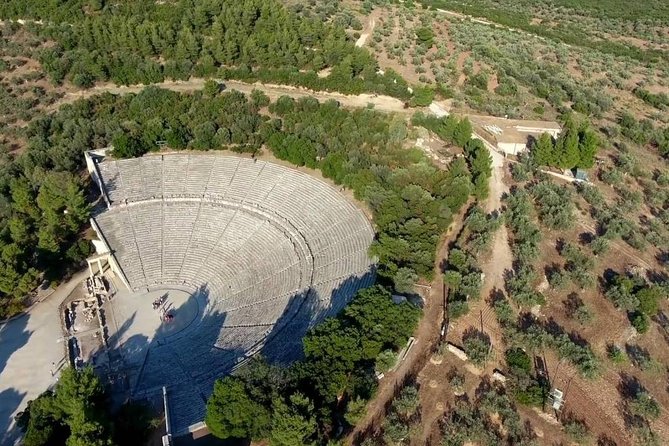
Epidaurus is a different kind of ancient site, more shaded and calmer, and that shift is part of why the day keeps working. The Ancient Theatre of Epidaurus is known for its acoustics and visual harmony, and the theatre still shows its classic tripartite layout: the theatron, the orchestra, and the skene.
What I find most useful is to treat the theatre as more than a backdrop for photos. Sit or stand where you can hear well, and try to notice how the design channels sound. It is one of those places where the architecture explains its own reputation.
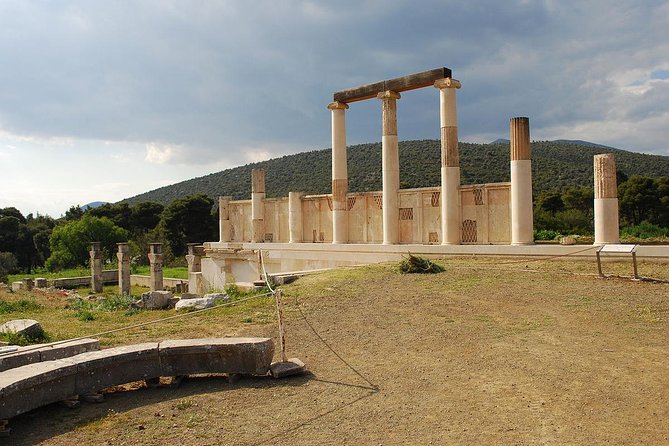
Also plan a visit to the Sanctuary of Asklepios, the healing sanctuary linked to Asclepius. The temple there was built in the early 4th century BC, and it was one of the major cult sites in the Greek world, often compared to big centers like Olympia and Delphi. If you are trying to connect the dots, this stop gives you the religious meaning behind the theatre era, where medicine and sacred ritual overlapped.
You may also include time at the Epidaurus Archaeological Museum if you want the artifacts and reconstructions that help you “see” what is missing from the ruins.
Nafplio’s old town: lunch time, harbor views, and optional fort steps
Nafplio is your decompression zone. This is where you get free time for lunch, coffee, shopping, and wandering around cobbled squares and Venetian-style buildings. Nafplio is often called the Naples of the East, and once you see the fortress-backed views and waterfront rhythm, the nickname makes sense.
It also carries real modern-adjacent history. It served as capital of the First Hellenic Republic and then the Kingdom of Greece from the start of the Greek Revolution in 1821 until 1834. So even if you came for Bronze Age drama, you are also stepping through a town that mattered in the country’s modern story.
For quick photo moments, aim for Bourtzi, the Venetian castle sitting in the middle of Nafplio’s harbor. From the harbor side, you can get that classic view that feels instantly “Greek postcard,” but still grounded in a real place.
If you want a bit more altitude, there are two fortress-style options in town. Acronauplia is the oldest part of the city, once a standalone town and later folded into fortifications. It was used as a prison at one point, and the view from up there is the reason it later became tied to hospitality.
Palamidi Castle is the bigger commitment. It sits on a hill about 216 meters high, built by the Venetians during their second occupation in the late 1600s to early 1700s. Expect stairs and effort, because the route from town is famously around 913 steps, with locals often quoting 999 steps. Entrance is not included, so decide based on your energy level and weather.
Price and what you still pay at the ticket desk
This tour costs $265.70 per person, and the value is in the full-day private setup. You are paying for more than sightseeing: hotel pickup and drop-off, private air-conditioned transport, Wi-Fi, bottled water, and a driver who keeps commentary going during the ride.
Lunch is offered as an upgrade with traditional Greek food at a local restaurant. If you know you will be hungry in the middle of the day, this can be the easiest way to protect your schedule, since your driver can line it up without you hunting on your own.
The main add-on costs are entrance fees. Corinth Canal and Temple of Apollo are free. For paid sites, you should budget about:
- €15 per person for Ancient Corinth and the Archaeological Museum of Corinth
- €20 per person for Mycenae, its Archaeological Museum, and the Treasury of Atreus
- €20 per person for Epidaurus and the Epidaurus Archaeological Museum
That comes to roughly €55 total in most cases, plus Palamidi if you go up there. If you add the lunch upgrade, plan for that too.
My take: this is a good value if you want to cover a lot of ground without the hassle of renting a car or piecing together buses. If you are already renting a car, the private element and driver storytelling may still be worth it, but only you can decide how much you care about the in-between travel hours.
How to pace a 9 to 10 hour day without wrecking your feet
This is a “long day” even when it feels well organized. The tour includes multiple archaeological stops, and you can expect uneven stone paths and hills at Mycenae and Epidaurus areas.
I strongly suggest wearing grippy walking shoes and bringing a light layer, even in warmer months. The car gives you comfort between sites, but the time outside is where your body counts the miles.
Also consider the weather. If rain hits, rocky surfaces can get slippery, and forts like Palamidi are not the place to gamble with traction. If weather looks rough, focus on the main ruins and theatre, then save the stairs for another trip.
Finally, one smart mindset: treat the day as a sequence of “short, focused visits.” You are not trying to do every corner at super depth. You are collecting big impressions, clear context, and a sense of how the places connect.
Best fit: who this tour is for, and who should choose something else
This tour fits best if you:
- want a private day that does not depend on train schedules or car parking stress
- enjoy both ruins and context, especially at Corinth where the museum helps
- like seeing the major Peloponnese anchors in one sweep, including Epidaurus and Nafplio
- would rather ask questions in the car than wander without direction
It may feel like too much if you:
- need very minimal walking
- want lots of museum time at each stop
- dislike stairs and steep viewpoints
Should you book this private tour from Athens?
Book it if you want your one-day Peloponnese plan to feel organized, comfortable, and story-driven. The private pickup, air-conditioned car with Wi-Fi and bottled water, and the driver-led explanations make the long drive time feel purposeful. And the combination of Mycenae’s fortification drama with Epidaurus’s theatre magic plus Nafplio’s relaxing old town break is a strong mix.
Skip or look for a slower option if you know you will struggle with uneven ground or you want a relaxed pace with long stays in each ticketed site. This is built for seeing a lot, so your best results come from good shoes, a flexible attitude, and using Nafplio time to recharge.
FAQ
Is this a private tour?
Yes. It is a private tour/activity, so only your group participates.
How long is the full day tour?
It runs about 9 to 10 hours.
Do you pick up guests from Athens hotels?
Yes. Hotel pickup and drop-off at your Athens hotel are included. The pickup time is adjustable upon request.
What does the tour cost?
The price is $265.70 per person.
Is lunch included?
Lunch is not automatically included. A traditional Greek lunch option is offered as an upgrade.
Are entrance fees included?
No. Entrance fees for Ancient Corinth and its museum, Mycenae plus its museum and Treasury of Atreus, and Epidaurus plus its museum are not included. Corinth Canal and the Temple of Apollo are free stops.
Is there Wi-Fi and air-conditioning in the vehicle?
Yes. The private air-conditioned vehicle includes Wi-Fi on board and bottled water.
Will I have a licensed tour guide inside the sites?
The drivers are not official licensed tour guides who enter the sites with you, but they can provide fluent English commentary and answer questions. A licensed tour guide is available upon request depending on availability.
Can I cancel and get a refund?
Free cancellation is available up to 24 hours in advance for a full refund.
More of Ancient Corinth
- From Athens: Ancient Corinth Day Trip with Canal & VR Guide
★ 4.6 · 1,073 reviews - Private Biblical Tour Ancient Corinth & Isthmus Canal from Athens
★ 5.0 · 762 reviews - Athens: Ancient Corinth & Nafplio Full Day Trip with Swim
★ 4.8 · 531 reviews - Athens: Corinth Canal, Mycenae & Nafplio Premium Guided Tour
★ 4.7 · 322 reviews
Just reviewed around Athens
- Athens Highlights: Myths & Philosophers Walking Tour★ 5.0 · 125 reviews
- Sounio Sea Kayak Tour to the Temple of Poseidon full program★ 5.0 · 126 reviews
- First Access Acropolis Tour, Beat the Crowds, Enjoy the Parthenon★ 5.0 · 128 reviews
- Athens Half-Day Tour: Acropolis, Parthenon & All Major Landmarks★ 5.0 · 127 reviews
- Athens Highlights by E-Bike: Small-Group Historic Tour★ 5.0 · 131 reviews
- Athens Cooking Class and Lunch in our beautiful garden in Greece★ 5.0 · 130 reviews
- Athens Shore Excursion: Acropolis Walking Tour★ 4.5 · 131 reviews
- Paul’s Biblical and Ancient Corinth Half-Day Tour★ 4.9 · 131 reviews
Mycenae & Epidaurus Tours, compared.
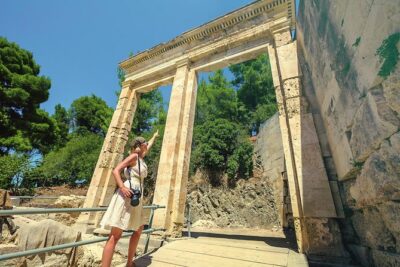
Small-Group Mycenae, Epidaurus & Nafplio Trip
Read our review →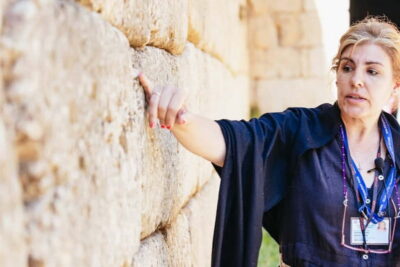

Mycenae, Epidaurus and Nafplio Tour from Athens
Read our review →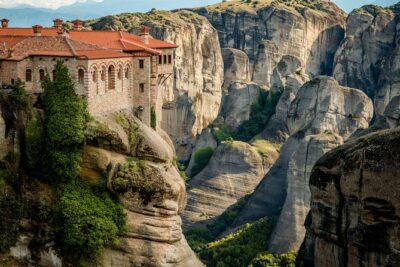
4-Day Classical Greece Tour: Epidaurus, Mycenae, Olympia, Delphi, Meteora
Read our review →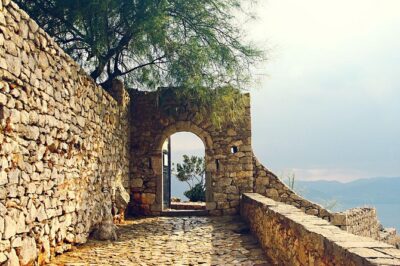
Mycenae and Nafplion Day Trip from Athens with Official guide
Read our review →
Catamaran Cruise in Nafplio | with Local Treats
Read our review →
Browse the lists this tour appears in