
Reviewed · SANTORINI VOLCANO CRUISES
Discover Scuba Diving in the Caldera of the Volcano in Santorini
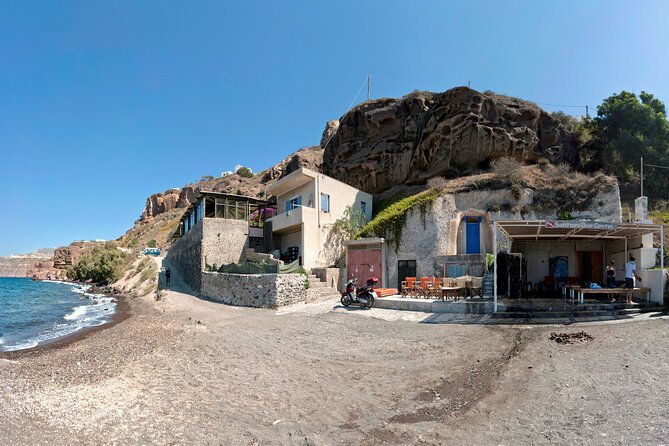
This experience is interesting because you start right where the volcano story is most visible. The scuba training begins at Akrotiri Caldera Beach, inside the crater area, with the sea waiting just steps away.
I really like two things. First, the small-group setup capped at 10 means you get personal coaching, not a rushed assembly line. Second, the instructors, like Barak and Zoe, are patient about the basics, so even first-timers can get comfortable fast.
One possible drawback to plan for: you might feel nervous at first, and breathing plus body control takes a few minutes to click. Also, you should not plan to fly for 12 hours after your underwater session.
Key highlights worth knowing
- Max 10 people keeps attention on you and your comfort level
- 20-minute briefing covers equipment, underwater hand signals, and safety basics
- Waist-deep first breaths in a controlled start right off the beach
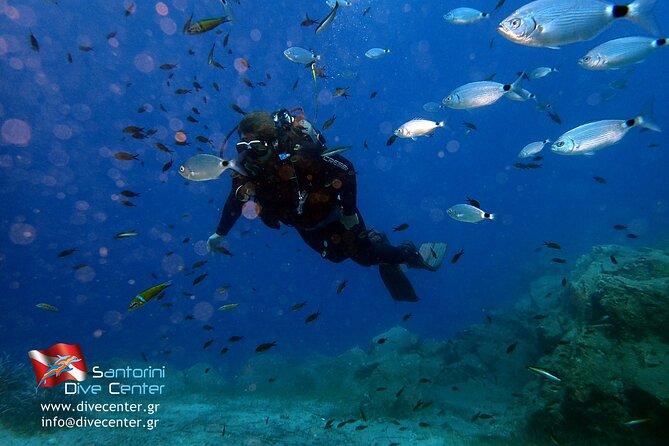
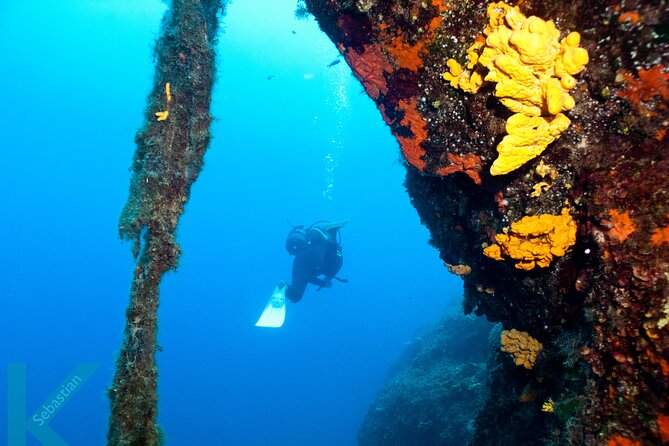
- Around 35 minutes underwater with a guided look at the nearby reef and fish
- Extra instructor support underwater for peace of mind
- Photo and video help may be available via staff GoPro capture
Volcano-crater location: why Akrotiri Beach makes this feel special
Santorini has plenty of dramatic views above the water. This flips the script. You begin at Akrotiri Caldera Beach, located right inside the volcano crater area. Instead of driving to a far-off boat and waiting in sun, you get ready and then head straight into the water from the beach.
That matters because it reduces friction for first-timers. Your time is spent on learning and seeing, not on long transfers. It also gives the session a different tempo. The entry feels immediate and practical, and it helps you focus on the training steps.
Your start time is either 10:00 or 13:00, depending on the schedule. Either way, you’re at the waterline early enough to enjoy clear, calm conditions when available. The experience ends back at the meeting point, so you’re not scrambling to coordinate transportation after you’re tired and a little excited.
More time on the caldera:
- Santorini: Catamaran Caldera Cruise with Meal and Drinks
★ 4.7 · 2,255 reviews - Santorini Caldera Cruise Tour (Volcano, Hot Springs, Thirassia)
★ 4.5 · 1,302 reviews - Santorini: Catamaran Caldera Cruise with Meal and Drinks
★ 4.8 · 980 reviews
The 20-minute briefing that sets you up for success
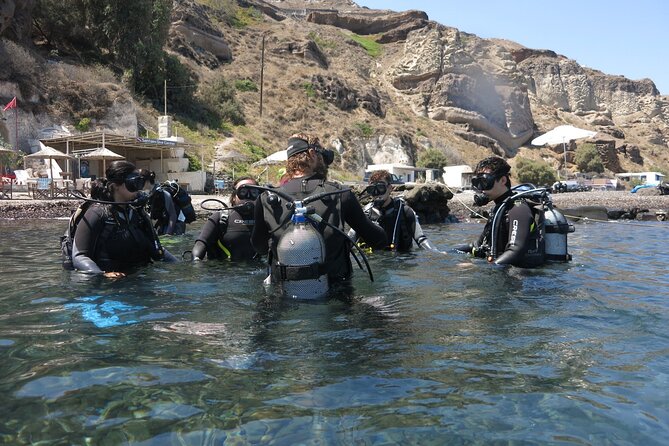
Before you ever go underwater, you do a structured briefing at the beach station. The instruction runs about 20 minutes, and it’s built around the core “how this works” stuff you need to feel safe.
You’ll learn:
- How the scuba equipment fits and how to handle it
- The important underwater hand signals
- The basic principles of scuba for breathing and movement
This part is where the instructors earn their tip. In reviews, people praised the calm teaching style, including patient coaching like Barak’s thorough explanations and Zoe’s steady pace. The goal is simple: help you understand what to do before you are trying to do it at the same time.
One smart detail is that you practice in stages. Your first underwater time is not a sudden leap into complicated maneuvers. It starts with breathing and comfort, then builds.
Also, the tour is offered in English, and you can show up with a mobile ticket. If you travel with a service animal, it’s allowed.
Waist-deep practice: learning to breathe without panicking
After the briefing, you change into wetsuits and put on your gear. Then you walk right into the water off the beach.
The first stop is shallow, about waist deep. Here’s what you’re really training at this stage: taking breaths through the scuba setup and getting used to how it feels in your body. This is often the moment where first-timers realize they need to slow down.
In reviews, people warned about normal first-session issues, like mask fogging or water getting into your mask. You also learn how to handle those moments with the signals and techniques you practiced in the shallows. If you expect it to feel strange at first, you’ll be less likely to fight it.
Your instructor then takes you step by step underwater for the guided portion. The shallow practice is what makes that next phase feel manageable instead of chaotic.
Quick reality check: many people start scared. That’s not a failure. It’s common. The instructors’ job is to take that fear and turn it into small actions you can handle.
The guided reef time: fish spotting and controlled calm
Once you’re comfortable breathing, you head underwater with the instructor. The guided underwater time totals about 35 minutes.
This part is focused, not rushed. You swim in a nearby reef area where you can watch sea life and look at the underwater rocks and seabed. Reviews highlight clear water and lots of fish. One review in French specifically mentioned seeing rascasses volantes, along with other fish, which suggests you may spot several types of reef-friendly species depending on conditions.
A standout safety detail: you might have more than one instructor supporting you. One review mentioned an extra instructor following along underwater, which can make nervous students feel steadier. If you like having eyes on you, this is a good sign.
You also get real guidance, not just freedom. You’re shown where to go and you get checked on often. That matters because buoyancy and control take time for beginners, and it’s easy to overdo it if you’re trying to prove you’re fine.
More of the volcano and hot springs:
- Santorini: Volcano and Hot Springs Sunset Dinner Cruise
★ 4.6 · 1,224 reviews - Santorini Volcano and Hot Springs Cruise Tour from Fira Old Port
★ 4.0 · 1,214 reviews - Santorini Port: Cruise to Volcano, Hot Springs & Thirassia
★ 4.5 · 992 reviews - Santorini: Thirassia Islands and Volcano Guided Cruise
★ 4.4 · 650 reviews
Getting photos and keeping the memory: the GoPro touch
One reason people love this outing is that it produces real, shareable memories. In at least one review, the staff brought a GoPro to take pictures and videos.
That means you can focus on learning and watching fish, instead of worrying about holding a camera. It’s also helpful if you’re using your hands to manage your gear and breathing.
There’s another nice detail from a review: someone left a GoPro behind, and the team notified them and shipped it back. That’s a small thing, but it signals good handling and follow-through.
You should still consider that underwater photo results vary with conditions and how you move. But the fact that they try to capture you tells you this is set up for first-time fun, not just check-the-box instruction.
Value check: what $108.84 really buys you in Santorini
At $108.84 per person for roughly 2 hours 30 minutes total (with about 35 minutes underwater), you’re paying for more than a scenic bucket-list activity.
You’re paying for:
- Training and coaching for beginners
- Equipment and safety gear provided for you
- A small-group format with a max of 10
- Guided underwater time focused on comfort and fish spotting
- Underwater hand-signal instruction
- Photo and video support may be included via staff GoPro capture
When you compare this to tours that only offer a “sit and follow” style, the difference is control. You’re learning how to use the equipment correctly. And because it’s capped at 10, the instructors can actually adapt to the group.
There’s also a timing benefit. You don’t need a full day plan to get the experience. This is short enough to still let you enjoy Santorini afterward, assuming you plan your logistics wisely.
One more practical point: the tour is often booked about 32 days in advance on average. If you’re visiting in peak season, treat this as a popular activity and reserve early rather than hoping for last-minute space.
Planning your day: the 12-hour no-fly rule and weather reality
One logistical consideration you should respect is the air travel guidance. After one underwater session, you’re advised not to take a plane for 12 hours. This matters if your Santorini trip is squeezed into a tight itinerary with quick hops between islands or connections.
So I suggest you do this earlier in your trip. If you’re leaving the island the next day, book the session with that in mind.
Weather is another key factor. The experience requires good weather, and if it’s canceled due to poor conditions, you’ll be offered a different date or a full refund. That doesn’t help your schedule, but it does protect your safety and the quality of the water time.
Also, the tour ends back at the meeting point. That makes it easier to build your afternoon or morning around it without complicated end-of-day transfers.
Who this is best for, and who should think twice
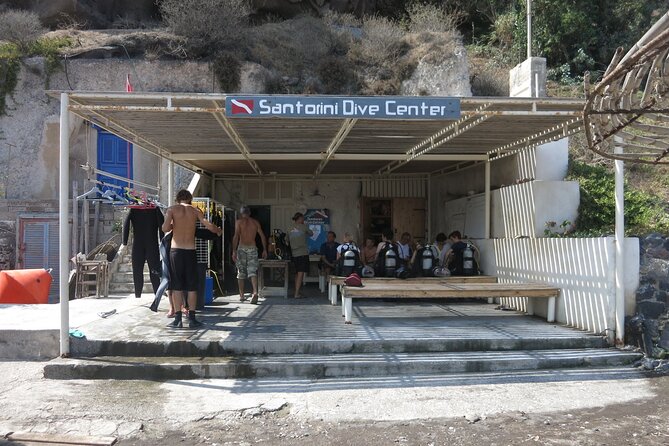
This outing is designed for beginners. The experience notes that most travelers can participate, and reviews strongly back that up with first-time success stories.
You’ll likely enjoy it most if:
- You’ve never used scuba equipment and want a guided introduction
- You appreciate step-by-step coaching and reassurance
- You want a unique Santorini setting, crater-to-sea rather than boat-to-spot
You might want to reconsider or ask more questions in advance if:
- You know you struggle with the sensation of breathing through equipment
- You get very panicky when you cannot immediately control every detail
- You have a time-sensitive flight within 12 hours after the session
If you are nervous, that’s still normal. The best part of this program is that the teaching style seems built for nerves, not against them.
Practical tips to make your session smoother
Here’s how to help the training click faster once you’re in the wetsuit.
- Go in expecting a learning curve. Breathing and buoyancy are unfamiliar at first, even when you understand the theory.
- Pay attention to hand signals early. In water, your brain will switch from talking to communicating with gestures.
- Don’t fight the mask. If fogging happens, follow your instructor’s guidance for clearing and adjusting.
- Choose a time you can relax beforehand. If you’re rushing, you may feel more fear than you need.
- If you’re bringing valuables, have a plan. One GoPro was left behind before, and the team resolved it by notifying and shipping it, but you don’t want to test that luck.
Should you book this volcano caldera scuba session?
Yes, I think you should book it if you want a first-time scuba training experience with strong coaching, small group attention, and a truly memorable starting point at a volcanic crater beach. The biggest strengths are the patient step-by-step instruction and the safety support that shows up in reviews, including extra underwater supervision.
It’s also a good choice for couples and solo travelers who want a real skill introduction without committing to a full course. Families with teens can do well too, especially if everyone can follow instructions calmly.
The main reason to pause is timing and comfort. Plan for the 12-hour no-fly rule, and be honest about how you feel about controlled breathing and body control at first.
If those two things fit your day and you’re ready to take it slow, this is a very solid value way to see Santorini from the inside out.
FAQ
What is the duration of the experience?
The experience is about 2 hours 30 minutes total, with around 35 minutes spent underwater.
What time does the tour run?
It starts at either 10:00 or 13:00 from the dive station at Akrotiri Caldera Beach.
How big is the group?
The tour has a maximum of 10 travelers, which helps keep instruction more personal.
What do I need to bring or use?
Equipment and training are provided, and you will be taught the basic scuba principles and underwater hand signals.
Is this suitable for beginners?
Yes. It is described as beginner-friendly, and the program focuses on basic principles and practice first in shallow water.
Can I fly after this experience?
No, you are advised that after one underwater session it is not recommended to take a plane for 12 hours.
Can the schedule change due to weather?
Yes. The experience requires good weather, and if it is canceled due to poor weather you will be offered a different date or a full refund.
More Diving Trips in Santorini
- Santorini: Scuba Diving Experience in Caldera for Beginners
★ 4.9 · 597 reviews - Heraklion: Scuba Diving Experience for Beginners _Beach
★ 4.7 · 549 reviews - (Full day)Scuba Diving in Rhodes
★ 5.0 · 466 reviews - Heraklion: Beginner Scuba Diving Lesson with PADI Instructor
★ 4.9 · 355 reviews
Just reviewed around Santorini
- Santorini See Everything All Day Private Tour★ 5.0 · 45 reviews
- Santorini: Caldera Private Power Catamaran Cruise★ 4.9 · 45 reviews
- Private Morning Tour Lagoon 400-380 Sailing in Santorini ,lunch, drink, transfer★ 5.0 · 45 reviews
- Private Tour: Customize Your Perfect Day in Santorini★ 5.0 · 45 reviews
- Santorini: 6hr Small Group Shore Excursion Villages & Wine★ 5.0 · 45 reviews
- Photoshoot in Flying Dresses in Santorini★ 4.5 · 46 reviews
- Santorini: Luxury Catamaran Cruise with Fresh Fish BBQ & Drinks★ 5.0 · 47 reviews
- Smooth and Fun Taste of Santorini Private Tour★ 5.0 · 47 reviews
Santorini Volcano Cruises, compared.
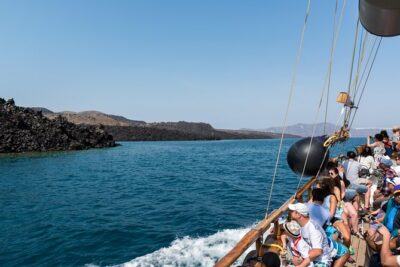
Santorini Caldera Cruise Tour (Volcano, Hot Springs, Thirassia)
Read our review →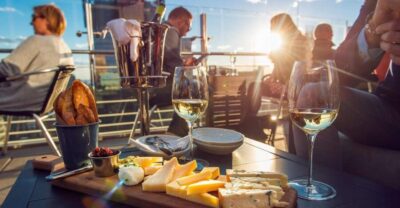
Volcano and Hot Springs Sunset Dinner Cruise
Read our review →
Santorini Volcano and Hot Springs Cruise Tour from Fira Old Port
Read our review →
Santorini Port: Cruise to Volcano, Hot Springs & Thirassia
Read our review →
1-Day Boat Trip: Santorini Volcano, Thirassia & Oia Sunset
Read our review →
Santorini Port: 3 Hour Cruise to Volcano and Hot Springs
Read our review →Browse the lists this tour appears in