
Reviewed · MYTHOLOGY TOURS
Mythology, Philosophy and Democracy Tour
This short Athens walk is interesting because it turns big ideas into real street corners. I love how it connects mythology and philosophy to the real political experiment of democracy, and I love that you stand at the Pnyx and hear the logic behind how Athens argued, voted, and debated. One drawback to consider is the heat and the walking time, even though the pace includes an easy stroll through the market area.
The best part is the guide, Panos. He’s repeatedly praised for wit and storytelling, and for making the connections feel human, not like a textbook. You’ll also get a small-group feel, with a maximum of 12 travelers, which makes it easier to ask questions and stay engaged.
Key highlights to expect on this walk
- Pericles’ setting at Kerameikos, tied to the city’s early democracy and civic ideals
- The Ancient Agora as the place where thinkers and leaders argued about how life should work
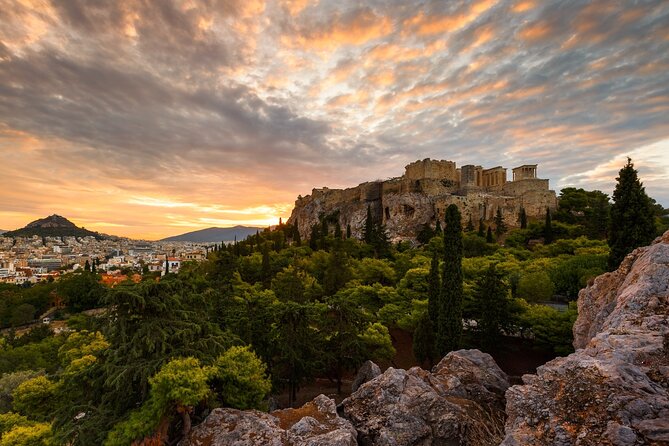
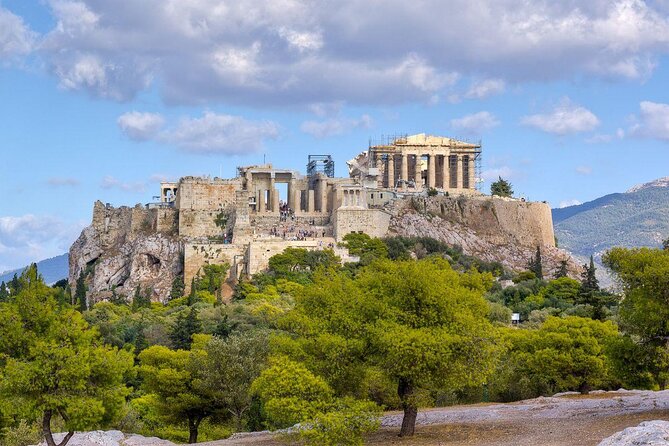
- Acropolis viewpoints from Pnyx Hill and Philopappos Hill, with great sunset or night options
- Roman Athenians in the mix, via the Roman Agora, Hadrian’s Library, and the Tower of the Winds
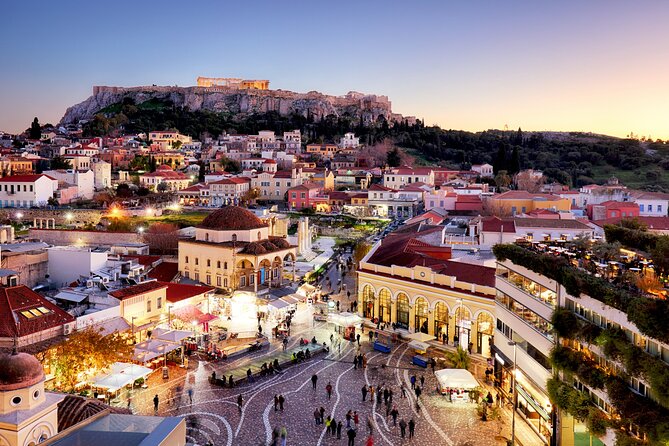
- A guided street-level route through Plaka and Monastiraki, not just monuments, but neighborhoods
What this tour is really about, and why it works
Most Athens tours point out ruins. This one tries to explain the thinking behind the ruins. You move from ideas people believed without proof, to the kind of questions that helped lead to early science and logic.
That approach matters because it gives you a mental map. Instead of collecting sites, you start seeing patterns: how citizens formed opinions, how philosophers trained arguments, and how political life shaped culture. You’ll leave with a clearer sense of why Athens mattered, not just what Athens has.
And since the group is capped at 12, you’re not fighting for attention. Panos can keep the story moving, while still reacting to what you find interesting.
More Mythology Tours in Athens:
- Athens: Mythology of Delphi, Museum and Arachova Guided Tour
★ 4.7 · 5,102 reviews - Athens & Acropolis Highlights: Greek Mythology Small-Group Tour
★ 5.0 · 2,370 reviews - Athens: Acropolis and Mythology Highlights Small Group Tour
★ 4.8 · 2,275 reviews
Price, value, and where your money actually goes
At $50.69 per person for about 3 hours, the cost is mainly paying for two things: a guided narrative and time in the city with a smart route. The route also focuses on stops listed as admission ticket free, so you are not getting nickel-and-dimed by entry fees at each point.
For me, the value comes from the format. You get a guided explanation of multiple landmarks in one session, including key democracy and philosophy sites, plus a couple of prime viewpoints over the Acropolis. If you only have a morning or afternoon and you want the “big picture” before diving into museums on your own, this price can make sense.
Your timing and comfort checklist for a 3-hour Athens walk
Plan for warm streets and sun. The itinerary includes multiple outdoor stops and long sightlines, plus viewpoint time at Pnyx and Philopappos Hill. If you’re traveling in hotter months, you’ll want water and a hat, and it helps to wear shoes that can handle uneven stone.
The good news is that the route includes an easy pace walk through the Monastiraki area. You’re not constantly sprinting between sights. Still, in 3 hours you cover a lot of ground, so if you prefer long museum sessions with sitting breaks every 10 minutes, you might feel rushed.
Kerameikos: the cemetery that connects to Pericles and democracy

Kerameikos is the first stop for a reason. It’s relatively less touristy than the big headline sites, but it’s packed with meaning. The area, tied to ceramics, was also Athens’ cemetery for many centuries, and prominent Athenians were buried here.
What you’ll focus on is civic memory. Panos frames Kerameikos through Pericles’ famous Epitaph speech, delivered for the first casualties of the Peloponnesian War, praising the virtues of democracy and the way Athenians lived.
This is a strong start because it sets the emotional baseline. Before you get political theories, you get the human cost behind the politics. You also get context for why civic ideas were not abstract in Athens, they were tied to funerals, public honor, and public speech.
More days around Athens:
- Athens: Acropolis & up to 5 Archaeological Sites Combo Pass
★ 4.2 · 13,904 reviews - Athens: Acropolis Ticket with Optional Audio or Live Guide
★ 4.2 · 11,055 reviews - Athens: Acropolis, Parthenon & Acropolis Museum Guided Tour
★ 4.8 · 9,316 reviews - The Acropolis, Parthenon & Acropolis Museum Guided Tour
★ 4.7 · 8,493 reviews
The Ancient Agora: where arguments were daily life

Next you shift to the Ancient Agora, which is described as the heart of Athens. This is where philosophers and politicians mixed with the rest of the city, and where debate covered everything from leadership to ethics to daily living.
The tour’s payoff here is the way it links people you know by name to the places where their ideas grew. You’ll hear about major figures associated with Athens, including Socrates, Plato, Solon, Themistocles, Pericles, Thucydides, Sophocles, and Aristophanes.
One practical benefit: once you’ve walked through the Agora area with this frame, you’ll understand why the city felt like a “thinking city.” It’s not just marble. It’s the physical stage for conversations that shaped how the West later talked about citizenship, law, and reasoning.
Time at this stop is shorter, so I’d treat it as orientation. If you want to spend longer here on your own after the tour, you’ll know what to focus on first.
Monastiraki Square and the market streets: color without losing the thread
Monastiraki Square is next, and the pace shifts into something more relaxed. You’ll do an easy walk through the Flea market area, with antique and tourist shops along the way.
This part works because it prevents the tour from becoming only “serious mode.” You get street texture and a feel for how Athens lives now, while Panos keeps tying back to the long arc of civic life and public space.
If you hate markets and crowds, this is the part to adjust mentally. It can feel lively and commercial. But even if shopping isn’t your thing, the walk is a nice break before you move into more architectural history.
Roman Agora and the logic of later layers

The Roman Agora sits north of the Acropolis and east of the Ancient Agora, and it adds a later chapter to the story. The tour keeps the focus on how Athens kept changing, even after the classical era.
If you love seeing continuity, this stop helps. Athens doesn’t freeze in time. You see how older civic spaces stayed meaningful, while new rulers and new building styles reshaped what people used those spaces for.
This is also a good “breathing stop” in the schedule. The duration is short, so you don’t need to treat it like a major museum visit. Instead, let it act as a bridge between the philosophical Athens of the Agora and the later timekeeping and learning sites you’ll see next.
Tower of the Winds: Athens timekeeping, meteorology, and the clever mechanics
Then you reach the Tower of the Winds, an octagonal building built in the 1st century BC by the astronomer Andronicus of Kyrristos. It served as both a wind indicator and a clock, almost like an Athens version of Big Ben.
Here’s the neat part to watch for: it’s described as having a solar clock, and on cloudy days there was also a hydraulic mechanism that produced a sound every hour. It’s considered the first meteorological station.
This stop is a great match for the tour’s theme, because it shows how measurement and observation were not just for scholars in isolation. People wanted to track weather and time, and architecture did the job for them.
Hadrian’s Library: Roman Athens and the ambition of learning
Hadrian’s Library was created by Roman Emperor Hadrian in AD 132, on the north side of the Acropolis. It was the second largest library in the world at the time, according to the tour description.
Even if you don’t geek out over library size, the idea matters. After the classical flowering of debate and philosophy, later rulers still cared about learning as a prestige project. You’re seeing how education stayed tied to power and identity.
This stop pairs well with the tour’s philosophy focus. It’s an example of how “thinking” had physical infrastructure, not just ideas floating around.
Plaka: small streets, big context
Plaka is your scenic neighborhood break, with small houses and narrow streets. The stop is timed so you can enjoy the feel of walking in a historic district without it turning into a long detour.
I like Plaka here because it helps you remember you are not only visiting ancient theory. You are also walking through the city where those ideas eventually became part of how people talk, build, and remember.
Keep an eye out for viewpoint opportunities in this area. Even brief pauses here can help your eyes reset before Pnyx and Philopappos.
Pnyx: the first parliament and Athens arguing in public
Pnyx Hill is one of the most meaningful stops on the whole route. The tour describes it as the first parliament of the world. This is where the political side of Athens turns from concept into place.
You also get a payoff for your senses. Pnyx offers great views over the area, and it’s a strong sunset spot. If you’re into “why politics looked the way it did,” Pnyx is a must.
When Panos connects democracy to the earlier steps in philosophy, the location helps. You can imagine citizens gathering to listen, debate, and decide. It stops being abstract, and becomes a physical rhythm of speeches, persuasion, and public life.
Philopappos Hill: the end point with night views and a reflective finish
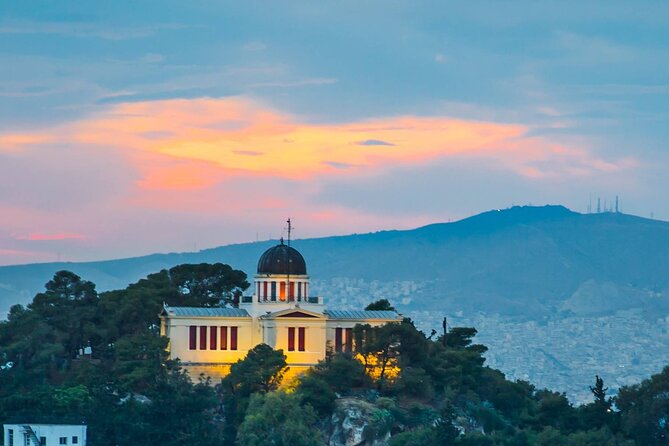
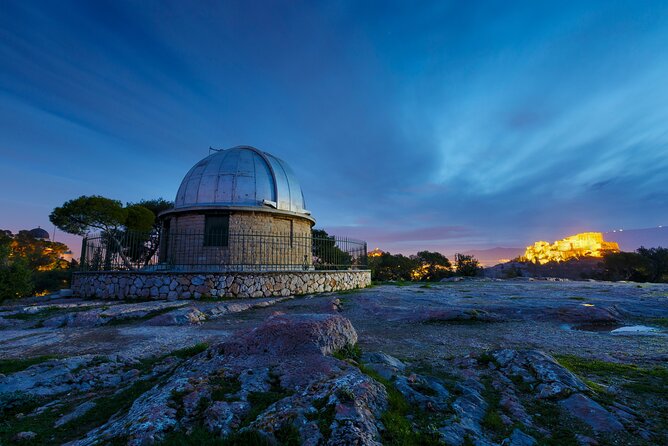
The tour ends at Philopappos Hill, also called the Hill of the Muses. The route highlights it as a top vista for views of the Acropolis by night.
This final stretch is important because it gives your brain time to absorb everything you just learned. You start with civic memory at Kerameikos, move through talk and institutions at the Agora, layer on Roman Athens, and then finish with the actual feeling of Athens under changing light.
Some guides close with a short symposium style reflection, and in this case that kind of wrap-up fits the theme perfectly. You’re not just checking the last box. You’re letting the day’s ideas settle into something you can carry.
Tips to get more from Panos and this philosophy-centered approach
If you want the biggest impact, go in with two mindsets. First, treat it like a conversation, not a lecture. Panos is praised for humor and for pushing you to think critically, including how past problems can echo today.
Second, listen for the connections. The tour’s whole point is that mythology, philosophy, and democracy didn’t grow in isolated lanes. They influenced each other, and Panos’s style is built to show those links as you walk.
Also, if you’re traveling with teens or adults who like big questions, this format is a good fit. People in that age range often leave saying they want to read more. Even if you are not a philosophy person, the tour aims to explain why it matters in plain language.
Who should book this, and who might want a different plan?
Book it if you want:
- A small-group Athens walk focused on ideas, not just monuments
- The story of democracy and philosophy grounded in specific locations
- Strong viewpoints over the Acropolis without needing extra transport
You might skip it if you:
- Prefer long indoor time and are not excited by a route heavy on outdoors and viewpoints
- Want a mostly archaeological deep-dive with lots of quiet solo time
- Don’t want any discussion component and prefer purely visual sightseeing
Should you book this Mythology, Philosophy and Democracy Tour?
If your goal is to understand Athens as a birthplace of civic debate and Western thought, this is a very strong use of a 3-hour block. The price is reasonable for what you get, especially with a maximum group size and stops that are listed as admission ticket free. Most importantly, the tour is guided in a way that keeps ideas connected to real places, not floating above them.
I’d book this early in your trip. Once you’ve built the “why Athens” story, the rest of the city clicks faster, and even the Acropolis viewpoints feel more meaningful when you know what arguments once happened nearby.
FAQ
How long is the Mythology, Philosophy and Democracy Tour?
It lasts approximately 3 hours.
What is the price per person?
The price is $50.69 per person.
What group size should I expect?
The maximum group size is 12 travelers.
What language is the tour offered in?
The tour is offered in English.
Where does the tour start and end?
It starts at the Statue of Theseus, Athens 105 55, Greece, and ends at Philopappos Hill, Φυλής 215, Athina 117 41, Greece.
Are admission tickets needed for the stops?
The provided stop details list admission ticket free for the stops on the route.
Is the pace easy enough for most people?
The tour says most travelers can participate, and it specifically mentions an easy pace walk through Monastiraki Square.
Is it near public transportation?
Yes, it is near public transportation.
Are service animals allowed?
Yes, service animals are allowed.
What if the weather is bad or I need to cancel?
The experience requires good weather. If it is canceled due to poor weather, you are offered a different date or a full refund. You can cancel for free up to 24 hours in advance for a full refund.
Just reviewed around Athens
- Athens Airport Arrival Transfer to Hotels or Addresses in Athens★ 3.5 · 45 reviews
- Luxury Catamaran Sunset Semi-Private & Greek Gastronomy in Athens★ 5.0 · 45 reviews
- Port Transfer★ 5.0 · 45 reviews
- Private Luxury Tour: Unveiling the Sacred Mysteries of Eleusis★ 5.0 · 45 reviews
- Acropolis Private Wine Tasting @ Finewine store★ 5.0 · 46 reviews
- Delphi, Thermopylae full day private tour from Athens★ 4.9 · 46 reviews
- From Athens: City & Corinth Guided Day Tour★ 4.8 · 46 reviews
- Ancient Corinth Half-Day Private Tour from Athens★ 5.0 · 46 reviews
Mythology Tours, compared.

Mythology of Delphi, Museum and Arachova Guided Tour
Read our review →
Athens & Acropolis Highlights: Greek Mythology Small-Group Tour
Read our review →
Acropolis and Mythology Highlights Small Group Tour
Read our review →

The History of Athens: Greek Mythology Private Tour
Read our review →

Greek Mythology Treasure Hunt for Kids – Athens Private Tour
Read our review →Browse the lists this tour appears in