
Reviewed · ANCIENT CORINTH TOURS
Footsteps of Apostle Paul from Athens to Corinth, Private Day Tour
This is interesting because you are not just sightseeing in Athens and Corinth. You are tracing a story, from Paul’s famous speech to where he worked, preached, and sailed onward.
I love the mix of major classical landmarks with the specific Paul-related stops like Areopagus and Ancient Corinth. I also like that this is private, so the driver can slow down at the places you care about most, rather than herding everyone through. The main consideration is timing: it is a packed 7 to 8 hour day, so summer heat and walking on uneven ancient ground can be real.
Quick hits before you go
- Private flexibility: you set the pace, and the driver can help you hit key moments with fewer crowds
- Paul’s Athens anchors: Areopagus and the Ancient Agora connections to his preaching are built into the route
- Corinth Canal is quick but special: a modern engineering stop with big views and a navigation story tied to shipping
- Ancient Corinth is the payoff: Priscilla and Aquila, Gallio’s trial, and Paul’s 18 month stay are part of the visit
- Driver-only commentary at sites: the driver speaks English on the way, and you can add a licensed guide in Corinth for an extra fee
A private Paul’s footsteps day, built for meaning and logistics
A good biblical-history day tour has two jobs. First, it has to connect the places on a map to what you read in Acts. Second, it has to make the logistics painless in a city where sites are spread out and crowds can decide your day.
This one is designed around that. You start with Athens, then move to the Corinth area, including the port of Kechries where Paul’s voyage route is linked. Because it is private, you do not have to race between stops. In practice, you should still plan for a full day, with breaks that you control.
You also get something that matters: a driver who offers English commentary during the ride. That means you get context as you travel, not just at the door of each site. Just know the driver cannot enter the archaeological sites, so if you want a licensed guide inside specific areas, you can request one for Corinth.
More of Ancient Corinth:
- From Athens: Ancient Corinth Day Trip with Canal & VR Guide
★ 4.6 · 1,073 reviews - Private Biblical Tour Ancient Corinth & Isthmus Canal from Athens
★ 5.0 · 762 reviews - Athens: Ancient Corinth & Nafplio Full Day Trip with Swim
★ 4.8 · 531 reviews
Price and value: is $286.02 per person fair for a 7 to 8 hour private tour?
At $286.02 per person, this is not a budget group tour. What you are paying for is the combination of private transportation, pickup from Athens or Piraeus, and a route that strings together multiple meaningful sites.
Here is why it can be good value:
- Private vehicle included: you get an A/C, non-smoking, insured ride suitable for your group size.
- Pickup and drop-off: hotels and the Piraeus cruise port are included, so you are not piecing together your own taxi plans.
- Skip-the-line ticket purchase support: they help with purchasing entrance tickets in advance.
- Water and basic comforts: bottled water is included, and child seats are available on request.
What is not included is also important: entrance fees are not included for the sites. For example, the Ancient Agora and its museum have an entrance fee, and Ancient Corinth and its museum have another fee. If you already know you will want those museums, you should factor that into your total.
My quick takeaway: this price starts making sense when (1) you value private pacing, (2) you want context tied to Paul’s story, and (3) you do not want to manage transport between far-flung stops yourself.
The morning in Athens: Areopagus, Agora, and the city Paul spoke into
The day starts at 8:00 am, with flexible pickup by request. You can be collected from Athens center or from Piraeus, including the cruise port. Expect an A/C car, and expect the ride to be where you get a lot of the story first.
Stop 1: Areopagus (Paul’s speech setting)
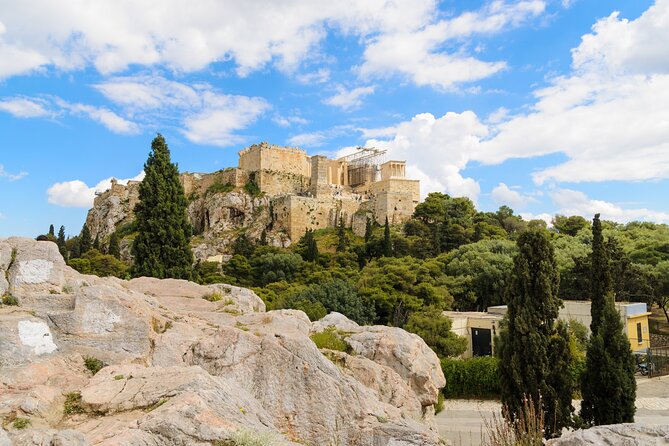
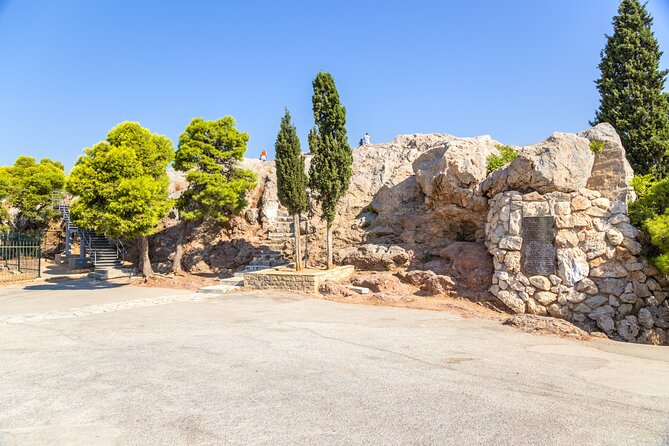
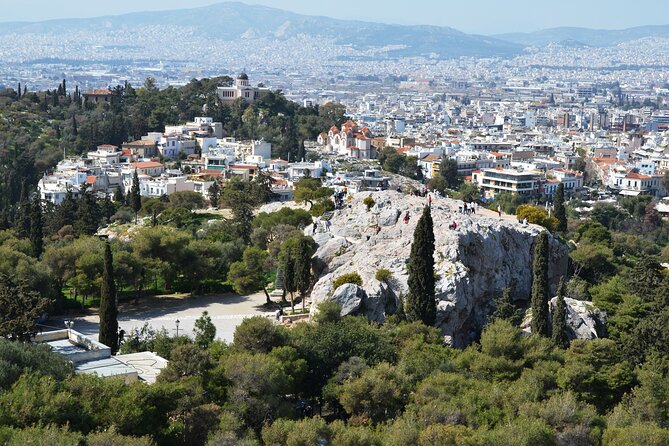
Areopagus is a rock outcropping northwest of the Acropolis area. Historically, it served as a council and a court location. In Roman times, it is tied to the setting for Paul’s famous speech, including the idea of an altar to an unknown god.
This stop works well because it is both dramatic and readable. Even if you are not a scholar, the physical setting helps you understand why Paul’s message would land with Athenian listeners.
Practical note: admission is free here, and the stop is short, around 20 minutes.
More days around Athens:
- Athens: Acropolis & up to 5 Archaeological Sites Combo Pass
★ 4.2 · 13,904 reviews - Athens: Acropolis Ticket with Optional Audio or Live Guide
★ 4.2 · 11,055 reviews - Athens: Acropolis, Parthenon & Acropolis Museum Guided Tour
★ 4.8 · 9,316 reviews - The Acropolis, Parthenon & Acropolis Museum Guided Tour
★ 4.7 · 8,493 reviews
Stop 2: Ancient Agora (where Paul preached first to Greeks)
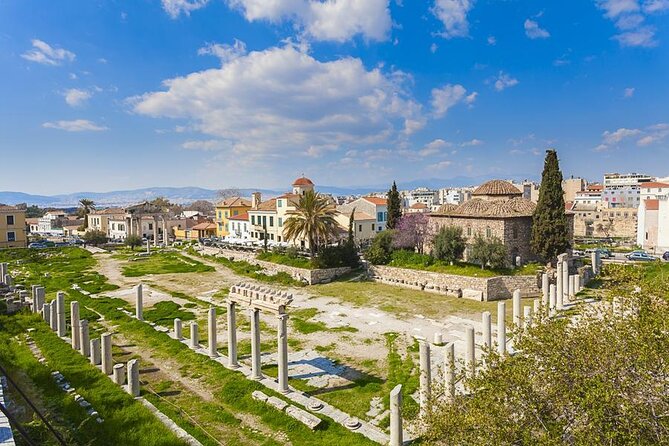
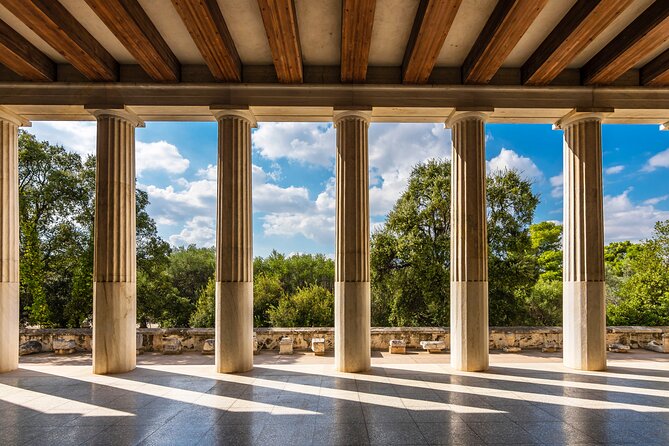
The Ancient Agora was the heart of ancient Athens, the political and commercial center, plus the religious and justice hub. It was used in every period of the city’s history, from very early occupation through classical Athens.
The important biblical context is that Paul preached Christianity for the first time to Greeks there in 51 AD. You can think of it as the moment his message moves from a local Jewish world into a broader Greek public sphere.
This is one of the longer Athens stops at about 1 hour 30 minutes. Admission is not included for the Agora museum area, so build that into your budget if you want to go inside.
Temple of Olympian Zeus: Roman scale on an ancient axis
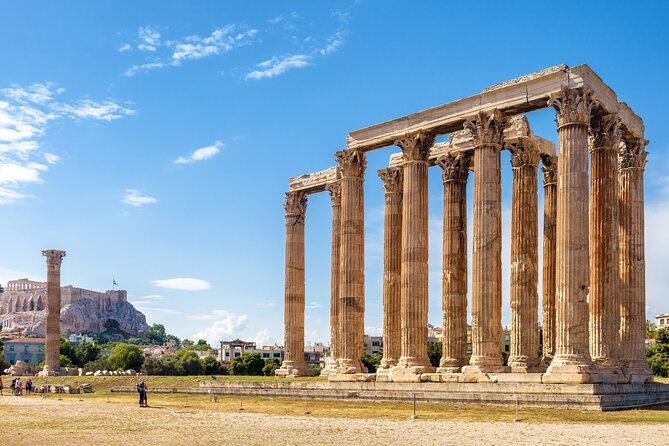
Between the Agora and the stadium stretch, you pass the Temple of Olympian Zeus. This is the kind of place where numbers do the talking. It had a huge column layout with three rows of eight columns on the narrow sides and two rows of twenty on the long sides. Sixteen columns survive today, with thirteen intact on the east side.
The practical beauty here is the contrast. Paul’s Athens message is about everyday civic life. Then you see a monument that reflects power at a massive Roman scale.
Admission is listed as free for the stop, and the time you get depends on how your driver manages the flow.
Panathenaic Stadium, Hadrian’s Arch, and Syntagma Square with the right pauses
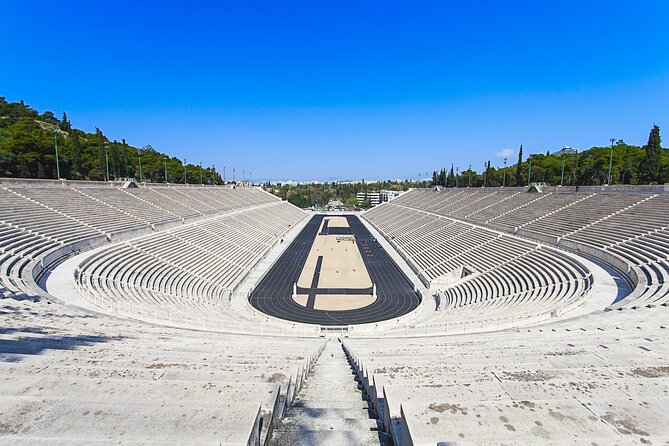
Athens keeps changing character as you go. This part of the tour moves from ancient sport and Roman imperial messaging into the modern civic center.
Panathenaic Stadium: where the form matters
The Panathenaic Stadium began as a natural hollow. Lykourgos turned it into a stadium for the Great Panathenaea games around 330 to 329 BC. Later, Herodes Atticus restored it in the second century AD, shaping it into the horseshoe form many people recognize today.
You even get specific measurements: about 204.07 meters long track and 33.35 meters wide. It is believed the stadium held around 50,000 people. For anyone who likes to understand scale, this stop delivers.
Time is short at about 15 minutes, and admission is free.
Hadrian’s Arch: a clean split message, old city and new city
Hadrian’s Arch sits on a street that connected old Athens to the Roman section built by Hadrian. Built in AD 131, it includes two inscriptions that give you the story in two directions: one side calls it the ancient city of Theseus, and the other side calls it the city of Hadrian, not Theseus.
This is a clever stop for the way it frames identity. Paul’s Athens world was a mix of old Greek pride and Roman governance. This arch is basically visible proof of that tension.
Time is listed as a short stop, and admission is free.
Syntagma Square plus the Unknown Soldier and Evzones
Syntagma Square is Athens’ big public plaza in front of Parliament. It is a people-watching stop, and it also helps you reposition from ruins to a living city.
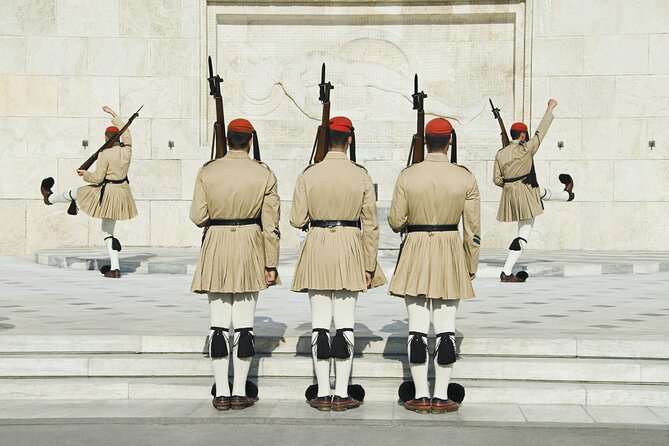
The Monument to the Unknown Soldier sits there, a war memorial sculpted between 1930 and 1932, with 24 hours a day, 7 days a week guarding by the Evzones at the Greek presidential guard.
Then comes the Changing of the Guard ceremony at the Presidential Mansion and at the Tomb of the Unknown Soldier area. The ceremony at the Tomb is a major tourist draw, so going during the right timing can matter.
The tour’s listed stop time is about 15 minutes for both the monument and the ceremony, and both are free.
If you want a small strategy: wear good shoes, and stand where you can see without craning your neck. This is one of those moments where comfort changes your enjoyment a lot.
Academy of Athens, the University, and the National Library: the neoclassical trilogy feel
Near the end of Athens time, you move through the neoclassical landmark zone. The Academy of Athens is Greece’s national academy, established in 1926. The National and Kapodistrian University is the main public university. The National Library was designed by Theophil Freiherr von Hansen as part of a neoclassical trilogy, along with the Academy and the original university building.
Admission is not specified for every building, and these are quick stops. Still, they give you a sense of how Athens built a modern identity on top of its ancient one.
Crossing from Athens to Corinth: the Corinth Canal moment that surprises people
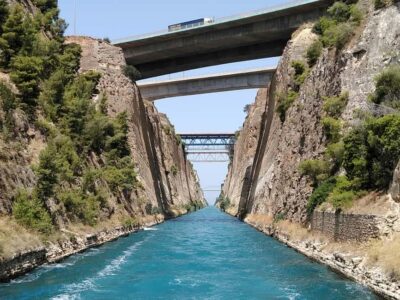
Once you head toward Corinth, you get a stop at the Corinth Canal. It is an old man-made canal, but also a critical navigation route linking the Gulf of Corinth with the Saronic Gulf.
The practical geography lesson is huge: it separates the Peloponnese peninsula from mainland Greece, turning it into an island. The canal is about 6.3 kilometers long, with walls around 170 feet high. Ships can save a journey of 185 nautical miles by using it.
This is a short stop, about 30 minutes, and admission is free. The reason it works is that it interrupts the biblical theme with something real-world, something Greek that is still affecting how goods and people move today.
Ancient Corinth: Paul’s 18 months, Priscilla and Aquila, and Gallio’s trial
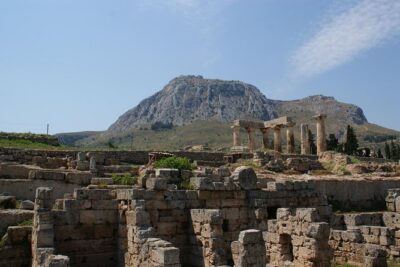
Ancient Corinth is where the day locks into focus. Corinth is not just a backdrop. It is a place tied to key events in Paul’s timeline.
Paul first visited around AD 49 or 50, during Gallio’s proconsul period. He lived there for 18 months, which lines up with Acts 18:11. This is where he met Priscilla and Aquila and worked with them as tentmakers. It is also where he attended synagogue regularly. Then, in AD 51 or 52, Gallio presided over Paul’s trial in Corinth, a date that anchors the timeline for the Acts narrative.
Time here is about 1 hour 30 minutes, and admission for Ancient Corinth and its museum is not included. If you care about connecting scripture dates to real geography, this is the most important ticket purchase of the day.
What I recommend for this stop: go slow enough to notice layout changes. Even if you do not know every ruin name, you can still feel how a civic center, a religious meeting place, and a marketplace would work together in daily life. Paul’s letters and preaching make more sense when you imagine the movement of people.
Kechries: the port connection, where the story moves on
The final Corinth-related stop is Kechries, one of Corinth’s two ancient ports. It is identified as the port where St. Paul sailed to Ephesus.
This stop is short, about 15 minutes, and admission is free. But it can hit emotionally because it shifts you from what Paul did in Corinth to what he did next. It is the hinge of the journey.
From a visitor standpoint, this is where you often get the biggest sense of travel direction. The day ends not with a ruin, but with a route.
Driver commentary, licensed guides, and what to expect at the sites
One of the more practical parts of this tour is how it handles interpretation.
Your professional English-speaking driver provides commentary en-route. But the driver cannot enter archaeological sites. That means you might not get full on-site narration unless you add a licensed guide.
You can request a local licensed guide in Corinth for an additional 200€. Availability matters, so if you want that upgrade, decide early and be ready to pay that extra cost.
This is also why it can be smart to think of the driver as your “story guide in the car,” with the option to turn certain stops into deeper guided visits once you are on foot.
Crowd strategy and timing, especially for the guard ceremony
Because this is private, you can often get better timing than on a big group bus. In practice, the best value of a private tour is not extra talking. It is better pacing.
For Syntagma Square and the Changing of the Guard ceremony, 15 minutes can disappear fast if you pick a poor viewing spot. Your driver will generally help with when to arrive and where to stand. Even if you are not chasing a perfect photo angle, this reduces stress.
In hotter months, the same logic applies to everything else. You want shade when it exists, and you want to build in water breaks without turning the day into a waiting game.
Who this tour suits best, and who should reconsider
This tour fits best if you:
- want biblical history tied to real places in Athens and Corinth
- prefer private pacing over rushing with a group
- like classic ruins but also want the story context, especially around Paul
It might be less ideal if you:
- want a long museum-focused day in Athens
- dislike walking on uneven archaeological ground
- expect a fully guided experience inside every site without paying extra for a licensed guide in Corinth
Should you book this Paul’s footsteps Athens to Corinth tour?
Book it if you want a structured, private day that connects Paul’s timeline to specific locations, with pickup from where you actually are in Athens or Piraeus. The price can feel high until you factor in private A/C transport, hotel or port pickup, and ticket help, then it starts looking fair for a full-day route.
Skip or rethink it if you are mainly after a relaxed stroll with zero planning. This is a day of stops, and the best enjoyment comes when you accept that trade-off: fewer surprises, more meaning.
If you do book, I suggest you decide ahead of time what matters most to you: Are you here for the Areopagus and Agora connections, or do you care most about Ancient Corinth and the port of Kechries. Then ask for the extra licensed guide in Corinth if that inside interpretation matters to you.
Just reviewed around Athens
- Athens Airport Arrival Transfer to Hotels or Addresses in Athens★ 3.5 · 45 reviews
- Luxury Catamaran Sunset Semi-Private & Greek Gastronomy in Athens★ 5.0 · 45 reviews
- Port Transfer★ 5.0 · 45 reviews
- Private Luxury Tour: Unveiling the Sacred Mysteries of Eleusis★ 5.0 · 45 reviews
- Acropolis Private Wine Tasting @ Finewine store★ 5.0 · 46 reviews
- Delphi, Thermopylae full day private tour from Athens★ 4.9 · 46 reviews
- From Athens: City & Corinth Guided Day Tour★ 4.8 · 46 reviews
- Ancient Corinth Half-Day Private Tour from Athens★ 5.0 · 46 reviews
Ancient Corinth Tours, compared.
Ancient Corinth Day Trip with Canal & VR Guide
Read our review →
Private Biblical Tour Ancient Corinth & Isthmus Canal from Athens
Read our review →
Corinth Canal, Mycenae & Nafplio Premium Guided Tour
Read our review →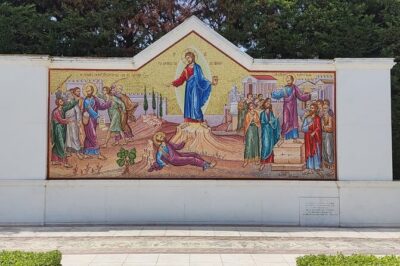
Private Tour of Apostle Paul’s Footsteps in Ancient Corinth
Read our review →
Corinth Half-Day Trip from Athens with Entrance Tickets
Read our review →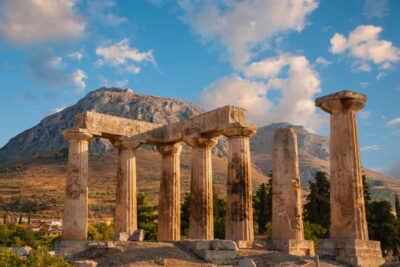
Ancient Corinth Tour with Official Guide & Tickets
Read our review →Browse the lists this tour appears in