
Reviewed · MYCENAE & EPIDAURUS TOURS
Corinnt Canal, Epidaurus, Nafplio and Mycenae, Private Day Tour
This is a classic Peloponnese day plan, packed with big-name sites but run like a private errand: you get a driver, a calm schedule, and UNESCO stops that actually make sense in one loop. You start at the Corinth Canal, then move into the quieter world of Epidaurus before ending at Mycenae.
I especially love two parts of this setup: first, the skip-the-line ticket help so you do not burn time at entrances, and second, the flexible pickup from Athens or Piraeus so the day starts with less hassle. The pace also tends to feel considerate, with guides like Apostle, Vasilis, and Sakis specifically praised for making the drive interesting without turning it into a race.
One possible drawback: entrance fees are not included for Epidaurus and Mycenae, and if you want a licensed guide inside the sites, that costs extra (on request/availability). If you are the type who reads every sign and wants full narration in the ruins, budget that in.
Key things that make this tour work
- UNESCO combo: Epidaurus and Mycenae in the same day, with a real sense of geography between them
- Corinth Canal stop: quick, photogenic, and historically meaningful as a shipping shortcut
- Driver commentary, not inside-site escort: your driver can explain en route, while a licensed site guide is optional for an extra fee
- Pickup from hotels or Piraeus port: fewer transfers on travel day
- Time to breathe in Nafplio: a town stop that is not just a photo stop
- Praised for English and pacing: guides like Spyros, George, and Tassos are repeatedly highlighted for clarity and good humor
What this private day trip gets you, and why it is priced like it is
This is not a bus tour with cattle-car timing. It is a true private format, meaning your group stays together, and you can usually shape the day around what you care about most: photos at the canal, time to walk the theatre seats, extra time in Nafplio for lunch, or a slower approach at Mycenae.
The price, $312.38 per person, sounds steep until you break it down like this: you are paying for door-to-door pickup in Athens or Piraeus, an A/C vehicle that fits your group size, and a driver who provides commentary during the drive. On top of that, the tour includes skip-the-line help for purchasing tickets in advance, plus parking fees and bottled water.
Then there are two add-ons you should expect to handle. Entrance fees for Epidaurus (€20 per person) and Mycenae (€20 per person) are not included. Also, the driver cannot enter archaeological sites, so if you want a licensed guide inside Epidaurus and Mycenae, you need to arrange that in advance or on request, and it costs extra (350€).
In plain terms: this tour is strongest if you like the balance of guided driving plus self-guided wandering in the sites, with the option to upgrade if you want more in-ruins explanation.
More of Mycenae and Epidaurus:
- From Athens: Small-Group Mycenae, Epidaurus & Nafplio Trip
★ 4.8 · 2,805 reviews - From Athens: Mycenae, Epidaurus & Nafplio Full-Day Tour
★ 4.5 · 2,530 reviews - Mycenae, Epidaurus and Nafplio Tour from Athens
★ 4.6 · 2,201 reviews
Morning start: Corinth Canal makes a smart first stop
Your day begins at 8:00 am, with pickup offered from Athens centre hotels and Piraeus hotels or the Piraeus ferry port area. That early start matters. Even if your time at each stop is limited, you get daylight for photos and you avoid some of the worst crowd timing at popular entrances.
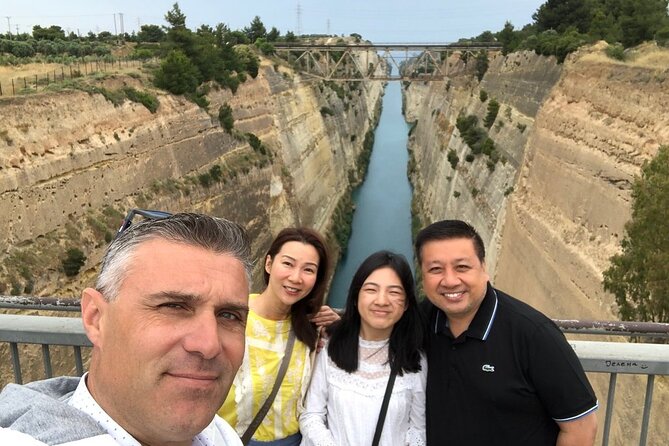
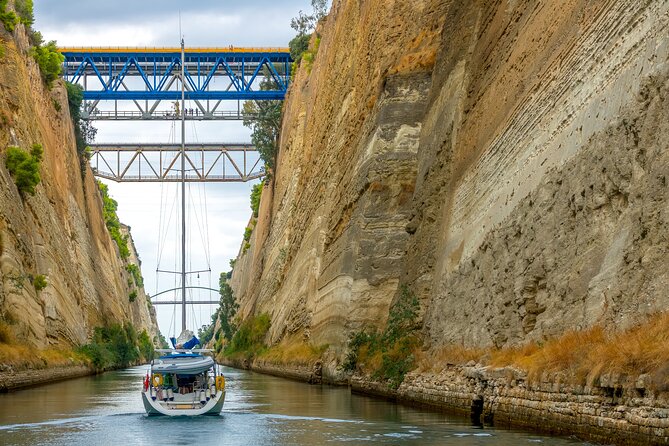
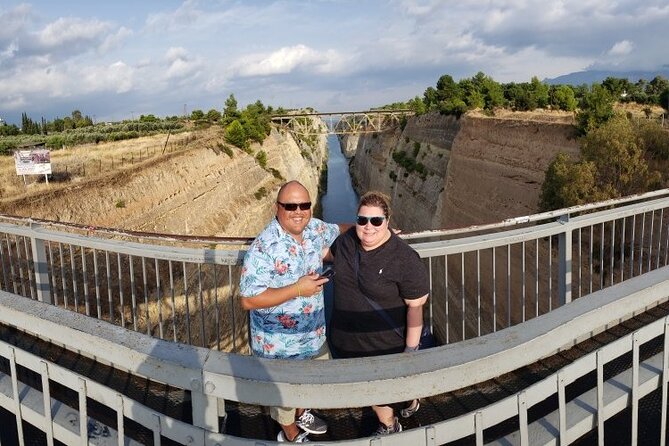
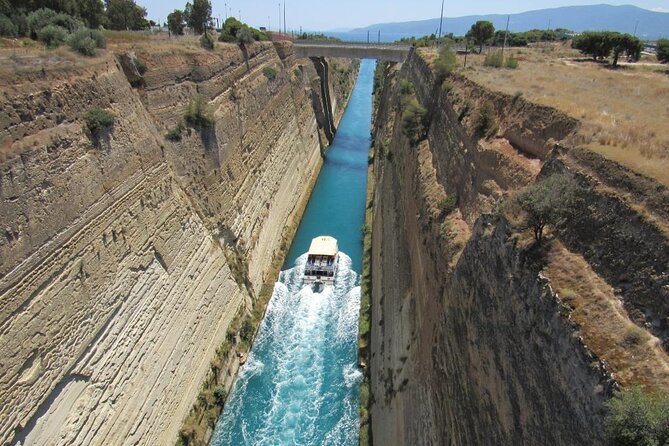
Corinth Canal is a short visit, around 30 minutes, and its value is not long stays. It is a dramatic slice of engineering. The canal is 6.3 kilometres long, cut to connect the Gulf of Corinth with the Saronic Gulf, and it effectively turns the Peloponnese into an island by separating it from the Greek mainland.
What you should look for in that short window:
- The steep canal walls, which rise about 170 feet
- The narrowness of the channel compared with the scale of ships that use it
- The practical idea that ships can save a journey of about 185 nautical miles
It is also a good way to transition mentally. You go from “Athens logistics” to “Peloponnese geography” in a single stop, and that makes the rest of the day feel connected.
Epidaurus theatre: the short visit that still feels unforgettable
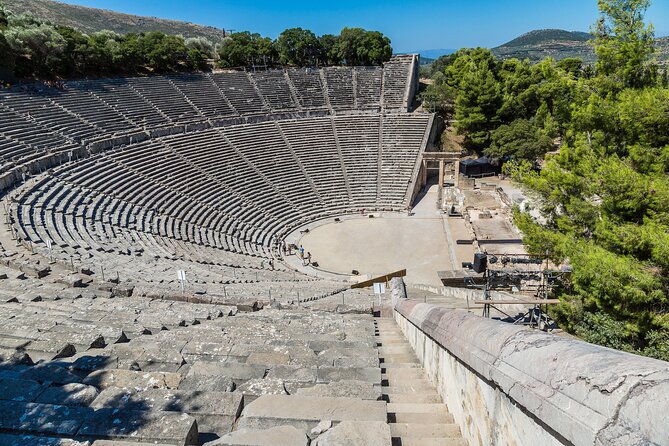
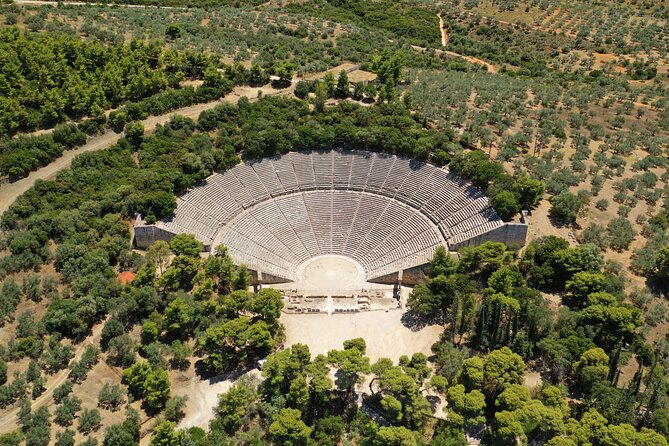
Epidaurus is one of those places where the architecture does not need hype. The ancient theatre is widely known for its seating layout and its famous acoustics. You will see 55 rows of seats set on a natural slope facing the stage area. It was built around 330 to 320 BC, then enlarged in the mid-2nd century AD.
Your time here is about 30 minutes. That sounds brief, but it is a theatre. Your goal is to pick a viewpoint, slow down, and let yourself notice how the space works. If you are doing this for the experience of being inside classical design, 30 minutes is often enough.
A practical tip: choose one seat area and stay there long enough to test the idea of sound carrying. You will not need special equipment, and the shape of the theatre is the point.
Entrance fees apply for Epidaurus, and those are not included. The tour does include skip-the-line ticket help, which can save you time at the entrance, especially if you arrive during a busy period.
One more setup detail to plan for: the driver can talk to you en route, but cannot enter the archaeological sites. If you want deeper interpretation inside Epidaurus, you can arrange a private licensed guide for an additional 350€ on request/availability. If you skip that, you can still enjoy Epidaurus, but you will rely more on signage and your own pacing.
Sanctuary of Asklepios plus Epidaurus museum: healing history in a quiet zone
After the theatre, you move to the Sanctuary of Asklepios, also about 30 minutes. This is in the peaceful hinterland of Epidaurus, known for mild climate and mineral springs. The sanctuary was a major healing centre in the Greek and Roman world and is often described as a birthplace of medicine.
Here is what makes it compelling for a modern visitor: you can feel how “faith plus place” worked. The ruins are not only about the building style, they are about a system where healing depended on the sanctuary’s rituals and environment.
Your next stop is the Epidaurus Archaeological Museum, located on site. You get around 30 minutes there as well. The museum houses architectural parts from the temple and shrine buildings, inscribed columns and pedestals, altars, bronze medical equipment, sculpted votive offerings, and tablets. There are also representations of the Asclepius temple and sections of the Tholos.
That museum time is one of the best uses of limited daylight on this route. Ruins can sometimes feel abstract if you are not sure what you are looking at. The museum gives context for what those places were used for.
Again, entrance fees for the major site are a consideration, while the tour’s ticket arrangement is meant to reduce hassle.
More days around Athens:
- Athens: Acropolis & up to 5 Archaeological Sites Combo Pass
★ 4.2 · 13,904 reviews - Athens: Acropolis Ticket with Optional Audio or Live Guide
★ 4.2 · 11,055 reviews - Athens: Acropolis, Parthenon & Acropolis Museum Guided Tour
★ 4.8 · 9,316 reviews - The Acropolis, Parthenon & Acropolis Museum Guided Tour
★ 4.7 · 8,493 reviews
Nafplio: where the day turns from ruins to real-life Greece
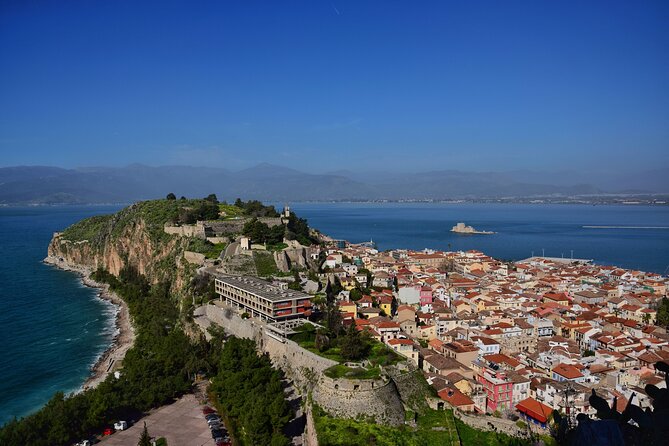
Then the tour pivots to a different kind of travel. Nafplio is the romantic break built into this day trip, and it is more than a pretty stop. You get about 1 hour in town with entrance marked as free.
Why Nafplio is worth the time: it was the first capital of the newly born Greek state between 1823 and 1834. Myth also connects to the name, with Nafplios described as the son of Poseidon and Danaus.
In practical terms, this town stop helps you recover from the archaeology intensity. You can walk, browse, and choose your lunch without feeling like you are paying a penalty in time. In fact, lunch flexibility is often the highlight in guides’ recommendations. People have specifically praised the chance to pick a local restaurant rather than being forced into a set meal.
What to do in your hour:
- Walk the old town streets and enjoy the mix of medieval walls, castles, and Ottoman fountains
- Look for Venetian and neoclassical buildings in the architecture
- Keep your energy for Mycenae later, but do not skip the wandering
If you care about food, this is the moment to use it. Ask your driver for a simple recommendation before you walk off, because once you are in town you may not want to keep hunting for someone.
Mycenae: cyclopean walls and the feeling of age pressing in
Mycenae is the other UNESCO anchor, and it is the payoff stop for people who love fortifications, legends, and big-scale stonework. The site sits on a small hill-top, with long views over the Argolic region. You will learn it was inhabited since Neolithic times and peaked during the Late Bronze Age, 1350 to 1200 BC.
Your time for the archaeological site is about 1 hour. That is enough for a structured walk if you do not get lost in detours.
What makes it special:
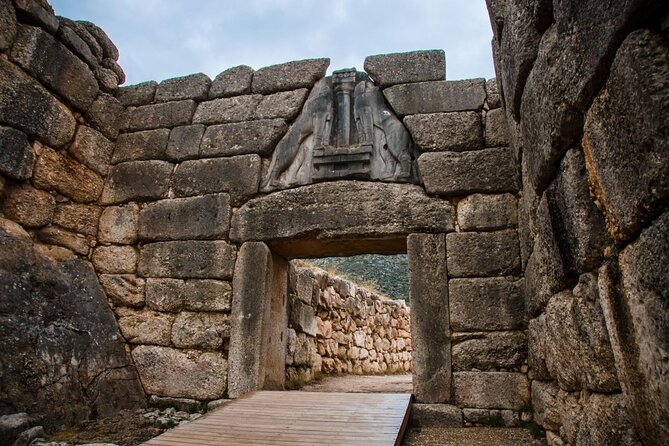
- Massive “cyclopean walls” built in stages around 1350, 1250, and 1225 BC
- A palace on the summit area
- The “Cult Center” and the main gate area, often associated with the Lion Gate
- The Grave Circle A, linked with burial ground of Mycenaean royalty
- A tunnel leading to a subterranean fountain built around 1225 BC
You do not need to memorize everything. Pick what you personally want to see. For many people, the walls are the main event. The stones are huge, and you get a sense of scale just by walking along the edges.
Entrance fees for Mycenae are not included and are listed as €20 per person. The tour’s skip-the-line help should reduce queuing stress.
Treasury of Atreus plus the Mycenae museum: focus on form, not just facts
After the main hill walk, you also visit the Citadel and Treasury of Atreus, the Tomb of Agamemnon, for about 30 minutes. This is a large tholos, often called a beehive tomb, constructed around 1250 BC. If you like dramatic architecture, this stop hits.
One detail you can use to ground your visit: the stone lintel above the doorway is described as weighing about 120 tons, with approximate dimensions of 8.3 by 5.2 by 1.2 metres. That is the kind of fact that makes the structure feel physical rather than theoretical.
Next is the Archaeological Museum of Ancient Mycenae, built into the archaeological site, for about 30 minutes. The museum can be visited easily after your tour of the site, which is handy because it keeps the day from fragmenting into extra transportation.
This museum time is your chance to connect the tomb and walls to objects, models, and explanations. If you are not hiring a licensed guide inside the ruins, the museum becomes even more important for understanding what you just walked through.
How the private guide setup really works, and how to get more out of it
Here is the practical reality of this kind of private tour: your driver can provide fluent English commentary during the drive, but the driver cannot enter the archaeological sites. If you want a licensed guide inside Epidaurus and Mycenae, the tour can arrange it for an additional 350€ depending on request and availability.
In other words, you are choosing how you want the day to feel:
- Option A: Enjoy the sites self-guided, with strong background storytelling while traveling between stops
- Option B: Add a licensed guide for in-site depth, especially helpful if you want to understand myths, architecture, and symbolism without relying on signage alone
If you are hoping for humor and personality, the guides named in the experiences show up often: Apostles and Dominiks are described as fun and engaging, Vasilis is praised for excellent English and considerate pacing, and Spyros is highlighted for heartfelt life advice alongside clear explanations. There is also mention of George, an engaging guide who answers questions and loves what he does, and Tassos for conversational clarity and modern Greek cultural insight.
One caution from an experience in the record: not every guide assignment may match your expectations. One specific guide situation was criticized for mixing myth and science less clearly than the guest wanted. That is not a reason to avoid the tour. It is a reason to be direct when you request a guide and to ask what level of interpretation is available for the sites.
For the best results, message in advance if you want particular focus, like architecture, history, or storytelling.
Transport, comfort, and why the car choice matters on this route
This tour includes luxurious A/C vehicles suited to the group size, from taxis and sedans to SUVs and vans and minibus options. Vehicles are non-smoking, insured, and certified for tourist use by state authorities. Child seats are available on request.
These details matter because the day is long: 8 to 9 hours approx. Private cars can make that much more bearable, and consistent comfort reduces the stress of switching between stops. Bottled water is included too, which is a small thing that helps when you are walking under sun.
Also, the tour is family friendly and can be modified to fit kids’ needs. If you travel with children, this is one of the best reasons to pick private over bus tours.
Timing: where you may feel rushed, and where you will not
This plan is built on short, efficient visits at several points:
- Corinth Canal: about 30 minutes
- Epidaurus theatre: about 30 minutes
- Asklepios sanctuary: about 30 minutes
- Epidaurus museum: about 30 minutes
- Nafplio: about 1 hour
- Mycenae site: about 1 hour
- Treasury of Atreus: about 30 minutes
- Mycenae museum: about 30 minutes
That is a lot of ground, even with a private car. The good news is that private tours usually allow pacing flexibility. In a few experiences, guides were praised for not rushing and for letting guests set the rhythm.
Still, be realistic. If you want to do a deep museum day, this will not replace spending a full day in one site. This is a “high impact highlights plus breathing room” day.
The smartest travel move is to set expectations before you start: you can see a lot, but you will not see everything. Decide what you want most at each stop, then let the rest be bonus.
Who should book this tour, and who might want a different style
This tour is a great match if you:
- Want UNESCO sites Epidaurus and Mycenae without complex logistics from Athens
- Prefer a private vehicle with door-to-door pickup from hotels or Piraeus port
- Like a mix of ruins and a real town stop in Nafplio
- Value clear English commentary during travel time
It may be less ideal if you:
- Want fully guided, inside-ruins explanations for every major stop, since in-site licensed guides cost extra
- Are very sensitive to long driving days, since it is still an all-day loop
- Expect food to be included, since food and drinks are not included unless specified
For people who love architecture, tombs, and classical space design, the theatre and Treasury of Atreus are strong anchors.
Should you book this private day tour?
Yes, if you want a well-organized Peloponnese highlights day with comfort, pickup convenience, and the option to add in-site expertise. The UNESCO pairing is efficient, and Nafplio gives your day a human scale. If you are worried about wasted time, the skip-the-line ticket help is a real practical win.
Before you book, do these two things:
- Budget the entrance fees for Epidaurus and Mycenae (and plan lunch in Nafplio)
- Decide whether you want a licensed guide inside the archaeological sites for the extra cost, especially if you want more explanation than signage provides
If you do that, you will get a memorable day that feels less like a checklist and more like a route through the Peloponnese with room to enjoy the stops.
FAQ
Is hotel pickup included for this private tour?
Yes. Pickup is offered from Athens hotels in the center and from Piraeus hotels, and it also includes pickup from the Piraeus cruise port area. Drop-off is at the same location as pickup.
What time does the tour start and how long does it take?
The start time is 8:00 am. The duration is about 8 to 9 hours.
Are entrance tickets to Epidaurus and Mycenae included?
No. Entrance fees are not included. The price for Epidaurus is listed as €20 per person, and Mycenae is also listed as €20 per person. Corinth Canal is marked as free.
Can the driver enter the archaeological sites?
Your driver can provide commentary in fluent English en route but cannot enter the archaeological sites. A private licensed guide can be arranged for an extra 350€ depending on request and availability.
What does the tour include for ticket handling and comfort?
The tour includes skip-the-line service to purchase appropriate entrance tickets in advance, parking fees, VAT and state taxes, A/C non-smoking insured transportation, and child seats upon request. Bottled water is included too.
What is the cancellation and weather policy?
You can cancel for a full refund up to 24 hours in advance of the experience’s start time. If it is canceled due to poor weather, you will be offered a different date or a full refund.
Just reviewed around Athens
- Athens Airport Arrival Transfer to Hotels or Addresses in Athens★ 3.5 · 45 reviews
- Luxury Catamaran Sunset Semi-Private & Greek Gastronomy in Athens★ 5.0 · 45 reviews
- Port Transfer★ 5.0 · 45 reviews
- Private Luxury Tour: Unveiling the Sacred Mysteries of Eleusis★ 5.0 · 45 reviews
- Acropolis Private Wine Tasting @ Finewine store★ 5.0 · 46 reviews
- Delphi, Thermopylae full day private tour from Athens★ 4.9 · 46 reviews
- From Athens: City & Corinth Guided Day Tour★ 4.8 · 46 reviews
- Ancient Corinth Half-Day Private Tour from Athens★ 5.0 · 46 reviews
Mycenae & Epidaurus Tours, compared.
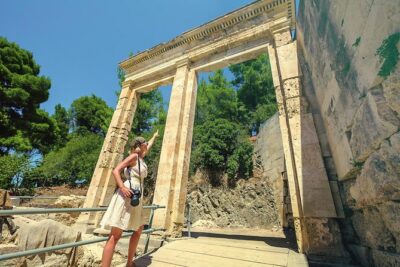
Small-Group Mycenae, Epidaurus & Nafplio Trip
Read our review →

Mycenae, Epidaurus and Nafplio Tour from Athens
Read our review →
4-Day Classical Greece Tour: Epidaurus, Mycenae, Olympia, Delphi, Meteora
Read our review →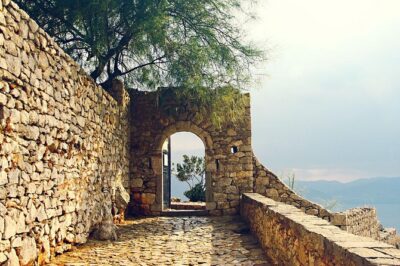
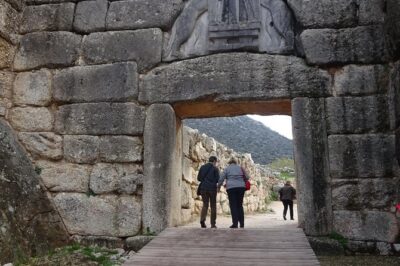
Mycenae and Nafplion Day Trip from Athens with Official guide
Read our review →
Catamaran Cruise in Nafplio | with Local Treats
Read our review →
Browse the lists this tour appears in