

Reviewed · ACROPOLIS TOURS
Acropolis monuments & Parthenon Walking Tour with Optional Acropolis Museum
Standing in Athens, this tour works because the Acropolis feels like a living history lesson in stone. You start early, get your bearings on the hill, and then connect the dots between what you see outside and what you can study inside the museum.
I like that you’re guided in a small group of fewer than 20 people, with a whisper system so you can actually hear the stories as you walk. I also like the way the route hits the big set pieces in a smart order, from the Theatre of Dionysus through the Parthenon and on to the Erechtheion.
One thing to plan for: there’s a lot of standing and some steep uphill walking paths. If moderate fitness is a concern, wear the best shoes you own and expect to slow down at the sight stops.
Why this Acropolis tour works so well for first-timers

If this is your first trip to Athens, the Acropolis can feel like a blur of famous names. A guide turns those names into a map, so you stop “looking at ruins” and start understanding how Athens wanted the world to remember it.
The route also helps you avoid the most common first-time problem: you spend most of your time taking photos and you miss the why. With a pro licensed guide, you get context fast, plus insider stories that make the Parthenon and its neighbors feel personal instead of distant.
Here are the most useful highlights to know up front.
Key things I’d focus on before you go
- Skip-the-line touring with a licensed guide, which keeps your morning from turning into a paperwork and waiting exercise
- Small group size under 20, so the walk feels controlled and you can actually hear the guide
- Two upgrade paths: add Acropolis tickets and optionally the Acropolis Museum visit
- Earliest drama to Roman theater: the walk connects sites from different eras, not just one “ancient Greece poster”
- Caryatids and Ionic details at the Erechtheion and Temple of Athena Nike, where the architecture is the point
- Small-group museum time after the ruins, when the artifacts make more sense
More Museums in Athens
- Athens: Acropolis, Parthenon & Acropolis Museum Guided Tour
★ 4.8 · 9,316 reviews - The Acropolis, Parthenon & Acropolis Museum Guided Tour
★ 4.7 · 8,493 reviews - Athens: Mythology of Delphi, Museum and Arachova Guided Tour
★ 4.7 · 5,102 reviews
Starting early at Athens, with a plan for the Acropolis

This is an early-morning style tour, with the meeting point near the Acropolis. You meet at Porinou 5, Athina 117 42, Greece, and you’re set up with a clear check-in spot that even has Wi-Fi nearby.
From there, you walk to the Acropolis area. If you chose the option with admission tickets, you pick them up with the group, then you go straight into the experience instead of scrambling. If you did not include tickets, you’ll need to purchase entrance online in advance. Either way, the goal is the same: start your hilltop visit with less friction.
The route is built for about four hours total. That time includes the big ruins stops, and if you upgrade, it also adds the museum visit. It’s enough time to see the headline monuments, but it still leaves you enough energy to absorb details instead of rushing like you’re sprinting through an art exhibit.
Theatre of Dionysus: where Athens loved a good story
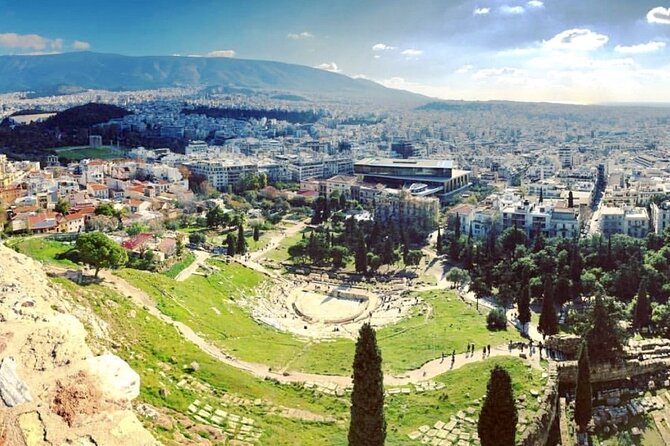
Your first stop is the Theatre of Dionysus Eleuthereus on the south slope of the Acropolis hill. This is the kind of site that helps you understand that the Acropolis was not only about temples. It was also about public life and performance.
The theater’s story goes back to around the mid- to late-sixth century BC, when the City Dionysia took place there. Even if you’re not a theater person, it helps to picture the scale and the purpose. This is where civic identity met drama.
Practical note: the listed time is short, so use it to get context. Look for how the theater sits into the slope, because that location is part of why it matters.
Herod Atticus Odeon: Roman Athens, still using the hill
Next up is the Herod Atticus Odeon, the stone Roman theater completed in 161 AD and later renovated in 1950. You’re moving from one “stage” to another, and the contrast is the point.
This stop is quick, but it gives you a useful takeaway. The Acropolis and its slopes didn’t stop being important after the Classical era. Later builders reused and repurposed the same commanding terrain, keeping the hill at the center of attention for centuries.
If you like layers of time, this is a good moment to practice seeing the same location with different eras in mind.
More Walking Tours in Athens
- Acropolis and Parthenon Guided Walking Tour
★ 5.0 · 4,755 reviews - Greek Food Walking Tour in Athens
★ 5.0 · 4,740 reviews - Athens: Guided Greek Food Walking Tour with Tastings
★ 4.9 · 2,859 reviews - Athens Acropolis and Parthenon Walking Tour
★ 4.5 · 1,355 reviews
Temple of Athena Nike: catching the victory details

Then you reach the Temple of Athena Nike, often called the Temple of Victory. It’s dedicated to Athena Nike, and it was built around 420 BC.
What I like about this stop is that you don’t just see a famous temple outline. The guide time here is meant for you to notice the Ionic character and the way this smaller temple fits into a bigger sacred complex. The timing also matters, because you’re still fresh and your photo instincts are still strong enough to capture the design from useful angles.
If you’re the type who enjoys “architecture as a language,” this is one of the best early moments to slow down.
Propylaea: the big ceremonial gateway
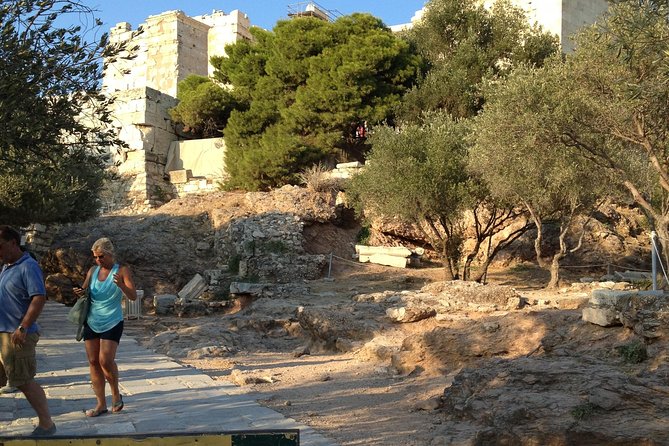
The Propylaea is the grand entrance to the Acropolis, built about 2,500 years ago. This is where you transition from the city approach to the monumental world at the top.
Think of it as a threshold. The guide uses this stop to explain how the experience was designed to feel deliberate, not accidental. You’re not just walking into an archaeological site. You’re entering a statement about power, devotion, and civic pride.
The practical upside: once you understand the gateway concept, the rest of the monuments feel like part of a planned route, not separate stops.
The Parthenon: more than a postcard

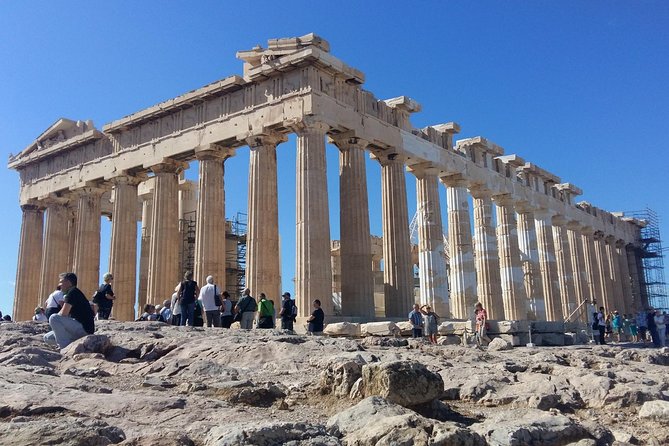
The Parthenon is the headline, but the real value comes from what you’re taught to look for while you’re there. You spend time at the Parthenon, including the view moments that most people rush through.
Admission to the Parthenon is not included unless you selected the option with entrance tickets. If you are paying for entry anyway, this is where it’s worth making sure your guide time is spent efficiently. You want the explanations for how the Parthenon fits into the broader Acropolis story, not just the generic “it’s famous” version.
Also, plan your pace. A walking tour here is not a casual stroll. Even when the group is moving at a manageable speed, you will still be standing, looking up, and moving between viewpoints.
Erechtheion: where the Caryatids steal the show
The Erechtheion is where many people’s interest spikes, because it’s known for the caryatid statues. These figures are part of why this building is instantly recognizable and instantly worth your close attention.
The guide time at this stop is shorter, so your best strategy is to pick a viewpoint and commit. Look at how the caryatids are presented as architectural support with a human presence. That blend is exactly why the Erechtheion has remained a favorite among art and architecture lovers.
If you have even a casual interest in myth and symbolism, this is a strong stop to pay attention to, because the stories people associate with the area help explain why a temple would be designed this way.
The Acropolis itself: viewpoints, photo time, and context
After the key monuments, you have broader Acropolis time, listed at around an hour. This is the slot that lets you regroup mentally and take in the big panorama.
Here’s what makes this part matter. Earlier stops teach you what you’re looking at. This middle and later time lets you absorb it as a whole. You’ll start noticing how the monuments relate to each other and how the site feels like a top-of-city command post.
You might also want to use this hour to ask questions. Guides are at their best when you ask about what you saw five minutes ago, not what you only noticed as you walked away.
Upgrade to the Acropolis Museum: why indoor artifacts change everything
If you choose the Acropolis Museum option, the tour continues at the modern museum near Dionysiou Areopagitou 15, Athina 117 42, Greece. The museum visit listed is about an hour.
This upgrade is not just a bonus stop. It’s the part that makes the outdoor ruins easier to understand. Outside, you see the structure and the setting. Inside, you can study artifacts and details that no longer sit in their original placements.
The museum is especially useful for people who want to understand the Parthenon beyond the exterior look. It also helps you connect specific architectural elements to the surviving pieces you can actually see up close.
The tour ends at the museum if you book the museum option. If you didn’t book it, you’ll end at the Acropolis monuments, which still works well if you want the rest of your afternoon free for Athens.
Price, tickets, and how to get the most value from €30 and €20
The base tour price is $42.33 per person and the tour runs about four hours. The value isn’t only “you get a guide.” You’re also buying structure, timing, and a smoother entry experience.
Here’s the financial reality you should plan for. Entrance tickets are not automatically included unless you pick the option with tickets.
- Acropolis ticket price is listed as €30 per adult from April 2025, and €10 per adult from November to March
- Acropolis Museum ticket price is listed as €20 per adult from April 2025
So the best value question becomes simple: do you want to handle tickets yourself, or would you rather have the tour package handle them?
If you’re visiting in a busy season or you dislike admin steps, the upgrade with entrance tickets often feels worth it. It also saves you from the mental overhead of trying to time online ticket purchases before your morning.
Also pay attention to discount rules. EU citizens under 25 can get free entrance. Others under 25 get a 50% discount, and you need ID or a passport. If you’re under 18, bring your passport or ID to help reduce the ticket price at the gates.
Group vibe, audio, and how the walk feels in real time
This tour caps at a maximum of 20 travelers. That matters on the Acropolis because crowd flow can make a big difference in whether you enjoy the site or just endure it.
You also get a whisper tour guide system, designed to help you hear the guide. That’s a big deal if you struggle to hear in noisy outdoor spaces. In practice, it makes a guided walk feel closer to a lecture you can actually follow.
The “pace” theme also shows up in how people talk about the experience. The walk isn’t rushed. You’ll still stand often, and you’ll be climbing uphill between stops, but you’re not being dragged at full speed.
Who this tour suits best
This tour is a strong fit if you’re:
- a first-time visitor to Athens who wants the Acropolis explained with a clear storyline
- a history fan who likes architecture, symbols, and how myths connect to buildings
- traveling with limited time and want both the ruins and, optionally, the museum in one organized block
- the type who benefits from audio and a guide’s photo-friendly viewpoint strategy
It’s also a good choice for solo travelers, because the group size is small and the meeting point is straightforward. If you’re bringing kids, note the ID requirement for reduced pricing and the fact that the route is mostly standing and uphill.
If you dislike stairs or steep paths, consider whether moderate fitness is right for you. This tour does not hide the physical part of the site.
A quick guide to the names you might see for your guide
You may be assigned different guides, and the style is consistent: storytelling plus architecture. Names you could encounter include Lisa, Anna, Aidli, Dorina, Aphrodite, John, and Dionysios or Dionysus. They’re often praised for making the ruins understandable, with museum time that connects directly to what you saw outside.
The common theme across these guides is how they turn familiar monuments into specific, memorable explanations.
Should you book this Acropolis and Parthenon walking tour?
If you want the Acropolis experience to feel like you’re actually learning something, and you want the Parthenon plus key neighboring monuments without guessing what to focus on, I’d book this.
I’d also strongly consider the museum upgrade if you like understanding details. The museum visit is where the outdoor experience can click into place. If you skip it, you can still enjoy the ruins, but you’ll miss the chance to study artifacts that put the buildings into sharper context.
Skip the tour only if you already know the basics and you prefer to wander completely on your own. Otherwise, the combination of guided stops, small group size, and optional museum time is a smart way to use your time in Athens.
FAQ
How long is the Acropolis monuments and Parthenon walking tour?
It’s listed at about 4 hours approximately, including the walking and stops. If you choose the Acropolis Museum option, that visit is included in the tour time.
Where do you meet for the tour?
The meeting point is Porinou 5, Athina 117 42, Greece. The tour check-in is near the Acropolis.
Is the tour in English?
Yes, it is offered in English.
Is admission to the Acropolis included?
Admission to the Acropolis is not included unless you book the option with entrance tickets. The listed Acropolis ticket prices depend on the season.
Do you also visit the Acropolis Museum?
Yes, you can upgrade to include the Acropolis Museum visit. If you book only the Acropolis option, the tour ends at the Acropolis monuments.
Are tickets optional, or must I buy them separately?
Entrance tickets depend on the booking option you choose. If you don’t pick the option with tickets, you must purchase entrance fees online in advance through the official website.
What about discounts for young travelers?
The info provided says people under 18 should bring a passport or ID to help reduce the ticket price. EU citizens under 25 have free entrance. Others under 25 get a 50% discount with ID or a passport required at the entrance gates.
What happens if the weather is bad?
The experience requires good weather. If it’s canceled due to poor weather, you’ll be offered a different date or a full refund.
More Ways to See the Acropolis
- Athens: Acropolis & up to 5 Archaeological Sites Combo Pass
★ 4.2 · 13,904 reviews - Athens: Acropolis Ticket with Optional Audio or Live Guide
★ 4.2 · 11,055 reviews - Acropolis: Premium Acropolis and Parthenon Guided Tour
★ 4.8 · 5,208 reviews - Athens: Acropolis, Parthenon & Acropolis Museum Guided Tour
★ 4.8 · 3,579 reviews
Just reviewed around Athens
- Athens Highlights: Myths & Philosophers Walking Tour★ 5.0 · 125 reviews
- Sounio Sea Kayak Tour to the Temple of Poseidon full program★ 5.0 · 126 reviews
- Athens Half-Day Tour: Acropolis, Parthenon & All Major Landmarks★ 5.0 · 127 reviews
- First Access Acropolis Tour, Beat the Crowds, Enjoy the Parthenon★ 5.0 · 128 reviews
- Ancient Corinth, Mycenae, Epidaurus, Nafplio full day private tour from Athens★ 5.0 · 130 reviews
- Athens Cooking Class and Lunch in our beautiful garden in Greece★ 5.0 · 130 reviews
- Athens Highlights by E-Bike: Small-Group Historic Tour★ 5.0 · 131 reviews
- Athens Shore Excursion: Acropolis Walking Tour★ 4.5 · 131 reviews
Acropolis Tours, compared.

Acropolis & up to 5 Archaeological Sites Combo Pass
Read our review →
Acropolis Ticket with Optional Audio or Live Guide
Read our review →
Acropolis, Parthenon & Acropolis Museum Guided Tour
Read our review →
The Acropolis, Parthenon & Acropolis Museum Guided Tour
Read our review →
Acropolis: Premium Acropolis and Parthenon Guided Tour
Read our review →


Athens Scenic Electric Bike Tour with optional Acropolis visit
Read our review →Browse the lists this tour appears in