
Reviewed · MYCENAE & EPIDAURUS TOURS
Ancient Sparta Ancient Corinth Private Tour from Athens/ Nafplio
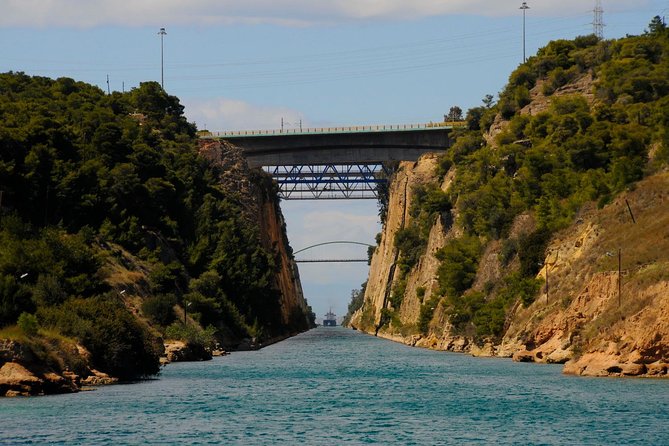
This is a fascinating day because you get the ancient “systems” in one sweep. You start with engineering at the Corinth Canal, then you jump straight into Sparta’s military culture, and finish with Ancient Corinth, tied to early Christian history.
What I like most is the way the day is built for real travel time. You get round-trip transportation in an air-conditioned vehicle, plus an English-speaking driver who adds context during the drive, like we experienced with guides such as Takis and Christos. Second, it’s private and flexible, so if you want more time somewhere, you can usually ask to adjust within the day.
One consideration: this is a long day in the car. Sparta is not Athens-scale, and if you tour on a Tuesday, you must be ready for museum closures (especially the olive oil museum). Build your expectations around timing and what you want to prioritize on foot.
Key things to know before you go

- One-day ancient Greece, without the stress: round-trip transportation from Athens, with parking and fuel handled
- Corinth Canal is a strong opener: quick photo stops plus a pedestrian crossing over the canal
- Sparta gives you the big ideas, not a huge museum crawl: you’ll focus on key ruins, Leonidas, and a small museum
- Museum days matter: the olive oil museum and Sparta’s archaeological museum close on Tuesdays
- Your driver is the glue of the day: many guides actively explain what you’re seeing along the route
- You can sometimes swap or add time: if time allows, you may be able to adjust stops with your driver
Why this Sparta and Corinth route works so well in one day
Trying to see Sparta and Corinth on separate days is doable, but it often turns into logistics homework. This tour is designed for the opposite approach. You leave Athens, you cover the Peloponnese highlights in daylight, and you’re back the same day.
The best part is how the stops connect. The Corinth Canal shows how Greece links the Aegean and Ionian worlds through modern engineering. Then Sparta shows a society organized around discipline and physical training. Finally, Corinth grounds all of that in a city that mattered for religion and travel routes in later centuries too.
If you’re the type who likes a tour day that has a clear arc, this one fits. If you hate being in a vehicle for hours, then consider whether a slower trip or fewer sites might suit you better.
More of Mycenae and Epidaurus:
- From Athens: Small-Group Mycenae, Epidaurus & Nafplio Trip
★ 4.8 · 2,805 reviews - From Athens: Mycenae, Epidaurus & Nafplio Full-Day Tour
★ 4.5 · 2,530 reviews - Mycenae, Epidaurus and Nafplio Tour from Athens
★ 4.6 · 2,201 reviews
Price and value: what $265.50 per person really covers
At $265.50 per person for roughly 10 hours, the core value is transport plus a day-long English-speaking driver. That price also includes air-conditioned vehicle use, fuels, toll roads, parking fees, and hotel or apartment pickup within Athens center up to 7 km.
Admissions can add up, but you get to control it. The big museum costs mentioned here are:
- Olive and Greek Olive Oil Museum in Sparta: €5, optional
- Ancient Corinth (Archaia Korinthos): €8 in winter or €15 in summer
- Archaeological Museum of Sparta: €5 in winter or €10 in summer
(Gratuities are typically extra.)
When is it a good deal? It’s best if you want an efficient day with no public transport switching and no map battles. It’s also a smart value if you’re traveling as a small group, because you’re paying for private time rather than paying for a “mass group” experience and competing for attention.
Pickup, vehicle comfort, and what your driver actually does
This is a private tour, so only your group rides along. You can choose vehicles based on group size, with options including a sedan for up to 3 adults, a minivan for 1 to 7 people, or a minibus for 1 to 14 people. Kids up to 12 can be free in the vehicle options listed.
Pickup is offered from your Athens hotel or apartment in Athens center up to 7 km. If you’re closer to Piraeus, there can be an additional charge, and airport and Lavrio Port pickups are not covered unless arranged. Your exact pickup details are handled as part of the booking.
Two important points about the driver:
- Your driver provides historical context through informative books and audio documentary details while you travel.
- The driver is not described as an archaeologist guide for on-site guided walking. If you want a licensed archaeologist to guide you in the ruins or museums, you’d need to arrange an extra guide.
In practice, that means you’re getting explanation during the drive and at stops, but you should still expect to “self-walk” the sites with your own eyes and the time you have on the ground.
Stop 1: Corinth Canal, the pedestrian bridge, and that 80-meter perspective
You start with the Corinth Canal, a man-made link between the Aegean and Ionian seas and a shortcut through the Peloponnese peninsula. The scale is the first wow. Workers dug it over years, and the stop is built around quick viewing and photos.
What you’ll do here:
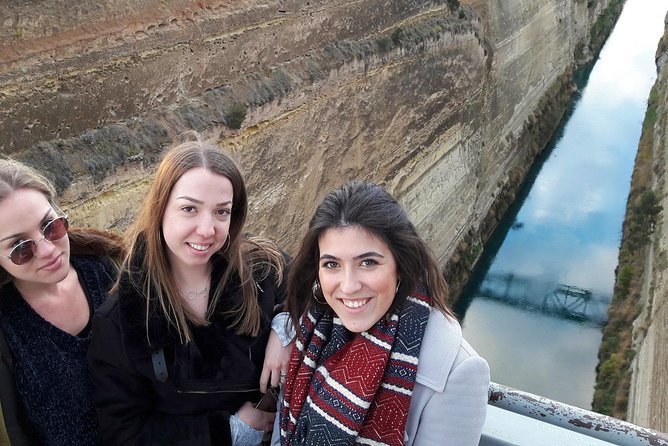
- You’ll get time to take photos and walk on the pedestrian bridge
- You can admire the canal from around an 80 m high viewpoint
- Admission for this stop is free in the details provided
A short stop like this is actually useful. It wakes you up early, gives you a modern-feeling anchor, and sets expectations for the rest of the day. It’s also a good moment to grab water and snacks because the rest of the schedule becomes a rhythm of driving and walking.
More of Ancient Corinth:
- From Athens: Ancient Corinth Day Trip with Canal & VR Guide
★ 4.6 · 1,073 reviews - Private Biblical Tour Ancient Corinth & Isthmus Canal from Athens
★ 5.0 · 762 reviews - Athens: Ancient Corinth & Nafplio Full Day Trip with Swim
★ 4.8 · 531 reviews - Athens: Corinth Canal, Mycenae & Nafplio Premium Guided Tour
★ 4.7 · 322 reviews
Stop 2: Sparta basics you should know before you arrive
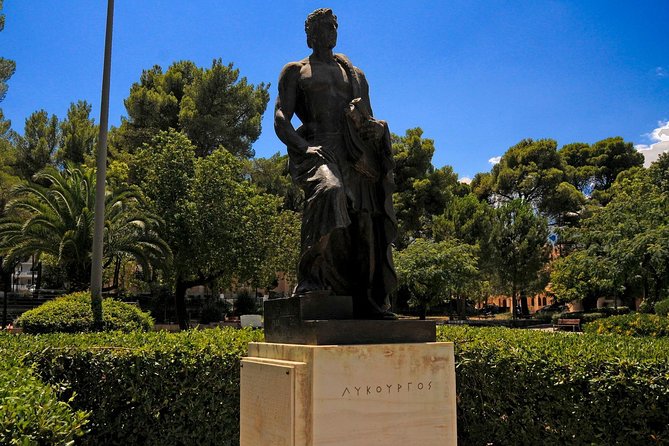
Sparta is not just ruins. It’s a social system. You’ll hear the essentials: Sparta’s constitution associated with Lycurgus, a society organized to maximize military proficiency, and categories of people within Spartan life.
Even if you don’t remember every term, you’ll get the idea. Sparta was built around training and discipline, and daily life flowed around that structure. That context makes the ruins feel less random.
You also get a short stop at the Sparta archaeological area focus and the time allotted includes a basic visit window (about 30 minutes for the Sparta stop as listed). For many people, Sparta’s main value is how quickly you can understand the logic of the city, not how many monuments you can check off.
Don’t miss the Tuesday museum note
The Archaeological Museum of Sparta is included as a timed stop, but it’s specifically noted as closed every Tuesday. If your day lands on a Tuesday, plan to put more time into the outdoor monuments instead.
The museum fee is listed at €10 general in the details you have, and the visit time is about 30 minutes.
Acropolis and the Ancient Theater: reading Sparta from its built shapes
Next comes the Sparta Acropolis and Ancient Theater. This stop is great because it’s built from local white marble in the Roman period, while the theater itself dates to the late 1st century B.C. You’re seeing a huge capacity space, with seating estimated around 16,000 people.
Here’s what makes it worth your time even if you feel it’s “small” compared with other European ruins:
- You’re walking through an area that helps you understand civic life in Sparta
- The theater’s size tells you Sparta wasn’t only about training, it also hosted major public gatherings
- The remaining structure shows how history damaged and re-shaped the site, especially during Byzantine times and through erosion
The visit window is about 1 hour, and admission is listed as free for this stop. When you only have an hour, it pays to move with intention: take the first few minutes to orient yourself, then spend the rest watching the shape of the auditorium and the stone blocks.
Leonidas Monument and the Thermopylae story in stone

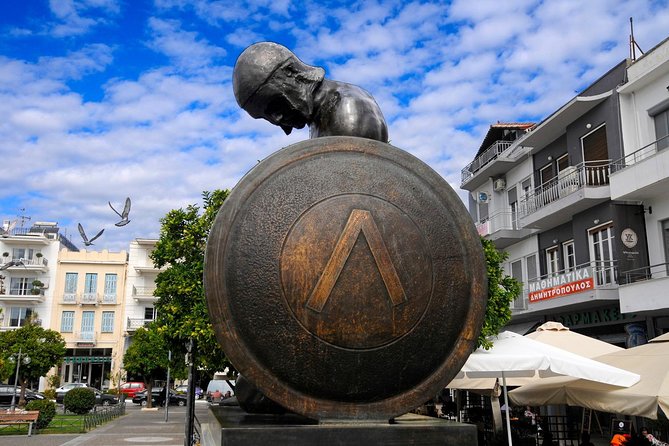
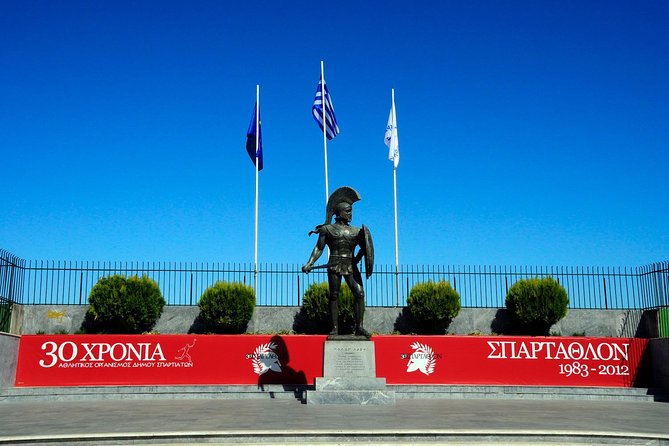
Then you hit the Leonidas Monument, positioned by a stadium area. It’s closely tied to the legend of Thermopylae, the moment when Leonidas famously replies with the idea of resistance, often remembered as Molon labe.
This stop adds a different flavor to Sparta. Instead of a city plan or a museum collection, you get a tangible reminder of national myth and memory. Excavations near the modern town uncovered a limestone construction dating to the 5th century B.C., believed by some accounts to connect to Leonidas’ tomb. Whether every detail is fully settled matters less on a first visit than the effect the monument has: it makes the story feel immediate.
Time here is short, about 15 minutes, and admission is free in the details provided. Use it for photos and to connect your earlier “Sparta system” thinking to the moment outsiders tried to break Spartan resolve.
The Olive Museum choice: optional stop, €5, and why Tuesdays change the plan
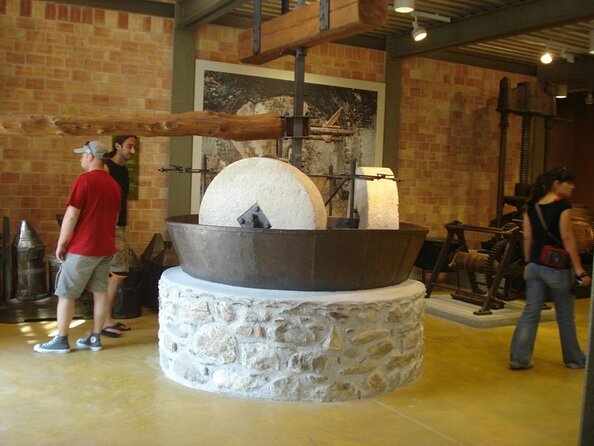
The Museum of the Olive and Greek Olive Oil is listed as optional and time-dependent. It’s €5 for a general ticket, and the stop is roughly 20 minutes.
What’s interesting here is that the museum isn’t just about taste or souvenirs. The details point to the long timeline of olive presence and olive oil production in Greece, including:
- Fossilized olive leaves dated about 50,000 to 60,000 years old
- Linear B tablets (with replicas) from the 14th century B.C. related to written testimony about olive and olive oil
Even with those cool specifics, you need to be practical. This museum is noted as closed every Tuesday, same as the Sparta archaeological museum.
So if you’re traveling on a Tuesday, you have two smart options:
- Accept that the olive museum won’t happen and focus your time on the outdoor Sparta monuments
- If your driver has room in the day, ask to swap the olive stop for extra time elsewhere, like the core ruins or the next Corinth segment
This is where private tours shine. The schedule can breathe, as long as you coordinate with your driver and keep an eye on timing.
Ancient Corinth: why this stop hits in more than one direction
Next is Ancient Corinth (Archaia Korinthos), one of the largest cities in Ancient Greece. The core appeal is simple: walking the area feels like you’re stepping back into a city that once had serious reach.
This stop is especially valuable if you like when archaeology connects to later texts. Corinth shows up in the New Testament through Paul’s letters, and it’s also referenced in Acts as part of his travel routes. Even if you don’t base your interest on religion, Corinth’s story is still about movement, trade, and links between places.
Time allotted is about 1 hour 10 minutes. Admission for Ancient Corinth is not included, and the ticket is listed as combined:
- €8 in winter
- €15 in summer
(Also noted that the combined ticket includes the museum.)
If you have only one hour, your job is to pick your route inside the site. Start with the views and the main structures first, then decide how much energy you want to spend on smaller areas.
Archaeological Museum of Corinth: use it fast, or skip and roam longer
There’s also an Archaeological Museum of Ancient Corinth stop, with about 30 minutes allocated. The museum details say the site and museum are closed on Tuesday in winter time, and admission for this museum is listed as free in the details you have.
That timing detail matters because Corinth museums can be “paper cut” stops if you’re not careful. If you arrive and the museum is open, you can get quick context that makes the ruins feel more readable.
If it’s closed, don’t panic. Use the extra time to walk more of the site while you still have energy. In a long day, your best souvenirs often come from the act of walking and seeing, not just from a ticketed room.
Timing, meals, and the photo strategy for a 10-hour day
This tour is long enough that your success depends on pacing. The day includes multiple stops plus driving time back and forth from Athens. If you start late, you’ll feel it.
The tour notes recommend an 8:00 am or earlier departure in winter. That’s smart. Earlier starts usually mean:
- more daylight for ruins
- fewer rushed decisions when you reach Sparta
- less pressure if you need a restroom stop mid-route
For meals, your schedule has short windows. Bring snacks or plan for quick lunch near the stops. The details don’t specify a specific restaurant, but the stops are frequent enough that you’ll likely have at least one practical lunch moment arranged by your driver’s plan.
For photos, you get the best payoff by taking pictures during scenic moments first, then later do slower viewing. The canal pedestrian bridge is a good example. Get your “big shot” early, then walk around while you can still enjoy it without sprinting.
What makes the best days feel special: the driver factor
This is one of those tours where the driver changes everything. The most highly praised aspect from the experience you shared is how guides made time feel worthwhile. People appreciated drivers who:
- pointed out good photo spots
- explained what you were seeing in plain English
- stayed friendly and relaxed rather than pushing you out the door
You’ll see guide names in the feedback tied to strong service, including Nikolaos, Christos, Takis, Makis, and Philippe. In a private tour, a driver like that is more than transportation. They reduce the mental load of your day, so you can actually enjoy Sparta and Corinth rather than just survive them.
One note to keep it honest: the driver is not positioned as an archaeologist guide for detailed walking tours. So if you want deep, site-by-site expert interpretation while you stand in the ruins, budget for the extra licensed archaeologist option where available.
Who should book this private Sparta and Corinth tour
You’ll likely love it if you:
- want a private day with no group juggling
- like structure, with built-in time at major sites and photo stops
- want English commentary while you travel so the day feels connected
- are okay with a long day, especially the driving between regions
It can also be a good fit for families, since children up to 12 can be free in the listed vehicle options. Still, remember that some stops are on foot and some are museum visits, so plan for moderate walking.
If you’re the kind of visitor who expects Sparta to look like a major modern city of ruins, you may feel you want more time. That’s not a flaw, it’s a mismatch of expectation. Sparta is about key monuments and context, not an endless “wall of stone.”
Should you book it? My practical take
I think this is a smart book for first-timers to both Sparta and Corinth who want one well-paced day out of Athens. The transport value, the private flexibility, and the strength of the driver-led storytelling are the reasons.
Book it if:
- you want the Corinth Canal as an easy start
- you like connecting Sparta’s social system to the monuments you see
- you can plan around museum closures on Tuesdays, especially the olive oil stop
- you’re comfortable spending real time walking the sites you choose
Skip or rethink if:
- you hate long car days
- you only want big, crowded major-ruin sites and not the smaller, more interpretive feel of Sparta
- your day specifically depends on the olive oil museum being open, because Tuesdays can shut that plan down
If you go in with a flexible mindset, this tour can feel like a fast but meaningful crash course in how Greece organized itself, remembered itself, and kept traveling.
FAQ
How long is the Ancient Sparta and Ancient Corinth private tour?
The duration is listed as about 10 hours.
What is the pickup area for tours starting in Athens?
Pickup is offered from/to your hotel or apartment in Athens center up to 7 km, at the arranged time.
Are admission tickets included?
No. Admission fees for the Sparta Archaeological Museum, Ancient Corinth, and the optional Olive and Greek Olive Oil Museum are listed as not included.
Is the Olive and Greek Olive Oil Museum stop guaranteed?
No, it is marked as optional and depends on time. It is also noted as closed every Tuesday.
What days are museums closed?
The Sparta Archaeological Museum is noted as closed every Tuesday. The Olive and Greek Olive Oil Museum is also closed every Tuesday. The Archaeological Museum of Ancient Corinth has winter Tuesday closure noted in the provided details.
What vehicle sizes are available for private groups?
You can choose among sedan (up to 3 adults), minivan (1 to 7 persons), or minibus (1 to 14 persons). Kids up to 12 are listed as free in the vehicle options.
Does the driver act as an archaeologist guide on site?
The driver is not described as an archaeologist guide for accompanying you through ruins or museums. If you want a licensed archaeologist guide, you need to arrange one additionally.
Can I extend the tour time?
The tour notes that you can extend it by arrangement with your driver, with an additional hourly charge listed per vehicle type.
Just reviewed around Athens
- Athens Airport Arrival Transfer to Hotels or Addresses in Athens★ 3.5 · 45 reviews
- Luxury Catamaran Sunset Semi-Private & Greek Gastronomy in Athens★ 5.0 · 45 reviews
- Port Transfer★ 5.0 · 45 reviews
- Private Luxury Tour: Unveiling the Sacred Mysteries of Eleusis★ 5.0 · 45 reviews
- Acropolis Private Wine Tasting @ Finewine store★ 5.0 · 46 reviews
- Delphi, Thermopylae full day private tour from Athens★ 4.9 · 46 reviews
- From Athens: City & Corinth Guided Day Tour★ 4.8 · 46 reviews
- Ancient Corinth Half-Day Private Tour from Athens★ 5.0 · 46 reviews
Mycenae & Epidaurus Tours, compared.
Small-Group Mycenae, Epidaurus & Nafplio Trip
Read our review →

Mycenae, Epidaurus and Nafplio Tour from Athens
Read our review →
4-Day Classical Greece Tour: Epidaurus, Mycenae, Olympia, Delphi, Meteora
Read our review →
Mycenae and Nafplion Day Trip from Athens with Official guide
Read our review →
Catamaran Cruise in Nafplio | with Local Treats
Read our review →
Browse the lists this tour appears in